In what US Treasury Secretary Scott Bessent has heralded as an Economic D-Day, the United States is threatening to tighten the noose around Iran with sanctions on countries that continue to trade with it.
But far from compelling others to join its efforts to isolate the Islamic Republic, the Trump administration’s mounting blunders are hastening the transition to a post-American world order.
It’s understandable why US “allies” are reluctant to join President Donald Trump’s costly, misbegotten war of choice.
They weren’t consulted beforehand, and they obviously do not want to get involved now that the US has failed to topple the Iranian regime or devise a Plan B.
Why, for that matter, would anyone come to help an administration that constantly berates its friends and partners, threatens to seize their territory (Greenland and Canada), and hits them with punitive tariffs?
Persuasion and bullying
There are two ways to convince others to go along with you: persuasion and bullying. But in Trump’s case, neither is working.
Aaron David Miller of the Carnegie Endowment for International Peace is right to conclude that D-Day, in this case, means “desperation day.”
Persuasion requires credibility. Others must believe that the administration has achievable objectives and the means to attain them.
But Trump has a well-earned reputation as a liar, so no one believes anything he says.
Everyone from the Iranians to the Canadians knows that any agreement Trump signs will be as sturdy as tissue paper
In June 2025, he claimed to have “completely and totally obliterated” Iran’s nuclear capacity, and in March he declared that the US had “literally obliterated” Iran’s military.
A war that was supposed to last four weeks, or perhaps a little longer, is now into its seventh month.
And everyone from the Iranians to the Canadians knows that any agreement Trump signs will be as sturdy as tissue paper.
Bessent was supposed to be the cabinet member with the most credibility. But he has now squandered it with his recent, failed attempts to steer the bond and currency markets.
His real motive was almost certainly to signal to his boss that he is “doing something.”
But why do Trump a favor when he may turn on you the next day, as he has done to just about everyone who previously carried his water?
Bullying and chest-thumping
With persuasion off the table, Trump’s only option is the one he prefers anyway: bullying and chest thumping.
But this presents a problem. He and Bessent seem not to realize that the US cannot push others around as much as it once did.
Nor does Trump understand the changing nature of modern war or the evolving US role in the global economy.
The US has lost control of key strategic chokepoints
Perpetually stuck in the past, he is unable to realize that America’s share of global GDP (in purchasing-power-parity terms) has shrunk by half since the end of World War II, from roughly 30% to just under 15% in 2025.
More importantly, the US has lost control of key strategic chokepoints. The advanced chips used in most cutting-edge technologies are produced in Taiwan, and China dominates magnets and rare-earths production and processing.
In these cases, even Trump realizes that America no longer holds all the cards.
He may want to throttle the Islamic Republic’s oil revenues by targeting the buyers; but China purchases 90% of Iran’s oil exports, and it still holds a rare-earths trump card.
The US will pay a high price
The responses to Trump’s aggression reflect these increasingly unfavorable economic realities.
Seeing that American power is waning fast under Trump, Canadian Prime Minister Mark Carney has decided that enough is enough.
He is refusing to surrender his country’s economic sovereignty to America’s mad king—a man who cannot even prevail over Iran.
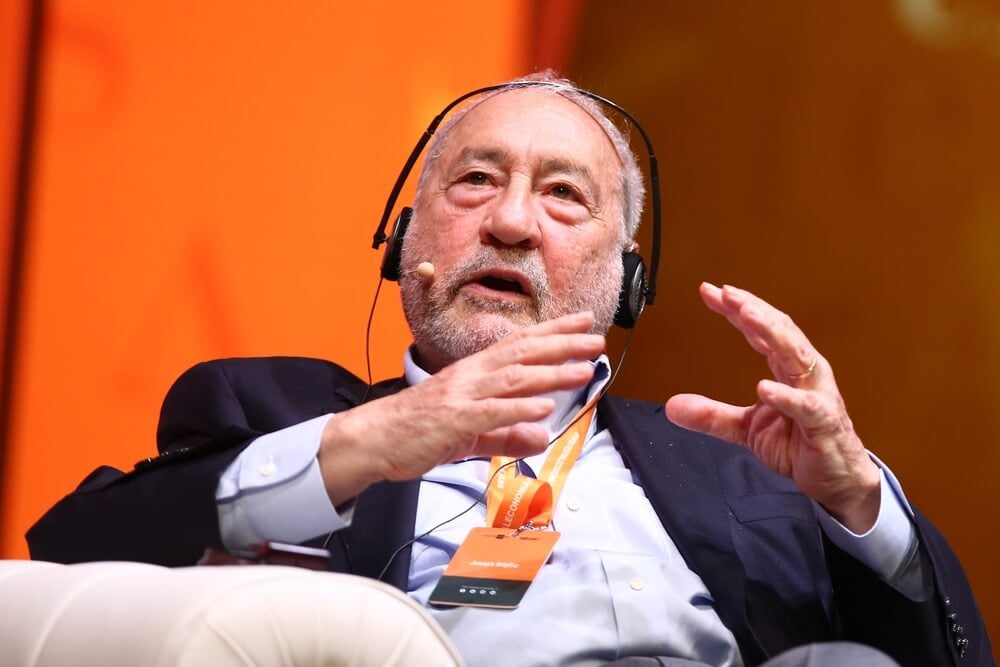 Once again, the US will pay a high price, and the costs it imposes on others around the world will further damage its reputation and soft power - Joseph E. Stiglitz
The rest of the world is probably absorbing the same lesson. No one needs to tolerate such bullying. No one needs to capitulate or remain dependent on the US.
A fast-changing global economic landscape offers many new opportunities for diversification. The sooner that Bessent and Trump realize how weak their hand is, the better it will be for the US and the world.
If China and others resist Trump’s latest demands—as seems likely—they will neither collapse nor suffer the kinds of costs the US hopes to inflict.
The economic world war Bessent has heralded would end in a stalemate, much like the impasse in the Strait of Hormuz.
Once again, the US will pay a high price, and the costs it imposes on others around the world will further damage its reputation and soft power.
The US used to be a role model. It stood for democracy, economic opportunity, and other values that appeal to many countries.
Now, it is a model of what not to do—a cautionary tale of extreme inequality, democratic erosion, corruption, and social division.
The rest of the world should develop a new appreciation for the value of cooperation and the rule of law, both domestically and internationally.
A world that casts off American leadership, at least for now, promises greater stability, security, and prosperity for all.
Joseph E. Stiglitz, a Nobel laureate in economics and University Professor at Columbia University, is a former chief economist of the World Bank (1997-2000), former chair of the US President’s Council of Economic Advisers, former co-chair of the High-Level Commission on Carbon Prices, and lead author of the 1995 IPCC Climate Assessment. He is Co-Chair of the Independent Commission for the Reform of International Corporate Taxation.
