On 3 September, the Missouri Supreme Court unanimously ordered Secretary of State Denny Hoskins to certify a referendum on a new congressional map by 8 September and to place it on the 3 November ballot.
In the same ruling, all seven judges decided that the upcoming elections for the House of Representatives must be held using the boundaries adopted in 2022.
Justice Ginger Gooch’s reasoning captures the essence of the dispute in a single sentence. House Bill 1, the Republican majority’s 2025 congressional redistricting bill, “is not a law and never has been a law”.
However, on 4 August Missouri had already held primary elections on that basis and selected candidates for November.
The court could determine which act was valid, but it could not send hundreds of thousands of voters back to the polls or erase the fact that they had voted in districts whose boundaries will now change again.
Law and the electoral calendar could no longer be reconciled. Legally speaking, the new map was halted on 9 December 2025, when the referendum petition was duly submitted, but the election administration continued to use it for months, until the end of the primaries.
A map that legally did not exist
Missouri’s Republican majority in the House passed HB 1 in a special session on 12 September 2025.
Governor Mike Kehoe signed it into law on 28 September and publicly thanked President Donald Trump for his role in its passage.
The map was designed to change the current ratio of six Republicans to two Democrats in the congressional delegation to seven to one.
The biggest change affects the 5th district of Democratic Congressman Emanuel Cleaver.
The former district, centred on Kansas City, gave Democrats an advantage of about 23 percentage points.
Under the new boundaries, the Republican advantage would be about 17 points.
Kansas City is split between multiple districts, while the heavily Republican counties of Lafayette, Johnson and Pettis are attached to the 5th district.
About 59 per cent of voters in the reshaped district would come from areas that did not previously belong to it.
Opponents of the new map invoked the right the Missouri constitution gives citizens to put “any Act” of the state legislature to a referendum
Opponents of the new map invoked the right the Missouri constitution gives citizens to put “any Act” of the state legislature to a referendum.
More than 300,000 signatures, packed into 691 boxes, were submitted on 9 December, two days before HB 1 was scheduled to take effect.
In the end, a sufficient number of signatures and compliance with the deadline were not in dispute.
Hoskins rejected the petition, arguing that congressional apportionment, unlike other laws, cannot be subject to a referendum.
The Supreme Court rejected that argument, referring to the literal meaning of the constitutional provision.
HB 1 is an act of the state legislature, and the phrase “any Act” does not provide an exception for congressional maps.
As a full check showed that the petition had enough signatures and was submitted on time, the court concluded that it was effective from the date it was submitted.
Therefore, HB 1 did not take effect on 11 December, so the 2022 map remained in force.
Eight months of waiting, a last-minute decision
There was no need for confusion in the final week before the elections, as the administration had eight months to decide on the petition.
In May, the same court ruled that simply submitting signatures does not automatically suspend the law.
The Secretary of State must first check the petition, and his decision can then be reviewed by the court.
However, the judgement also explained what happens after the verification is completed.
The result of the check is valid from the day the signatures are submitted. That is why the state has known since the spring that use of the new map carries a legal risk that could subsequently call the entire election process into question.
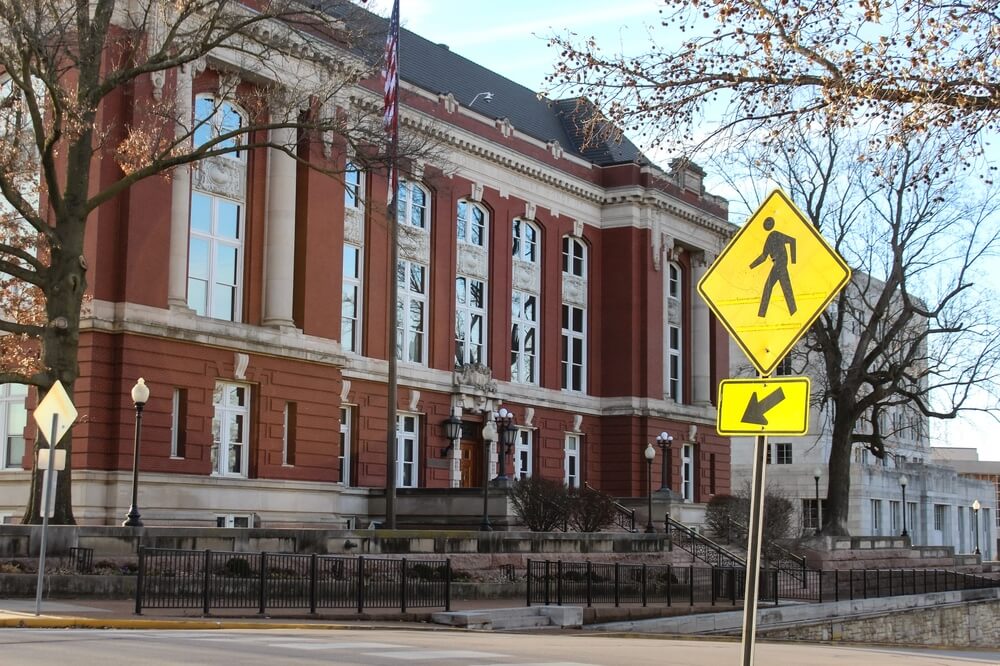 The state has known since the spring that use of the new map carries a legal risk that could subsequently call the entire election process into question - The Missouri Supreme Court
Hoskins had the signatures since December but decided to reject the referendum petition on 4 August at around 4.00 p.m., approximately one hour before the legal deadline and while voting in the primary elections was still under way.
The Court expressly rejected the contention that the resulting confusion justified the use of HB 1.
It attributed responsibility for the expense, difficulty and confusion to the Secretary, who waited until the last minute even though the proceedings could have ended earlier.
However, one objection raised by state authorities is hard to dispute.
Republican candidate Rick Brattin won the nomination in the new 5th district, while Cleaver was unopposed among Democrats.
Brattin rightly warns that some of the voters who took part in his nomination will be voting in other districts in November.
At the same time, voters who did not have the opportunity to participate in that primary race will be deciding on him.
However, this cannot be a reason to validate a map that has never entered into force.
Changing boundaries does not automatically disqualify candidates, because the US Constitution requires a member of the House of Representatives to live in the state they represent, not necessarily in a specific district.
The real problem is who participated in the nomination, because candidates enter the general election before one electorate, even though they were nominated by another.
Who will be on the ballot in November?
The court did not determine how the parties and the election administration should resolve the status of candidates.
It only ordered that the 2022 map be used in the general election. It decided, therefore, which boundaries would be voted on and left the status of candidates to Hoskins’s office, local election authorities and party bodies.
The simplest solution would be for already confirmed candidates to remain tied to the same number of congressional districts, but with the old boundaries.
The candidacies would thus remain valid, and a new round of intra-party decision-making would be avoided, but the discrepancy between voters in the primary and general elections would persist.
Another option is for the party committees to fill the resulting gaps, provided that the law does indeed treat the change of boundaries as a vacant nomination.
Such a solution would be even less democratic, because a small group of officials would decide instead of primary voters.
New primary elections would seem the cleanest solution, but only in theory
New primary elections would seem the cleanest solution, but only in theory.
Missouri allows absentee ballots to be available 46 days before the election, which for the 3 November vote means 18 September.
Federal law requires that ballots for military personnel and citizens overseas be mailed no later than 45 days before the election.
Approximately two weeks remained between the verdict and the start of that process.
In such a short time, it is almost impossible to open candidacies, conduct a campaign, hold the vote, confirm the result, print new ballots and still leave room for judicial control.
Because of the short deadlines, existing candidates will almost certainly remain on the ballot, despite their nominations coming from a differently distributed electorate.
Under the old boundaries, Cleaver will again be the clear favourite, while Brattin will compete in the district where Cleaver won at least 60 per cent of the vote in each of the previous two elections, instead of in a Republican-leaning district.
The ruling will most likely preserve the current ratio of six Republicans to two Democrats in the delegation, although it does not itself determine the result.
The narrow path to the US Supreme Court
Attorney General Catherine Hanaway announced an emergency request to the US Supreme Court, describing the ruling as a violation of federal law.
She confirmed that she would seek intervention, but the submission containing the specific legal request had not yet been published.
Hanaway can still invoke the federal constitution, which entrusts state legislatures with determining the time, place, and manner of holding congressional elections.
This argument has a very narrow scope. In 2023, the US Supreme Court confirmed in Moore v. Harper that federal courts can intervene when a state court departs so far from the normal bounds of interpretation that it effectively usurps the legislature’s authority.
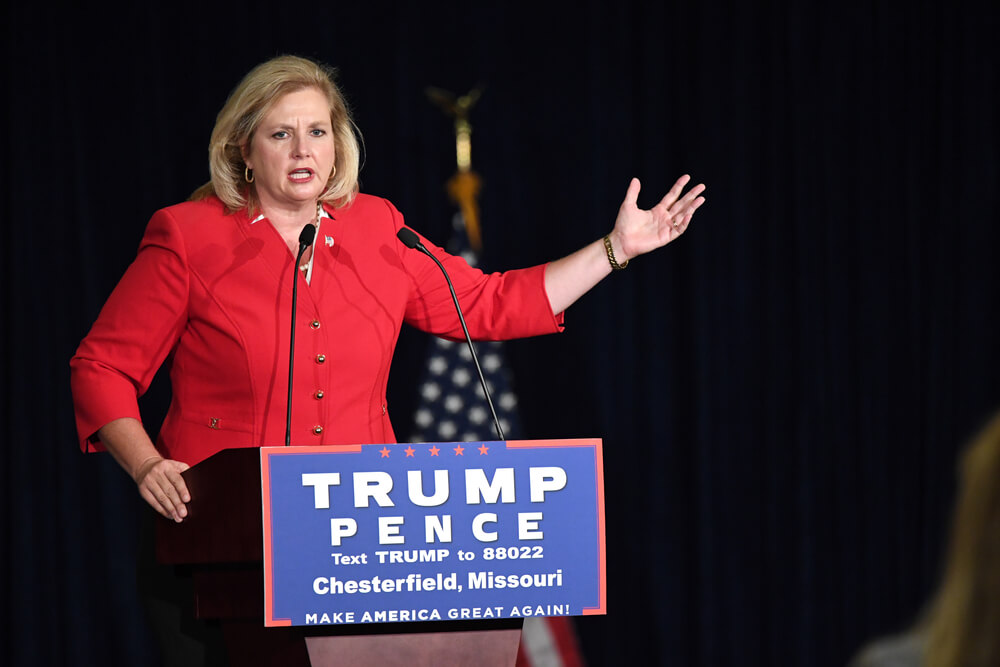 Attorney General Catherine Hanaway announced an emergency request to the US Supreme Court, describing the ruling as a violation of federal law
The claim that the congressional map can never be subject to a referendum has already been rejected by the US Supreme Court.
In 1916, in the Hildebrandt case, it unanimously affirmed the right of Ohio voters to reject congressional apportionment by referendum.
The Court in the Moore case also referred to Hildebrandt, confirming that the state legislature remains subject to its own constitution when regulating federal elections.
In 1922, Missouri also rejected the congressional map adopted by the legislature in a referendum.
Hanaway will therefore have to prove that all seven justices, in interpreting the term “any Act”, went beyond the acceptable limits of judicial work, because political damage and an unusual election calendar alone are not enough.
It is difficult to expect federal judges to accept such an argument when they are faced with a unanimous decision, an indisputably sufficient number of signatures and their own precedents.
The timing of the election may prompt them to consider the case quickly, but urgency does not in itself alter the substance of the right.
Two votes on two different ballots
Unless the US Supreme Court intervenes urgently, Missouri will elect members of Congress under the 2022 map on 3 November, and on the same day decide whether to approve the 2025 map.
Even if a majority supports HB 1, the outcome of the referendum cannot retroactively change elections held that day.
The court has already ordered that they be conducted under the 2022 map. Under Article III, Section 52(b) of the Missouri Constitution, HB 1 would take effect if approved by a majority of voters and could be used in the next congressional elections, provided it survives other court challenges.
In future, the administration will have to complete the verification of signatures, judicial review and preparation of ballots before party candidacies become a fact that can no longer be fully corrected
Republicans passed HB 1 to secure a seventh seat as early as 2026, but the ruling has delayed that opportunity for at least one election cycle and left it to voters to decide future boundaries.
If they reject the bill, the 2022 map remains in effect. If they accept it, the next campaign will be based on boundaries that have received direct voter approval, but still give a strong advantage to one party.
The ruling will also affect how Missouri conducts referendums in future. No future Secretary of State will be able to rely on the passage of time to resolve a dispute before it reaches the courts.
Confirmation that a petition is valid applies from the date of its submission, and elections held in the meantime cannot give the act a legal force it did not have.
In future, the administration will therefore have to complete the verification of signatures, judicial review and preparation of ballots before party candidacies become a fact that can no longer be fully corrected.
