Is it that the world is more accustomed to it and has become jaded, or is Donald Trump actually slightly more subtle than before about grabbing attention through polarising measures and rage-baiting statements?
I suspect it’s a bit of both, but looking at what he has done over the last few weeks, he’s definitely up to his old tricks in order to draw attention away from a slew of problems – from the Iran stalemate to troubling economic indicators.
All the old standby tropes, such as migration, tariffs and crime, are being mobilised to fire up the base and keep swing voters on board ahead of the midterms, now just a few months away.
The new high-profile tariff fight with Canada not only serves as a distraction from Trump’s economic and geostrategic troubles but is also part of an effort to reverse a significant defeat for his political agenda: the Supreme Court striking down most of his tariffs earlier this year.
The administration has been slowly and much more quietly rebuilding the tariffs since then. The Canada kerfuffle appears as a well-timed reminder to Trump’s base that he’s sticking to his guns.
European silence on Canada’s travails – even though the American demands could plainly be seen as gross interference with an ally’s sovereignty – is jarring but ambiguous.
One interpretation is that the EU has been cowed by the Trump administration and is hanging Canada out to dry. Another is that a big outcry only makes Trump, in the eyes of his supporters, look more defiant of international norms and would play into his hands.
There’s probably something to both ideas, but the latter is particularly relevant with an eye to Trump’s likely current preoccupation: the upcoming midterms.
Carney probably had no choice but to refuse the American diktat, but the administration might have structured its demands deliberately in such a way that a fight was inevitable, exactly because Trump at this point can use the drama.
It’s no surprise that he chose to escalate on an issue that touches on the economy. Many of his supporters still resent the now superseded NAFTA deal with Canada and Mexico, which they see as having hurt American jobs and manufacturing.
Bypassing the focus on the economy
It is the economy that is likely to cause Republicans the most headaches in the midterms. Polling consistently shows that cost of living, inflation and overall management of the economy top voters’ concerns, and they don’t think the administration is doing a good job.
In an ominous sign for the GOP, some polls now show that Democrats are more trusted on the economy than Republicans.
Trump’s culture war polarisation has chipped away at the Clinton-era adage of ‘it’s the economy, stupid’. But that was at least partly predicated on the idea that Trump and the Republicans were, in any case, much more trusted on the economy than the Democrats.
Thus, demonstrating that Trump is still righting ingrained economic wrongs by taking on Canada, among others, might help blunt some of the immediate economic criticism among his base.
Without a change in fundamentals, though, affordability in particular can remain the wedge issue that might tip the outcome in both the House and the Senate.
The comparison between Trump and Jimmy Carter has been made, with Iran holding his political fortunes hostage and refusing to make any progress until after the midterms
In the opinion polls, disapproval of the administration’s economic policies dovetails with the unpopularity of Trump’s war with Iran.
The biggest immediate impact on both issues would come from, at the very least, a prolonged suspension of the conflict with Iran and a clear and somewhat sustainable reopening of the Strait of Hormuz.
While many people feel higher overall prices directly in their pockets, this might still remain abstract for those with a bit more financial breathing room. High petrol prices, on the other hand, are of huge symbolic importance to almost all Americans.
The comparison between Trump and Jimmy Carter has been made, with Iran holding his political fortunes hostage and refusing to make any progress until after the midterms.
There are several problems with this analogy. First, the Iranian leadership is a lot more calculating than that, and it might yet use this period to squeeze important concessions from the US and actually do a deal, even if it is a temporary one.
Also, Trump is very different from Carter in that he has a huge bag of tricks that he’s willing to resort to in order to bypass the focus on the economy and the Iran conflict and redirect it to his vote-getting comfort zone, which includes migration, crime and the culture wars.
Timing is everything
Timing is everything in the run-up to the midterms, and we might still see more on this front, but the announcement that the US will revoke some 200,000 visas from people who’ve entered the country for short-stays and subsequently applied for asylum definitely fits the objective.
It has been described as “the largest mass visa revocation in history” (ABC News), which is exactly the kind of coverage the administration would hope to generate at this point.
The administration has also announced a controversial worldwide pause in all immigrant visa application appointments, ostensibly for training purposes.
It compounds the steady drumbeat of stories about ICE sharply increasing deportations, albeit much more on the quiet than before, to reach 50,000 in July.
When a progressive think tank called him out on the crime stats for the capital and the cost of deploying the National Guard, he threatened a defamation suit
As with tariffs, the new Trump strategy on migration appears to be to put less emphasis on the shock and awe and more on the actual results of highly polarising and controversial policies.
Other long-running Trump tropes, such as crime, also get re-upped, with the president exaggerating and recently taking credit for a slump in the crime rate that started under his predecessor.
When a progressive think tank called him out on the crime stats for the capital and the cost of deploying the National Guard, he threatened a defamation suit.
Hinting at the possible demolition of the Kennedy Center, a site of long-standing Trumpian grievance, also fits both the regular order of business and the goal to keep outrage levels high ahead of the midterms.
The regular Trump playbook
On the international scene too, many steps fit both into the regular Trump playbook and his political mobilisation strategy.
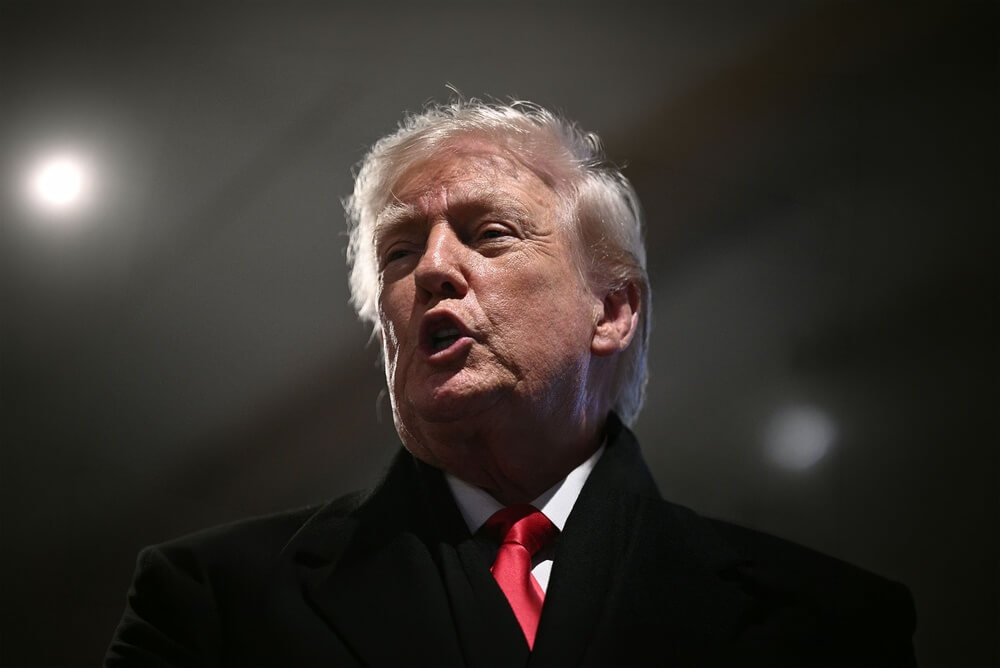 Trump is still the deciding factor in the upcoming midterms, along, possibly, with the Democrats’ weakness
Pulling out of training exercises with South Korea sends a signal that he blames others for what’s going wrong with Iran and rekindles Trump’s bizarre bromance with the North Korean leader, Kim Jong Un.
Other gestures, such as the US not attending Ukraine’s Independence Day celebrations, might draw less attention but send a not-so-subtle signal that he has not changed his stance.
In fact, despite signs of warming between Washington and Kyiv, this was a serious downgrade compared to last year, and the possibility of further tensions with Ukraine ahead of the midterms cannot be ruled out.
Trump is still the deciding factor in the upcoming midterms, along, possibly, with the Democrats’ weakness.
While his low popularity ratings might make it look as if he’d be a drag on some candidates, primary results show he’s still a potent factor in the GOP.
In any other year, the economic and geopolitical circumstances should have translated into a blue wave. It’s still Trump’s presence and polarising tactics that would make it otherwise.
