Kurds in Syria’s northeast regarded the announcement that the Kurdish-led force that once controlled the area has been dissolved with mixed emotions, while international players with a stake in Syria welcomed the step.
Mazloum Abdi, commander of the Kurdish-led Syrian Democratic Forces, on Tuesday announced the official dissolution of the group which for years controlled a de facto autonomous zone that at once point encompassed about 25% of Syria.
The group lost much of the land it had held in a government offensive in January. Its fighters are now being integrated into the official state military and the civilian institutions it controlled are being handed over to the state.
The transition has unfolded more smoothly than many expected, and interim President Ahmad al-Sharaa has promised to strengthen the rights of Kurds, who were long marginalized under the rule of the Assad dynasty before he took power.
Many Kurds initially regarded al-Sharaa's government with suspicion. Some of the insurgent groups that took part in the offensive that ousted former Syrian President Bashar Assad had also clashed with the SDF in the past.
Kurds say they are giving the new system a chance
But Mohammed al Mohammed, a civil society activist in Qamishli, said he has faith in Abdi, who led a yearslong battle against Islamic State militants.
“Our trust is that the general (Abdi) and his team will be able to work for the interest of the Kurdish people and be able to secure our rights,” he said. “Our rights are basic rights - being able to speak in our own language, to live on our land, to be able to manage our land ourselves, and not to be assaulted as Kurds, as it happened during Assad’s regime.”
Eva Sheikh Mousa, from the town of Amuda west of Qamishli, said the SDF as an organization is not important to her as long as Kurdish rights are respected.
It’s not that SDF is gone and so the Kurds are gone too - Eva Sheikh Mousa
“Whoever secures the rights of the Kurds, the right of speaking our own language, working freely in our farms, along with political rights and if we can be active players in the new Syria, that’s what the Kurds are looking for,” she said. ”... It’s not that SDF is gone and so the Kurds are gone too.”
Some were more wary of the changes taking place. Jwan Mohammed, was displaced from the town of Afrin in a 2018 offensive by Turkish forces and allied Syrian opposition fighters.
Kurdish civilians as well as SDF fighters were pushed out of areas seized in the offensive, although some of the displaced have now begun to return.
Mohammed said he agrees with integration with the national military but is unhappy to see the SDF end as an organization.
The SDF “made great sacrifices and they fought against the Islamic State,” he said. “Now, they say the name of SDF doesn’t exist any more. It is too much and it is hard.”
Residents of the formerly SDF-controlled area have also been hard hit by price increases since the central government took control and removed fuel subsidies that had formerly been in place.
Protests have broken out in recent months over rising prices and deteriorating living conditions.
International community welcomes the move
But the integration of the northeast has given a major boost to al-Sharaa’s government, which has struggled to unify the country as it begins to recover from a nearly 14-year civil war.
The announcement of the SDF's disbandment was praised by international players.
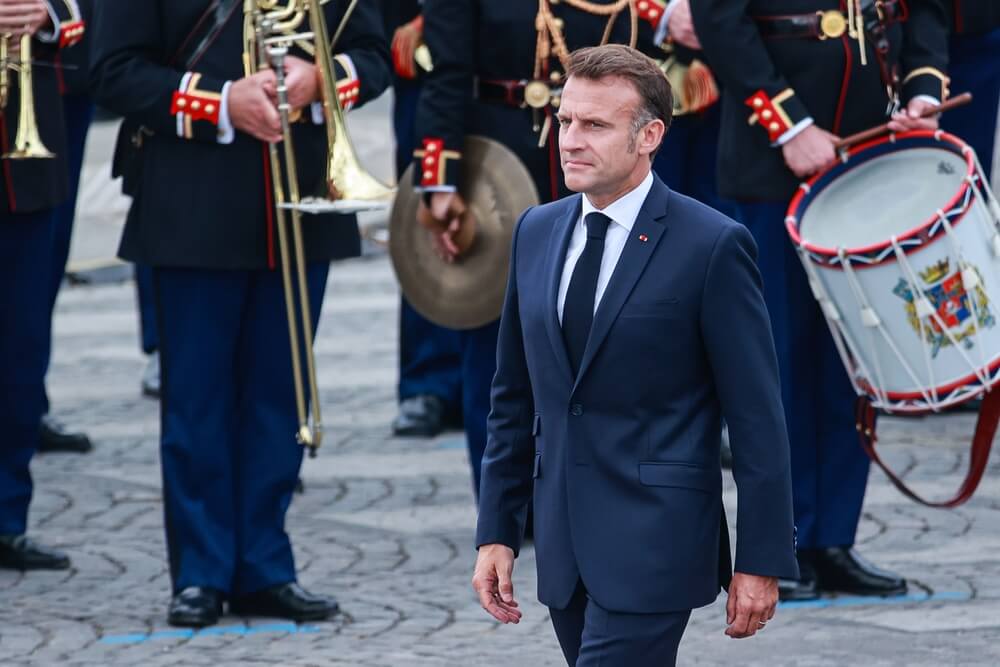 Emmanuel Macron congratulated Syrian on the decisive step in the process of the peaceful integration of the Syrian Democratic Forces into the Syrian state
French President Emmanuel Macron in a statement Wednesday congratulated Syrian on the “decisive step taken yesterday in the process of the peaceful integration of the Syrian Democratic Forces (SDF) into the Syrian state.”
U.S. envoy to Syria Tom Barrack in a post on X, called Abdi’s announcement “absolutely historic” and praised “far-sighted leadership” for “transforming past division into lasting partnership and restoring to the Syrian people the opportunity to shape their common future.”
He touted al-Sharaa's pledge to recognize the Kurdish language in education and the appointment of senior SDF figures including Abdi and Elham Ahmad, who served as the SDF-linked administration’s foreign relations official, to “substantive roles” in the Syrian government.
The government has not officially announced the appointments, but local media has reported that Abdi would be appointed as a presidential adviser and Ahmad as a deputy in parliament.
Nechirvan Barzani, president of northern Iraq's semi-autonomous Kurdish region, who had played a mediating role between the SDF and Damascus, welcomed the steps taken to implement the agreement between them and called for “all Kurdish parties and all components of Syrian society to support these steps and contribute to their success.”
