Welcome to the era of ‘too little, too late’. From AI regulation to the rise of the new fascism to the climate crisis – it appears as if we’re all constantly behind the curve and letting opportunities for mitigation slip away.
Of course, we have to be careful not to assign the label willy-nilly to every political, technological or other issue. That is what the various forces that find themselves currently in concert to undermine liberal democracy are doing.
Take migration: steps to counter it are always too little, too late in the minds of those who yearn for a supposedly purer and better past.
Or take the matter of economics and taxation – austerity hawks constantly proclaim that much more has to be done to constrain public finances before it is too late.
In both examples, too little, too late is used to inject urgency and threat into subjects that are neither most urgent nor uniquely threatening.
While these issues might exercise voters disproportionately, the underlying mechanisms can be calibrated without much existential risk, unless you believe in far-fetched conspiracies of the ‘great replacement’ type or think present-day deficits – or the current bond market panic – will quickly lead to massive economic collapse.
Climate change, on the other hand, already causes fatalities on a large scale, the risk of AI disruption or worse is potentially lethal to humanity, and fascism, as we know, invariably ends in death and destruction – both domestically and globally.
The democratic dilemma in a nutshell
A line in an article by the eminent historian Timothy Garton Ash in The Guardian re-emphasised for me the problematic lag that democracies have in countering anti-democratic forces.
Garton Ash argued that Germany had uniquely strong mechanisms in place to prevent a modern-day equivalent of the fall of the Weimar Republic and the rise of Nazism.
One problem, he said, was that Germany is now facing something more akin to Budapest in 2010 and the United States under Trump than to Weimar – a slow erosion of both the liberal and democratic order, rather than a putsch.
It is too late now, he pointed out, to ban the AfD, even though one of the protections afforded to post-war German democracy was exactly such a measure.
Banning the AfD now that it has a mass following across Germany would appear counter-democratic
Banning the AfD now that it has a mass following across Germany and is about to assume power in one of the German states would appear counter-democratic.
This encapsulates the democratic dilemma in a nutshell: Sometimes, defending democracy requires measures to be taken that could be construed by some as undemocratic.
Once the democratic consensus has started to crack, it’s often too late. Politicians and judges alike are then even more loath to risk being branded as undemocratic, and so will refrain from enacting the protections that are available to the system.
Heating up to the boiling point
This well-known phenomenon is often illustrated by the boiling frog fable, where a frog sits in a pleasantly lukewarm pot of water and supposedly will not jump out even as the water is heated to the boiling point.
Over the last couple of decades, the world has slowly been heating up to this boiling point, and even though many people have started to notice, nobody except a handful of activists is taking action.
This failure to act on a slowly developing extreme danger that remains rather abstract for most, doesn’t immediately affect all of us equally, and looks like a slow-moving train that can be easily avoided at some point when it’s nearer, perhaps, is a well-documented feature of humanity as a whole and hard-to-steer democracies in particular.
But that’s only one aspect of what’s happening right now. Another, much more worrying development is that this mechanism is actively being encouraged, and action is being thwarted, by a variety of actors who have their own agendas.
The convergence of purposes between revanchist powers such as Russia and China on the one hand and a Western billionaire class that seeks unfettered room for wealth accumulation is somewhat mind-boggling, though not unprecedented.
Many of Germany’s capitalists at the time actively or passively lent their support to the Nazi party
Here, I would slightly diverge from Garton Ash’s narrative – or rather, address his piece, skipping over how the Nazis came to power in the 1930s.
They also used the existing democratic system and had been planning their power grab by undermining it from within for more than a decade.
Specifically on elites: many of Germany’s capitalists at the time actively or passively lent their support to the Nazi party.
And as far as foreign powers were concerned, the Soviet Union, an ostensible arch-enemy, facilitated the early stages of Germany’s rearmament through a secret clause added to the treaty of Rapallo – and later facilitated the outbreak of the Second World War through the Molotov-Ribbentrop Pact.
Threats of an entirely new order
But we don’t have to hark back to the 1930s to ring the alarm bells about the current moment.
While fascism, totalitarianism and its siblings are destructive constants in human history, the current climate crisis and the rise of AI are threats of an entirely new order.
In the case of the climate crisis, a scientific consensus has steadily developed over more than half a century that it is indeed human-caused and that it is unprecedented, entirely different from earlier climate shifts during the relatively short span of human history.
The AI threat, on the other hand, used to belong to the realm of fiction but has evolved into a potential reality at a dizzying speed over just the last several years.
It is thus much harder to pin down and there’s far less data available on it than on the climate crisis, but the recent industry consensus is equally alarming, if not more so.
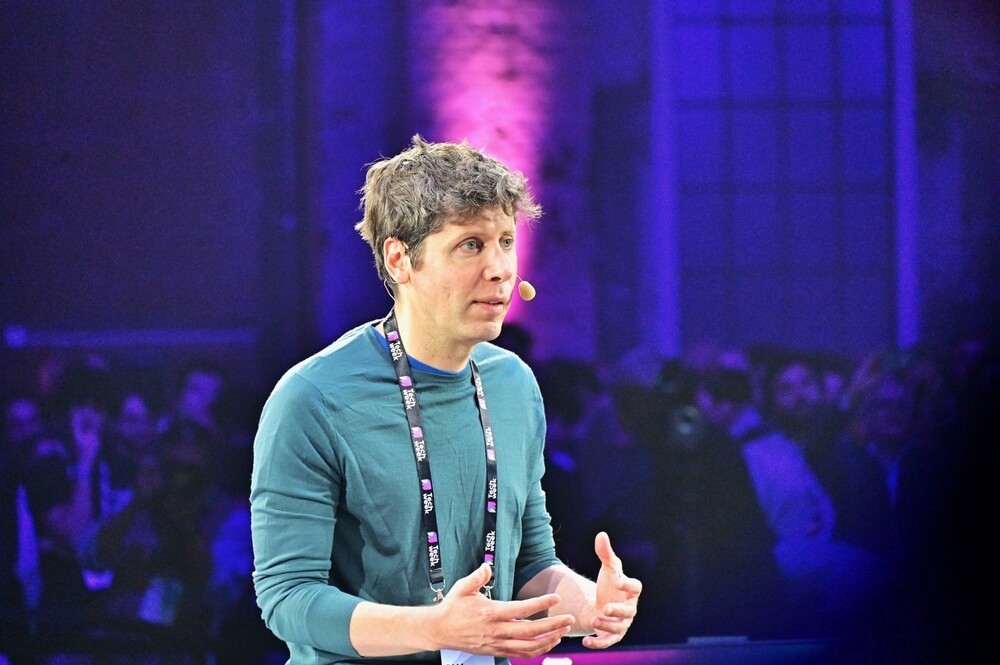 The CEOs who are warning of the AI apocalypse are themselves part of the mostly American billionaire class that is seeking to free itself from both regulatory oversight and taxation - Sam Altman
The CEOs who are warning of the AI apocalypse are themselves part of the mostly American billionaire class that is seeking to free itself from both regulatory oversight and taxation – and is willing to go to extremes to achieve this.
Cynicism about their motives in ringing the alarm bells is entirely justified, which doesn’t diminish the terrifying basis of their claims.
Regardless of motives, the latest AI panic has further muddied the waters on regulation.
Regulation, of course, should have been a given from the beginning and was actually starting to make headway in the wider tech sector, witness the various restrictions on social media for minors.
In that sense, the tech-regulation debate is much older than the rise of AI and there is plenty of data available by now on some of the adverse effects on society, democracy, human development and so on that the digital revolution has had, besides its obvious benefits.
Blind faith in technological progress
What the digital revolution and the climate crisis have in common is that both of them now form the basis of our daily lives, particularly in the West.
Our electricity, transport, consumer products, etc. wouldn’t be available without the pollution they’re causing, at least not for the foreseeable future.
The online and AI revolutions have very quickly become equally quotidian; they’re not just very convenient, nowadays we cannot do without.
It’s not too late, but acting to mitigate the extreme risks the world is facing will get ever more fraught and difficult
As with the German political class and judiciary vis-à-vis the AfD, we have now passed the point at which we could plausibly stop these developments without stripping something essential from our current way of life.
Of course, it’s not too late, but acting to mitigate the extreme risks the world is facing will get ever more fraught and difficult.
At least, that is, if we don’t put our faith blindly in technological progress, which is becoming increasingly hard as many of the current issues are caused by this in the first place.
We either find a way to turn the temperature down, or we’ll cook slowly in our no-longer tepid pot of water.
