A week before the elections in Saxony-Anhalt, German Defence Minister Boris Pistorius and Baden-Württemberg Minister-President Cem Özdemir called for proceedings to examine banning the most radical branches of Alternative for Germany.
They specifically mentioned the AfD in Thuringia, Saxony, Saxony-Anhalt and Brandenburg, explaining that those parts of the party can no longer be seen only as the hard right within normal party competition.
The request comes at a time when the AfD in Saxony-Anhalt is entering the final stages of the campaign with about 40 per cent support and a real chance of becoming the strongest political force in the federal state.
The latest polling shows how much the balance of power has changed. On 28 August, Forschungsgruppe Wahlen measured the AfD at 40 per cent, the CDU at 23, the Left at 13, the SPD at 9 and the Greens at 6 per cent.
Two days earlier, Infratest dimap had put the AfD on 42 per cent and the CDU on 22 per cent.
Ulrich Siegmund, the AfD's candidate for prime minister, is no longer campaigning just to increase his party's number of deputies and further weaken the traditional parties in the federal state.
The AfD is now talking about forming a government and is presenting Saxony-Anhalt as the place where it wants to prove it can take executive power, lead institutions and govern the state.
An election victory does not necessarily mean a government
A result of 40 or 42 per cent would almost certainly make the AfD the strongest party in the Landtag (provincial parliament), but it would not on its own guarantee the majority needed to form a government.
What will be decisive is how many mandates the other parties win and how many of them cross the five per cent electoral threshold.
If the AfD falls short of an absolute majority, the CDU, SPD, Greens and the Left will have to decide whether they can form a joint parliamentary majority to keep the AfD out of the executive.
The constitution of Saxony-Anhalt further complicates the post-election maths. The Prime Minister must win a majority of all members of the Landtag in the first two rounds.
If that fails and the parliament does not dissolve itself, a majority of the votes cast is sufficient in the next round.
The balance of power after the election will depend on whether the other parties can agree on a joint candidate and form a stable government
Therefore, the balance of power after the election will also depend on whether the other parties can agree on a joint candidate and form a stable government.
They could end up with more MPs than the AfD, but still not have a politically viable formula for governing together.
This is where the simple logic of the German Brandmauer – the informal agreement under which the major parties refuse to cooperate with the AfD – reaches its limit.
That approach was easier while the AfD had enough votes to be important, but too few to seriously threaten the formation of other coalitions.
With support at around 40 per cent, the cost of such a policy becomes higher.
Any coalition formed to keep the AfD out of government would have to bring together parties with very different agendas.
The AfD would almost certainly portray such a deal as an attempt by its opponents to prevent the strongest party from taking power.
What does the AfD gain when it gains power?
The prospect of Ulrich Siegmund actually becoming prime minister has far greater consequences than the election result itself.
Saxony-Anhalt would then become the first serious test of Germany's federal system, with a government that its own domestic intelligence service has classified since 2023 as confirmed right-wing extremist.
It is important here to distinguish the status of the AfD in Saxony-Anhalt from the status of the party at the federal level.
Since 2023, the Saxony-Anhalt branch of the AfD has been classified by the domestic intelligence service there as a confirmed right-wing extremist organisation.
The Federal Office for the Protection of the Constitution tried to place the entire party in the same category, but on 26 February the Administrative Court in Cologne temporarily banned the use of that label until it rules on the AfD’s main lawsuit against that classification.
If the AfD forms a government in Magdeburg, for the first time the specific question will arise of how a government, duly elected by voters while its own security service considers it extremist, is supposed to function.
The prime minister of Saxony-Anhalt appoints the ministers and plays a key role in determining the policies of the state government.
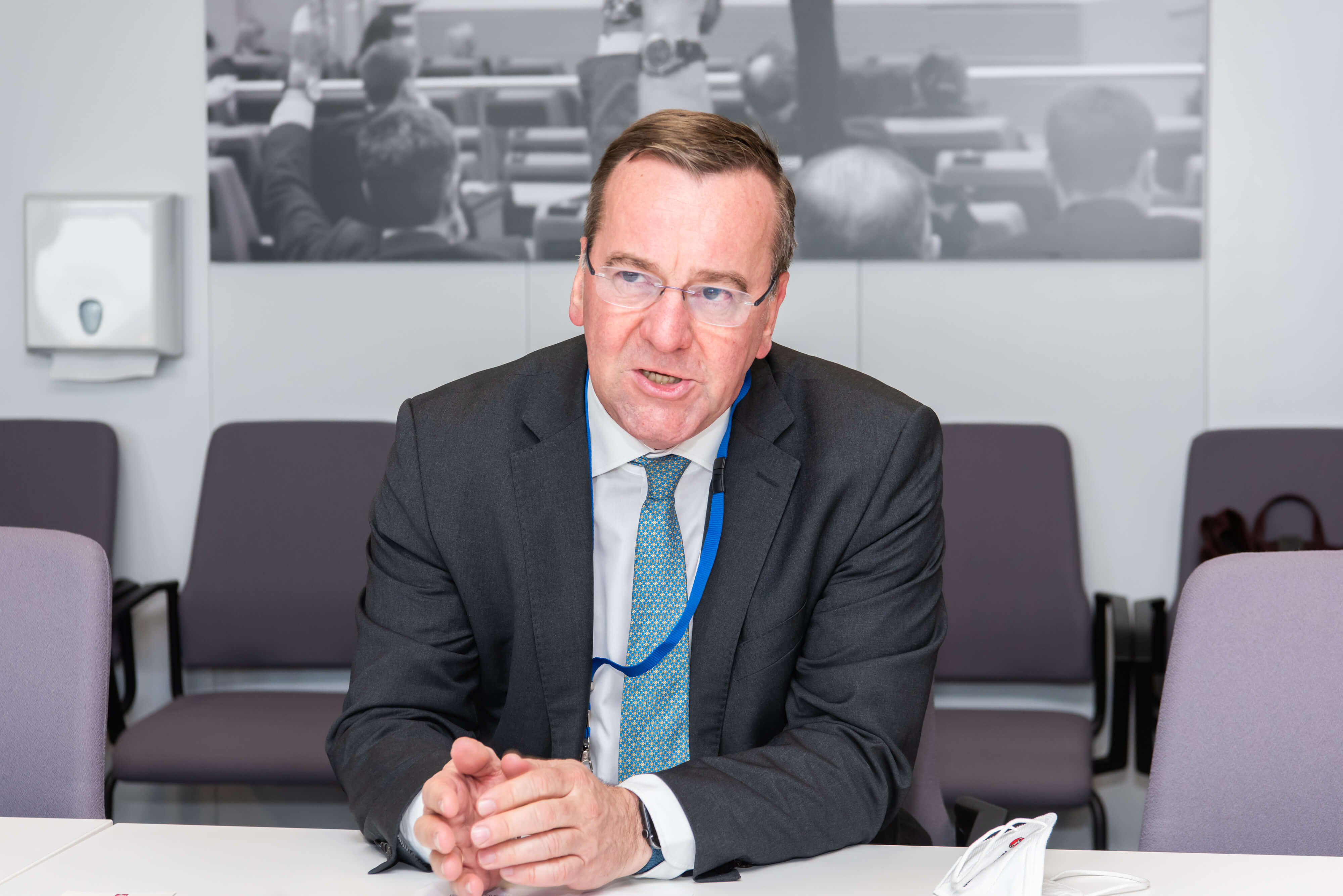 Boris Pistorius has already spoken about the need to prevent classified Bundeswehr information from reaching the AfD if the party enters the state government
It is particularly important who leads the Ministry of Internal Affairs, because the domestic intelligence service also falls under that ministry.
The new government could change the service’s leadership, its staffing priorities, and the areas to which it pays the most attention.
The service, which currently monitors right-wing extremism intensively, could be given different priorities and a different allocation of staff and funding under the new political leadership.
The problem would not remain within the borders of the federal state. German agencies share confidential data on a daily basis, and federal and state institutions rely on each other.
Completely excluding a federal state service from this system is not a simple administrative decision.
At the same time, institutions that hold sensitive data can restrict access if they judge that the conditions for protecting secrecy are no longer sufficient.
Boris Pistorius has already spoken about the need to prevent classified Bundeswehr information from reaching the AfD if the party enters the state government.
Saxony-Anhalt would set a political precedent
In Magdeburg, the AfD would have political scope that goes far beyond the security services. The German federal states have extensive powers over education, policing, culture and public administration.
Many of the AfD’s foreign policy demands cannot be implemented at state level, but changes to the school system, the police, staffing policy and the approach to migration can.
It is precisely in these areas that it is easier to see what the AfD looks like when it is no longer speaking from the opposition benches but running institutions.
The federal state government also takes part in the work of the Bundesrat, the upper house of the German parliament in which the federal states are represented, as well as in coordination between the federal states.
This would be the first time the AfD entered institutions in which state governments directly participate in implementing federal policies, having previously only been a parliamentary opposition party.
For a party that aims to enter the federal government, running a federal state would be a chance to show what the AfD looks like when it takes responsibility for the day-to-day functioning of institutions
For a party that aims to enter the federal government, running a federal state would be a chance to show what the AfD looks like when it takes responsibility for the day-to-day functioning of institutions.
If the government in Magdeburg operates without serious institutional upheaval, the AfD will be able to claim in 2029 that it has proved its ability to govern.
That would weaken one of the main arguments of its opponents, who say the party is good at mobilising discontent but incapable of running complex institutions.
If, however, gaining power quickly leads to clashes with the courts, the federal government and other states, Saxony-Anhalt’s experience could serve as a warning to voters in the rest of the country.
A ban will not solve the problem of government
It is in this context that Pistorius and Özdemir’s calls for a ban should be seen. The German constitution recognises banning a political party as a last resort for protecting the democratic order, but such a ban can only be imposed by the Federal Constitutional Court, at the request of the Bundestag, the Bundesrat or the federal government.
The judicial standard is high and demands far more than radical statements or extremist rhetoric. It is necessary to prove active measures against the free democratic order and a genuine ability to achieve such goals.
This is where a serious political dilemma arises. The stronger the AfD becomes in elections, the stronger the argument of those who claim that the state must examine whether certain branches are still operating within constitutional limits.
If the AfD forms a government, German institutions will have to look for answers within the existing constitutional and federal order
At the same time, trying to ban a party that wins about 40 per cent of the vote in one federal state gives its leadership a very strong political argument that the establishment is trying to achieve through the courts what it can no longer achieve at the ballot box.
Friedrich Merz and a large part of the CDU remain sceptical about a ban precisely because of this risk.
Even if proceedings were initiated, they would not resolve what will arise after 6 September.
Such a process would continue, while the new federal state majority would have to form a government immediately, adopt a budget, appoint ministers and take responsibility for the administration.
If the AfD forms a government, German institutions will have to look for answers within the existing constitutional and federal order, because the procedure for banning the party cannot offer a quick solution.
The limits of cooperation
The most likely outcome remains a victory for the AfD without a secure absolute majority.
In that case, the CDU, SPD, Greens and the Left will have to show whether they can form a sustainable majority based on more than just shared opposition to the AfD.
If they succeed, the AfD stays in opposition, but with a result that lets it spend the next few years claiming that the strongest party was once again kept from power by a political deal between its rivals.
If the deal fails, the constitutional procedure for electing the prime minister opens up a much more uncertain phase.
If the AfD does form a government, the response from Berlin and the other federal states will most likely be administrative and legal rather than spectacular.
Federal institutions will regulate access to classified information, security cooperation and shared systems much more carefully.
Any change in the work of the police or the service for the protection of the constitutional order will come under stricter scrutiny from the courts, the media and other state institutions.
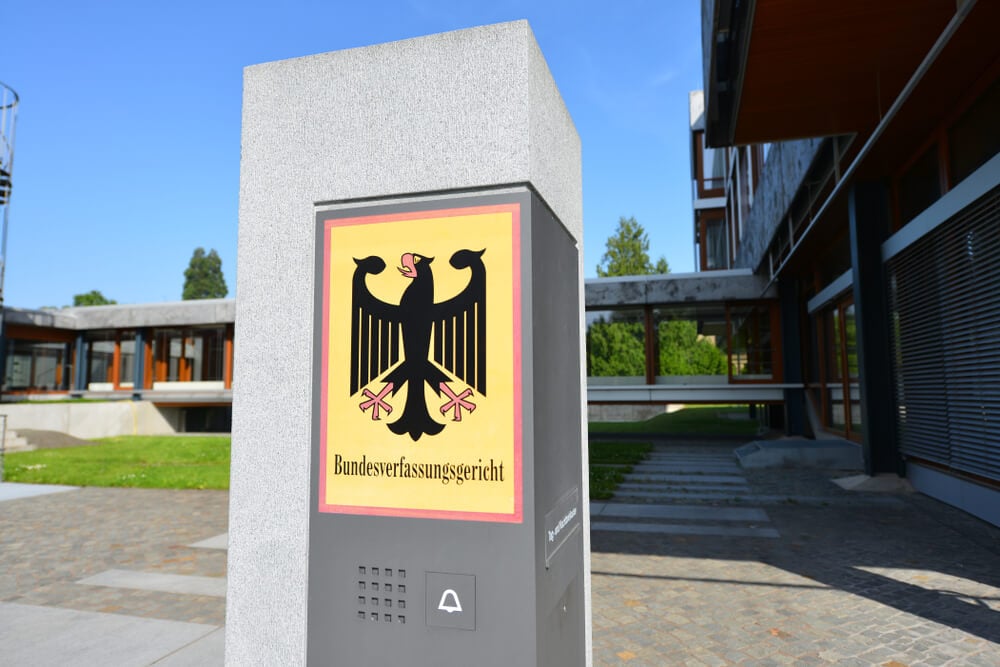 German federalism has enough legal instruments to limit the damage, but their day-to-day implementation will be politically exhausting - Constitutional Court
German federalism has enough legal instruments to limit the damage, but their day-to-day implementation will be politically exhausting and is likely to be fraught with disputes.
This is precisely where the broader significance of Saxony‑Anhalt lies. For years, Germany dealt with the AfD problem by refusing to share executive power with it within the party system.
That approach can only work as long as the other parties have enough mandates and mutual trust to form an alternative majority.
If the AfD starts winning around 40 per cent of the vote and manages to enter a federal state government, political isolation will no longer be enough.
The boundaries for the AfD will then be drawn through access to classified information, the competences of ministries, judicial control, and the rules of federal cooperation.
Saxony‑Anhalt can therefore become much more important than its size suggests. If the AfD enters the executive branch, Germany's discussion of the party will no longer be based on assumptions about how it would govern.
There will be a concrete government, concrete decisions and concrete conflicts with other institutions.
The next phase of German politics will depend on how that relationship works: whether the experience of government will normalise the AfD in the eyes of the wider electorate or expose the limits of its ability to manage the country without constantly clashing with the very system it wants to change.
