Prime Minister Andy Burnham raised more questions than he answered when he suggested the possibility that the UK might seek to rejoin the European Union it voted to quit a decade ago.
Following up on a speech to the ruling Labour Party’s annual conference in which he outlined options for strengthening ties with the EU, Burnham suggested the UK might “go all the way” to rejoining the 27-member bloc.
Having told Labour members that Brexit had “done more harm than good”, it was unclear whether his rejoin option was a nascent policy, a personal aspiration, or a political gambit to exploit growing public disillusionment with the outcome of the 2016 leave vote.
Resurrecting an in-out debate that split the country into almost equal antagonistic halves is certainly a gamble so soon after what was supposed to be the electorate’s once in a lifetime choice.
And, while the prime minister’s intervention may have buoyed committed rejoiners, does what was headlined as Burnham’s Brexit bombshell risk turning into a damp squib?
Whatever the outcome, any initiative will depend on the result of the next national election within the next three years, by which time the Labour Party will have to define its intentions on future relations with Europe.
In the current parliament, it is bound by the commitments of a manifesto drawn up when any mention of Brexit was a Labour taboo and in which even rejoining the EU customs union or its single market were ruled out.
Now Burnham has acknowledged at least the possibility that the next pre-election manifesto might promise a new in-out referendum, although he said the time was not yet right while other options were being considered.
The "Burnham bounce"
Latest polling suggests a majority of the public may be ahead of him and that the promise of renewed ties with the EU might reinforce the so-called Burnham bounce, an improvement in Labour’s popularity since he replaced Keir Starmer earlier this year.
A YouGov survey, published the day after the prime minister’s September 29 conference speech, indicated 59 per cent of voters would support the UK rejoining the EU against 32 per cent who would oppose it.
Support was highest among Labour voters, of whom only a quarter preferred that relations with Europe should remain where they are or be further loosened.
The overall consensus among three-quarters of those polled was that the government should pursue closer ties
The overall consensus among three-quarters of those polled was that the government should pursue closer ties. These included two-thirds of those who had previously supported leaving the bloc.
YouGov added a note of caution, however, by pointing to earlier polling in June that indicated a significant fall in pro-rejoin sentiment if the UK were to be denied the benefits of its previous opt-outs.
EU concessions that allowed the UK to remain outside of the Schengen open borders agreement and outside of the Eurozone might not be an offer if there was a UK bid to rejoin.
From "welcome back" to hard bargaining
A smiling Emmanuel Macron greeted Burnham’s latest statements with a lighthearted “welcome back”.
But the apparent enthusiasm of the French president failed to eclipse the prospect of the hard bargaining ahead, even if Labour’s aspirations towards improving ties fall short of renewing its EU membership.
Many sympathetic Europeans regarded the UK’s divisive Brexit debate as a collective nervous breakdown as they looked on despairingly as the country tore itself apart.
A decade on, do European governments and voters even want their British cousins back?
After the 2016 vote, European interest rapidly faded in an issue that has continued to haunt domestic UK politics. A decade on, do European governments and voters even want their British cousins back?
If Brexit had one lasting impact on European politics, in France and elsewhere, it was to temper the enthusiasm of continental radicals on the left and right for quitting the bloc in the light of the damage it was perceived to have inflicted on the UK.
While European governments, at least the current ones, might welcome the prospect of closer and more regular ties with the UK, they would not want to relive the trauma of uncertainty that was provoked by the previous Brexit debate.
That is a view that appears to be shared, for the time being at least, by some in Burnham’s own party who previously backed the remain vote.
Among a number of Burnham’s sceptical colleagues, home secretary Shabana Mahmood commented that rejoining was “not a simple, straightforward thing” and the costs might be unacceptable.
Back to being a rule-taker
The prime minister has nevertheless shifted the level of the debate on Europe. He has identified the political opportunities of a growing national consensus that Brexit was a mistake.
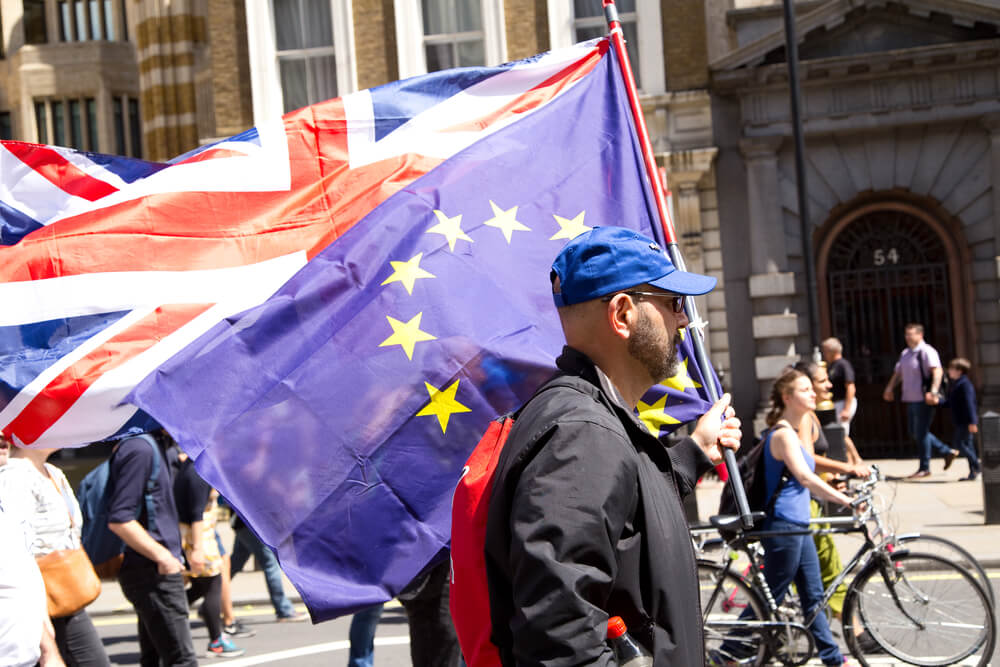 Burnham and his ruling party may ultimately decide that relying on shifting public opinion would be too risky to go all-out for another in-out vote
But he and his ruling party may ultimately decide that relying on shifting public opinion would be too risky to go all-out for another in-out vote.
At the same time, European governments would be reluctant to welcome the UK back, only for a future Reform or Conservative government to head for the exit again.
More likely is that Labour’s pro-Europeans will limit their current ambitions and policies to reinforcing ties, focusing on the single market and customs union, that fall short of a renewed membership bid.
That might disappoint ardent rejoiners and would force the UK back into the position of being a rule-taker, something voters were told Brexit would eradicate.
Further proof, perhaps, of what a bad idea the belatedly regretted 2016 vote really was.
