For decades, South Asia was locked in a perpetual cycle of conflict management: brief military clashes between India and Pakistan would be followed by de-escalation and the resumption of formal peace talks, which eventually gave way to another bout of conflict.
But this pattern has now been broken. No high-level dialogue has taken place since 2016.
Rather than some temporary diplomatic tantrum, this reflects a paradigm shift in Indian foreign policy, permanently altering the subcontinent’s security architecture.
The roots of this stalemate can be found in the structural failures of past diplomacy.
In 1947, 1965, and 1971, Pakistan initiated conventional wars, none of which delivered the results it desired.
The third resulted in the breakup of the country and the birth of independent Bangladesh.
These experiences, together with the success of the US-backed mujahideen in their fight against Soviet forces in Afghanistan in the late 1980s, prompted Pakistan’s military to embrace a new strategy, based on asymmetrical warfare—or, more bluntly, terrorism.
From 1989 to 1993, as terrorist attacks caused significant civilian casualties in India, Pakistani officers crowed about “bleeding India to death by a thousand cuts.”
Indian leaders were nonetheless convinced that, through structured dialogue, they could persuade Pakistan to abandon this strategy.
It was this belief that, in the late 1990s, gave rise to the Composite Dialogue framework, a bureaucratic mechanism designed to segment contentious issues, ranging from Kashmir to trade and humanitarian concerns, so that friction in one area would not derail progress in others.
Military or terrorist provocation
There was just one problem: every major Indian peace overture was met with an act of military or terrorist provocation that the Pakistani government was either unable or unwilling to prevent.
In 1999, when then-Indian Prime Minister Atal Bihari Vajpayee undertook his historic bus journey to Lahore to sign a landmark peace declaration, Pakistani troops were infiltrating the Kargil district of Ladakh—actions that led to the Kargil War (which Pakistan lost).
Pakistan's civilian governments lacked the authority or longevity to fulfill the commitments they made at the negotiating table
In 2008, when back-channel diplomacy was on the brink of delivering a non-territorial solution to the Kashmir issue, coordinated terrorist attacks by Pakistan-based militants killed 166 innocent civilians in Mumbai.
This cycle exposed a profound institutional disconnect within Pakistan. Its civilian governments lacked the authority or longevity to fulfill the commitments they made at the negotiating table, and its military-intelligence apparatus viewed peace with India as an existential threat to its domestic hegemony.
Talks and terror cannot coexist
Now, India has had enough. Prime Minister Narendra Modi initially followed the old peacemaking script.
He invited his Pakistani counterpart, Nawaz Sharif, to his 2014 inauguration, and visited Lahore the following year.
Even when this visit was followed by a terrorist attack on the Indian airbase in Pathankot, Modi invited Sharif to join the official investigation into the incident.
India abandoned its doctrine of strategic restraint in favor of a new guiding dictum: talks and terror cannot coexist
Then came the final straw: Pakistan’s Joint Investigation Team concluded that the attack was a “drama staged by India to malign Pakistan.”
With that, India abandoned its doctrine of strategic restraint in favor of a new guiding dictum: talks and terror cannot coexist.
India would return to the negotiating table only after Pakistan dismantled, comprehensively and verifiably, its state-supported terrorist networks.
Military doctrine
This diplomatic shift was accompanied by a fundamental change in India’s military doctrine.
For nearly three decades, Pakistan assumed that its tactical nuclear arsenal would deter India from launching conventional military reprisals for terrorist attacks.
Then India decided to call Pakistan’s bluff—most notably, in last year’s “Operation Sindoor.”
India has sought to rewrite the rules of deterrence in South Asia
Through calibrated retaliatory actions, ranging from surgical cross-border strikes to sophisticated aerial bombardments targeting terrorist infrastructure deep within Pakistani territory, India demonstrated a willingness to accept escalation risks to impose tangible costs on its neighbor.
By signaling that state-sponsored terror would automatically trigger a conventional military response, India has sought to rewrite the rules of deterrence in South Asia.
Strategy of disengagement
The current stalemate is hardly desirable. The absence of a diplomatic safety valve between nuclear-armed neighbors poses acute risks to regional, even global, stability.
Even the most basic bilateral matters, such as humanitarian issues, trade blockades, and water sharing, are now viewed through a hyper-politicized national-security lens.
And if a new crisis erupts, what mechanism is available to manage it? The margin for miscalculation is perilously thin.
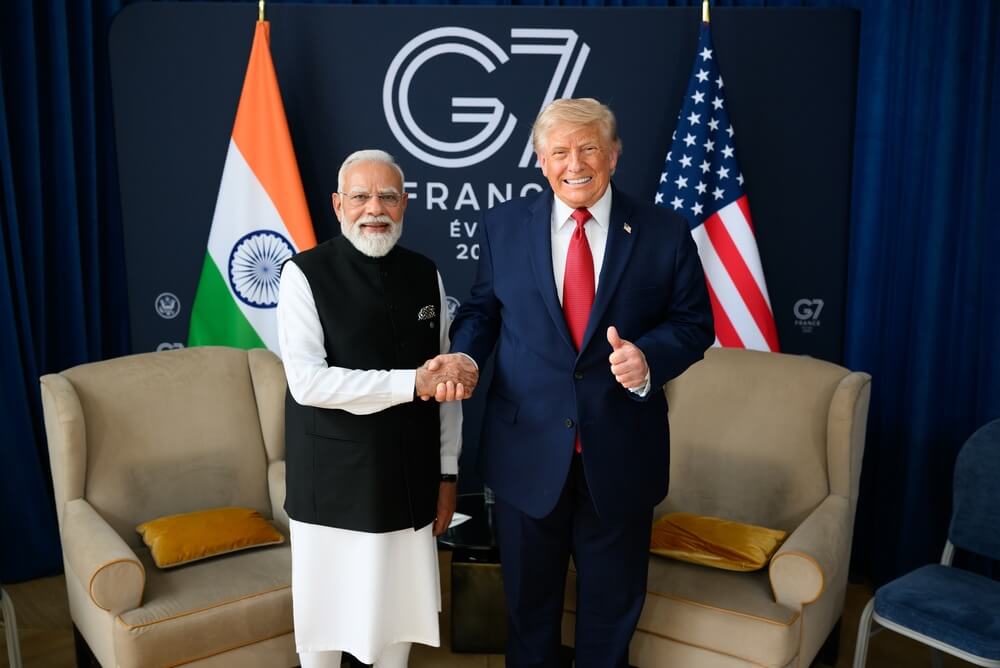 The United States is certainly not encouraging India to rethink its stance
But the prospects for a diplomatic breakthrough remain bleak. Pakistan’s military leadership still pins its domestic political legitimacy partly to hostility toward India, even as the country faces profound economic distress.
And India, with its growing economic and conventional-military advantages, has little reason to compromise on its core security interests.
The United States is certainly not encouraging India to rethink this stance. Not only has Donald Trump’s administration all but abandoned America’s Indo-Pacific strategy, in which India played a central role as a critical counterweight to a rising China.
It has also embraced Pakistan, which, despite its financial instability and close ties with China, has managed to woo the US administration by striking a lucrative cryptocurrency deal with a Trump-linked firm and unctuously nominating Trump for a Nobel Peace Prize.
With the underpinnings of the India-Pakistan conflict firmly entrenched, the current stalemate should be viewed not as a pause between rounds of negotiation, but rather as part of a deliberate strategy of disengagement.
Until Pakistan undergoes a political transformation that fundamentally alters its security calculus, or a “black swan” event forces an existential realignment of regional priorities, the silence across the subcontinent will endure—and the risk of catastrophic error will remain.
Shashi Tharoor, a former UN under-secretary-general and former Indian Minister of State for External Affairs and Minister of State for Human Resource Development, is an MP for the Indian National Congress and Chairman of the Parliamentary Standing Committee on External Affairs.
