The UK is fast approaching the tenth anniversary of its Brexit vote with little to celebrate.
The problems the country has faced in the subsequent decade cannot be blamed uniquely on the fateful decision to leave the European Union. But, as a majority of voters now appear to acknowledge, it hasn’t helped.
Within a year of the 23 June 2016 referendum, opinion polls were already indicating that at least some of the 51.9 per cent of the electorate who had cast a vote to leave were beginning to regret their choice.
The UK’s most prominent pollster, John Curtice, recently wrote that by the time the country formally quit the EU at midnight on 31 January 2020, there was a clear, if narrow, margin against leaving that has been growing ever since.
The trend that has been dubbed ‘Bregret’ is largely irrelevant since the question put to voters in 2016 was a one-time choice.
Like other elections, the outcome was a snapshot of public opinion on a specific day. But, unlike those recurring elections that allow voters to change their minds, the country has been living ever since with the consequences of its referendum choice.
Post-Brexit challenges
It will continue to do so, despite the aspirations of diehard pro-Europeans that the UK might one day renew the broken pact with its continental neighbours.
That option is not on the table for the foreseeable future, or perhaps ever, from the perspective of both the UK and the EU.
What is more likely is a cautious renewal of specific ties, following the tentative steps of the current Labour government to smooth some of the rough edges of an imperfect Brexit deal.
Among politicians of all persuasions, there is little appetite to relive the traumas of the Brexit debate and the political stalemate that followed the vote.
The post-referendum deadlock was finally resolved when Boris Johnson led the Conservatives to a landslide victory in late 2019, allowing the pro-Brexit campaigner to secure a parliamentary mandate for his agreement to leave the EU.
It is safe to say that the UK and its European neighbours have more factors that are bringing them together rather than pushing them apart
Within weeks of the deal, the UK and other countries were in Covid lockdown, a crisis that would eventually contribute to Johnson’s political demise.
It turned out he was aware of government and Conservative aides breaking lockdown rules by partying in the same Downing Street offices where months earlier he and his guests had been toasting Brexit ‘independence day’ with glasses of English champagne.
The pandemic was just one of the post-Brexit challenges that both the UK and the countries of the EU were obliged to confront.
They include the continuing war that has followed Russia’s full-scale invasion of Ukraine in February 2022 and the election of Donald Trump to a second term as US president in November 2024.
White House ambiguity on Ukraine and Trump’s questioning of the US’s role in the defence of Europe have been accompanied by hostile comments on developments in both the EU and the UK.
Add to that the disruption caused by the US-Israeli war on Iran, and it is safe to say that the UK and its European neighbours have more factors that are bringing them together rather than pushing them apart.
Broken promises
It is also safe to say that if a Brexit vote were held tomorrow, it would yield a different result.
So what did voters want in 2016 and what do they want now? Essentially, the priorities of a majority of voters have barely changed, with the cost of living, immigration numbers and the state of the National Health Service still trumping rising concerns about national defence.
These are issues that the Leave campaigners promised Brexit would resolve. Those in the Conservative Party, such as Johnson, highlighted the perceived advantages for the economy and the NHS, while Nigel Farage’s Brexit party – now Reform UK – focused on immigration from the EU and beyond.
Some former Leave supporters now acknowledge that, amid slow growth and increased trading bureaucracy, Brexit has not been kind to the economy.
While Brexit did not cause Britain’s growth malaise, it undoubtedly deepened it - Ryan Bourne
Ryan Bourne, a one-time member of the Economists for Brexit group, acknowledged last year that, while Brexit did not cause Britain’s growth malaise, it undoubtedly deepened it.
Writing in The Times in November, he stated: “Nor did it create our fiscal woes, although it worsened them too. Denial about this helps no one.”
The run-up to the 2016 vote saw the migrant crisis of 2015 when more than a million asylum-seekers fled to Europe from the Syrian civil war and other regional conflicts.
Although the arrivals had minimal impact on the UK, fears that were stoked of an uncontrolled influx may have tipped the balance in favour of the Leave vote.
The referendum campaign included some fanciful claims, including Johnson’s promise of an additional £350 million a week for the NHS. These were never convincingly countered in a lacklustre and divided Remain campaign that had persuaded itself that it would win the June 23 vote.
The fracturing of UK politics
Some of the subsequent Brexit regret can be ascribed to those who believe they were misled by false claims rather than having regained a lost affection for the EU.
That may help to explain the irony that Farage, who built a political career on the issue of leaving the EU, is now leading national polls with up to a third of the electorate backing Reform.
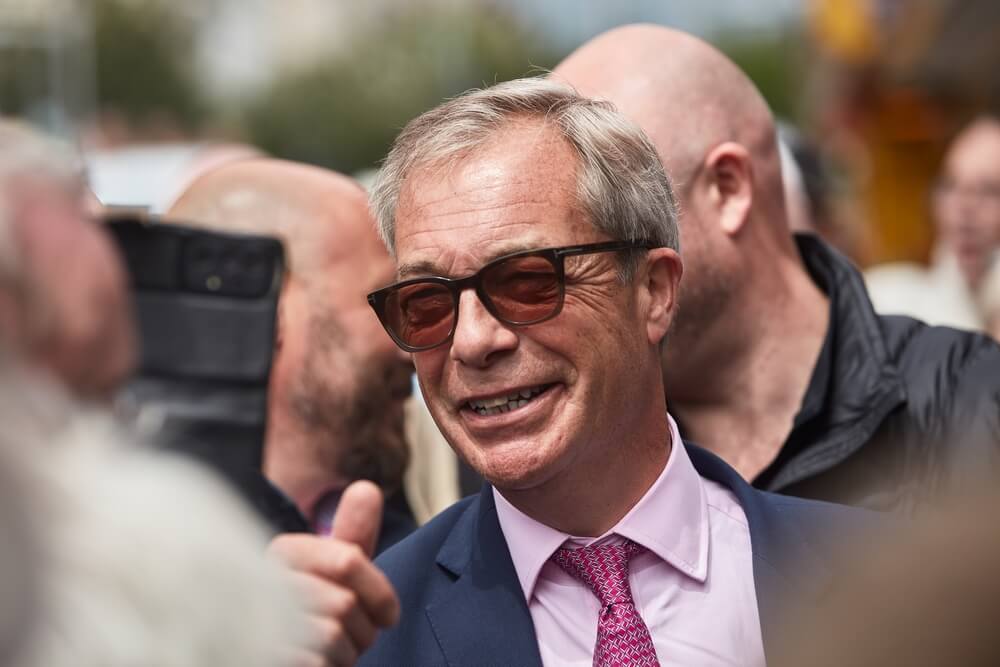 The current fracturing of UK politics, with traditional parties being eclipsed in recent local polls while insurgents from left and right are on the rise, can be traced back to the 2016 vote - Nigel Farage
Although his party’s hostility to immigration may be the principal bait for many voters, others may go along with the argument that leaving the EU was the right choice but that the execution was flawed.
The current fracturing of UK politics, with traditional parties being eclipsed in recent local polls while insurgents from left and right are on the rise, can be traced back to the 2016 vote.
One legacy is a widespread distrust of politicians of all stripes and a coarsening of public debate. It was once unthinkable to brand an opponent as a traitor until betrayal became the byword for any argument that challenged Brexit orthodoxy.
The Guardian columnist Jonathan Freedland wrote this month: “In 2026, we wade through a swamp of lies and disinformation all the time, especially online – but it was the referendum that drove us into that swamp and at top speed.”
Despite the evident negatives of Brexit, no fundamental change in relations with the EU is expected in the current parliament.
Labour has ruled out rejoining the European single market and customs union.
But ten years on, Bregret means the UK has yet to bury the traumas of Brexit, let alone find cause to celebrate. The once in a lifetime vote failed to resolve the divisions it created.
As pollster John Curtice recently concluded, “Perhaps another referendum will not happen in the next five years.
However, unless public attitudes towards EU membership shift once again, it is difficult to believe the 2016 referendum will prove to be the final word.”
