Russia’s economic system is sustained exclusively through strict manual control. This indicates a deep structural dysfunction.
The real sector of the Russian economy is experiencing one of its most severe crisis phases, characterised by growing isolation, a lack of transparency, and increasing instability.
Russia’s financial system is operating in a mode of “managed chaos”. Concealment of realities has become an integral part of state policy.
The Central Bank of Russia has effectively abandoned internationally accepted transparency standards.
Starting in 2027, banks will publish only aggregated data on their owners. About one-third of Russian entrepreneurs expect their businesses to close within the next six months.
Banks deny consumer loans to 90% of applicants. At the same time, the profitability of pawnshops has increased by 54% over the year, driven by problems in the banking sector.
Russia’s revenues from energy exports in 2026 are likely to amount to only 22% of total budget revenues, compared with the previous 40–50%.
The Russian budget has effectively become a wartime budget: more than 40% of all expenditures are directed towards security and defence.
In the first nine months of 2025, Russia’s military spending reached 11.8 trillion rubles—four times more than in 2021.
Each day, the war consumes 43.4 billion rubles, which equals 44% of all federal tax revenues.
At the same time, Russia is becoming increasingly dependent on China, from which up to 87% of goods critical to the military industry are supplied.
Russia’s Reserve Fund has shrunk to approximately $50 billion. This is half the level at the start of the war and could be exhausted during 2026.
Tightening of the oil market
An additional blow to Moscow came from developments in the oil market. India announced a 28% reduction in purchases of Russian oil.
As a result, Russia is forced to store around 140 million barrels of unsold crude on tankers.
Subsequently, U.S. President D. Trump stated that Indian Prime Minister Modi had agreed to stop buying Russian oil altogether.
Trump believes that India will resume purchases of Venezuelan oil, emphasising that New Delhi would buy it “instead of Iranian oil”.
This implies a replacement of Russian imports, on which India relies as the world’s third-largest oil importer.
Beijing is being offered an alternative to Russian oil
Thus, the United States is reducing the dependence of key Asian markets on Russian raw materials, creating competitive pressure on Russia’s Urals oil and redistributing energy flows in favour of alternative suppliers.
Separately, Trump invited China to join this arrangement, stating that “China is welcome and will make a great deal on oil.”
Although no details were provided, the signal is clear: Beijing is being offered an alternative to Russian oil. In the long term, this could undermine a key source of foreign currency revenues for the Kremlin.
Against the backdrop of these statements and signals of de-escalation between the United States and Iran, oil prices fell by nearly 5%, marking the sharpest one-day drop in six months.
Brent fell to around $66 per barrel, and WTI to around $62 per barrel. The market reacted by removing the “geopolitical premium”, further hitting exporters’ revenues.
Kremlin’s revenues may shrink dramatically
For Russia, the consequences are critical. More than 40% of federal budget revenues are generated by oil and gas exports.
Falling prices reduce margins. Venezuelan oil is displacing Russian volumes in India and possibly later in China.
In conditions of global oversupply and recovering Venezuelan production, the Kremlin’s revenues may shrink dramatically—by tens of billions of dollars annually—directly complicating the financing of military operations.
A forecast has been published by Russia’s Center for Macroeconomic Analysis and Short-Term Forecasting, which is close to the government.
Over the next three years, real wages are expected to grow by only 1%. In 2023–2024, real wages grew by 8.2% and 9.7%, respectively, but in 2025 growth began to slow.
The situation in the Russian economy is deteriorating, making it impossible to raise wages at previous rates
The situation in the Russian economy is deteriorating, making it impossible to raise wages at previous rates.
Growth is slowing, corporate profits are falling, and investment has stopped growing. Profitability in most sectors has fallen below lending rates.
Overall, the Russian economy is experiencing stagnation, even stagflation. Periodic wage increases are coming to an end, and more and more enterprises will be unable to sustain wage growth.
Within GDP, labour compensation has effectively crowded out other income components, primarily gross profits.
Loans are becoming too expensive
Russia is also seeing a record decline in cash loan issuance. In 2025, issuance reached a six-year low. During the year, 18.23 million such loans were issued, totalling 3.37 trillion rubles—40% fewer in number and 41% less in volume than in 2024.
The reduction in cash lending is a signal of serious economic problems. It reflects deeper processes rather than an isolated phenomenon.
High interest rates are behind this decline, as the Central Bank of Russia is pursuing a tight monetary policy. Loans are becoming too expensive, demand is falling sharply, and servicing old debts is becoming more difficult.
Overall, this is a sign of inflationary pressure and instability rather than a healthy economy.
Consumer cash loans often substitute for real income growth and are used to cover basic expenses
In Russian realities, consumer cash loans often substitute for real income growth and are used to cover basic expenses, not just purchases.
When such loans decline, it almost always indicates stress in the financial system or among the population.
In general, the contraction of cash lending reflects declining household purchasing power and problems in the banking sector and serves as a marker of structural economic issues.
Additional taxes
At the same time, Russian tax authorities are demanding that businesses pay additional taxes for periods more than three years ago.
Experts link this trend to growing problems with Russia’s budget deficit. Pressure on business is increasing as budgetary problems worsen.
In 2025, the deficit reached 5.7 trillion rubles—a record since the pandemic. The government had planned to reduce the shortfall to 3.8 trillion rubles this year, but this did not happen.
The government faced a sharp collapse in oil and gas revenues. In January 2026, Urals oil prices fell to $35–37 per barrel instead of the $59 assumed in the budget.
As a result, in the first month of 2026, the Russian treasury received only 415 billion rubles in oil and gas tax revenues—the lowest level since 2020. Sanctions, although gradual, are leading to the accumulation of fiscal problems and complicating the maintenance of budget stability.
The authorities are seeking to save the federal budget from falling oil and gas revenues
If current oil prices and the ruble exchange rate persist, the budget could lose about 3 trillion rubles in oil and gas revenues.
Russian businesses have not yet adjusted to the significant increase in value-added tax, but the government is already discussing the introduction of new taxes and further increases to existing ones.
The authorities are seeking to save the federal budget from falling oil and gas revenues, which sharply accelerated at the beginning of 2026.
Accordingly, the Ministry of Finance has prepared a draft decree introducing an export duty on diamonds.
The Ministry of Natural Resources and Ecology has sharply increased environmental impact fees for businesses. In metallurgy, these fees will rise 9–20 times in 2026–2030; in gold mining, 15–25 times; and in the oil and gas sector, fivefold.
Moscow is forced to negotiate on Ukraine
At the same time, the Russian Ministry of Finance proposed to Putin the legalisation of online casinos and the collection of 30% of their revenues as a tax, which would bring about 100 billion rubles to the federal budget.
The ministry is also considering a new tax on imports of large batches of non-food goods. The state is expected to continue raising taxes on both the population and businesses—unless the situation with Russian oil prices improves.
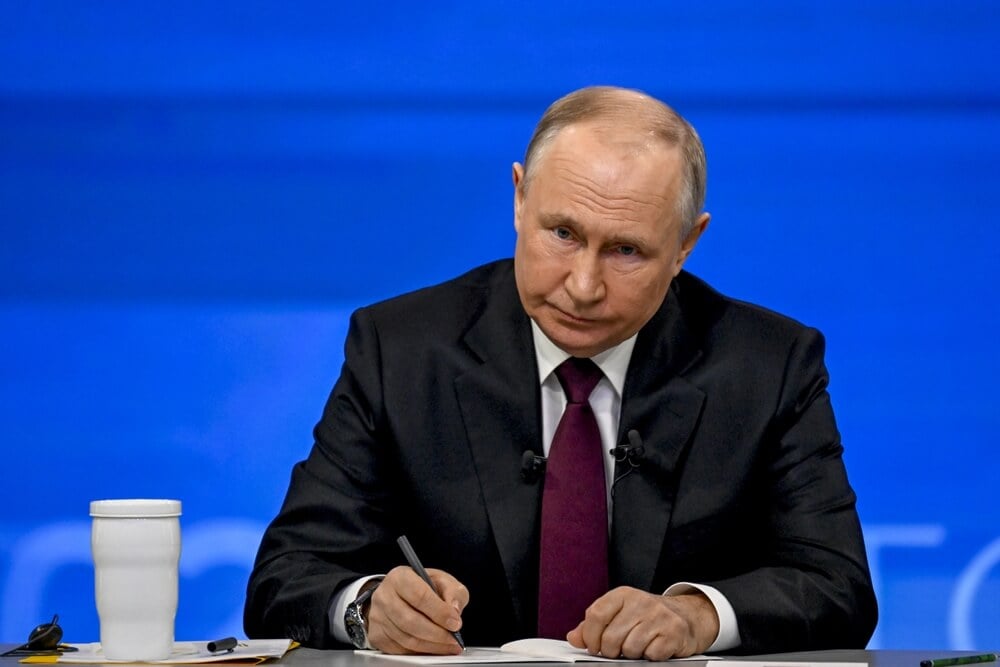 If Putin does not agree to peace, Moscow faces a very difficult 2026 and an even worse 2027
Currently, Urals crude is sold for export at $35–37 per barrel, with some batches for Indian refineries priced at $22–25.
Thus, Russia’s economy is in a stage of depletion and a pre-crisis condition. This means that Moscow should be highly interested in negotiations.
The Kremlin pretends that it needs to be persuaded to achieve peace, but in reality, Putin is bluffing.
If he does not agree to peace, Moscow faces a very difficult 2026 and an even worse 2027.
Russia may simply be unable to withstand this economically. If, in addition to India, China also abandons Russian oil, it would mean the collapse of the Russian economy. This must be taken into account during the negotiations in Abu Dhabi.
Oleksandr Levchenko, a former Ukrainian diplomat, is a professor at the State University (Kyiv) and a member of the Academy of Geopolitics and Geostrategy (Kyiv).
