UK government planners are scrambling to find the money to speed up an already promised increase in defence spending after Prime Minister Keir Starmer described hard power as the currency of the age.
His aides are reported to be looking at ways to bring forward an existing pledge to boost defence since Starmer told European allies at the Munich Security Conference at the weekend that to confront the threats they face: “It's clear that we are going to have to spend more, faster.”
That has raised concerns that the government might be contemplating plundering some of the resources that support the UK’s influential soft power assets to meet the costs of a hard power age.
Boxes above its weight
Despite the decline in its post-war global clout, Britain has managed to retain an outsize influence in areas ranging from diplomacy to humanitarian aid to media, science and the arts that has allowed successive governments to boast that the country boxes above its weight.
Like weapons of war, soft power does not necessarily come cheap
But, like weapons of war, soft power does not necessarily come cheap, meaning there are difficult choices that the government strategists may have to make.
The concept of soft power was popularised in the late 1980s by the American political scientist Joseph Nye, who defined it as a means by which states employ influence rather than coercion to obtain the outcomes they seek.
In the UK’s case, successive governments have used a sophisticated and extensive diplomatic presence in global forums to promote their stance on democracy and the rule of law, on human rights and climate change.
At home and abroad, they have also deployed funds to enhance Britain’s international status as a provider of higher education, cultural exports and trusted news.
A soft power retreat
However, economic setbacks that predate the current focus on defence had already prompted a soft power retreat that threatens to accelerate in a more uncertain world.
Since the current government launched a Soft Power Council a year ago, with the aim of helping to enhance security and drive economic growth, fiscal policy appears to have headed in the opposite direction.
Cuts to overseas aid, combined with staff reductions at the Foreign Office and financial pressures on universities, the arts and the BBC World Service, have put some of the UK’s most crucial soft power assets at risk.
MPs on international development committee this month urged ministers to pause plans to slash 2,000 UK staff at the Foreign, Commonwealth and Development Office
That has prompted politicians and interested parties to urge the government to think twice at a time when other states - and not just friendly ones - are seeking to extend their soft power influence.
MPs on parliament’s international development committee this month urged ministers to pause plans to slash 2,000 UK staff at the Foreign, Commonwealth and Development Office until current aid plans and their impact on the world’s poor are assessed.
“We have no time to lose”
The head of the BBC, meanwhile, warned that funding for its World Service would run out within weeks unless a renewed government subsidy was in place.
The World Service, which broadcasts to 300 million people worldwide in more than 40 languages, relies on the Foreign Office for around a third of its £400 million annual budget.
“As a country, we face big decisions about our role in the international arena” - Tim Davie
BBC Director-General Tim Davie said the looming funding gap came at a time when other Western news organisations were cutting their international reporting teams.
Disinformation was meanwhile flooding the digital sphere, and media firms backed by states such as Russia and China were using AI to promote propaganda.
“We have no time to lose,” he told a forum on global media security. “As a country, we face big decisions about our role in the international arena.”
Coercion once more threatens to trump cooperation
This and similar warnings from other relevant sectors perhaps reflected a perception that the soft power of countries like the UK may be on the wane, with or without the funding factor.
The consultancy firm Brand Finance, which puts together an annual global soft power index - the UK placed fourth in the latest rankings behind the US, China and Japan - noted in its latest 2026 assessment:
“Western nations account for a disproportionate share of the decline. The US, UK, Germany, and France all record sharper-than-average drops, reflecting growing scepticism about their ability to deliver on long-standing promises of stability, prosperity, and leadership.”
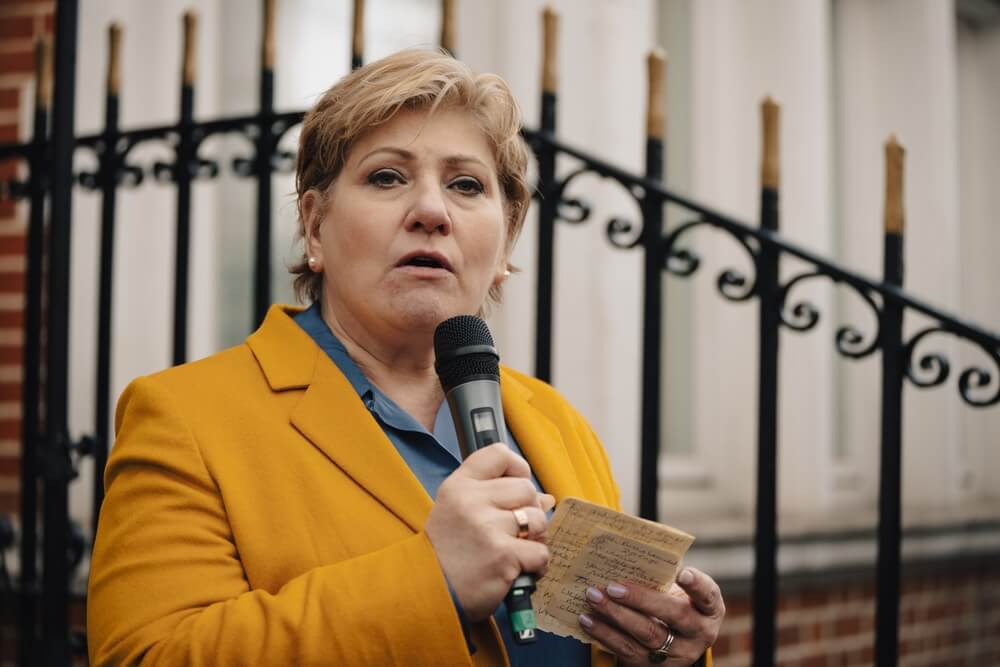 While the UK has successfully made the case for democratic values in the past, new, competing narratives seek to undermine this - Emily Thornberry
During a parliamentary inquiry into soft power last year, the foreign affairs committee chair Emily Thornberry cautioned that the UK should not be complacent.
Countries such as Russia and China were stepping up their game and were ready to fill any gaps left by the UK and other like-minded countries.
“While the UK has successfully made the case for democratic values in the past,” she said, “new, competing narratives seek to undermine this.”
In a relatively upbeat assessment last year, the Labour party-aligned Labour Together think tank reported that its research found the UK remained firmly within the top tier of soft-power countries.
Its author, Jonathan McClory, nevertheless acknowledged that its soft power status had declined due to post-Brexit “political instability and a distinct lack of an overarching national narrative”.
A further decline could be engendered by the UK’s continuing political factionalism.
That would be a self-imposed defeat and a victory for the hard-nosed “realists” who regard soft power as a comforting conceit in a world in which coercion once more threatens to trump cooperation.
