As negotiations edge towards a ceasefire, Tehran is trying to blame the country’s economic collapse on the war and foreign pressure.
Yet the data tell a different story: Iran’s economy was already structurally broken before the war. Years of ideological policymaking, institutionalised corruption, and the militarisation of the economy have caused Iran’s economic ruin.
Iran has been in a state of permanent economic emergency since at least 2018. Official inflation has remained above 40% year after year, destroying the country’s middle class.
World Bank estimates show average inflation in the high 30s for most of the 2018–2025 period, with spikes of up to 60%, driven by massive currency depreciation and the constant monetisation of fiscal deficits.
Monetary collapse and the myth of sanctions
Since 2018, the rial has lost almost 95% of its value against the dollar, including a depreciation of more than 60% just between 2024 and 2025.
This collapse stems from relentless money printing to finance uncontrolled budget deficits, a domestic loss of confidence in the currency, capital flight, and a regime that has treated the central bank as a mere financing arm of the state.
All of this has happened while the government received billions of dollars from oil exports and enormous financial support from China, Russia, and other Asian countries.
This is a state that prints money without restraint or underlying demand
The regime insists that Western sanctions are the primary cause of hardship. This is a convenient but false excuse.
The Iranian regime has not fallen into economic crisis because of U.S. sanctions. It has dozens of trade agreements with the world’s largest economies and generates enormous oil income from exports of more than 1.3 million barrels per day.
The problem is that practically none of this wealth reaches ordinary citizens. This is a state that prints money without restraint or underlying demand, borrows heavily from its own banking system and generates capital flights while its currency collapses.
Financing terror and institutional corruption
The elimination of Mohammad Reza Ashrafi Kahi, head of Trade at the Oil Headquarters, exposed a multibillion-dollar structure that financed the military activities of the Revolutionary Guard, Hamas, Hezbollah, and other armed groups using revenues from crude oil sales.
Between November 2024 and November 2025, government debt to the banking system increased by 41% and debt to the central bank by 68%, forcing the authorities to monetise the deficit.
Over the same period, commercial banks increased their borrowing from the central bank by 63%, flooding the economy with worthless local currency.
Official sources cited by the oil exporters’ association report 47 billion dollars in crude oil and gas export revenues in 2025
As a result, the money supply was growing at annual rates of more than 40%, according to official data compiled by expert Mohamad Machine Chian, with the rial plunging despite massive export revenues.
These huge oil revenues are used to finance corruption and terror. Official sources cited by the oil exporters’ association report 47 billion dollars in crude oil and gas export revenues in 2025.
With that level of income, the economy would be growing, and inflation would be moderate if the funds were used to benefit Iranian society and its productive fabric.
Instead, reports on capital outflows describe a clear pattern: money leaves Iran faster than it comes in, which forces the regime to rely even more on the printing press and on internal fiscal plunder, according to the BTI Project.
IRGC dominance and the destruction of the private sector
Iran has implemented all the measures that demolish an economy: legal and investor insecurity, expropriations, price controls, subsidies, and an oversized public sector that preys on a private sector now reduced to barely 15% of the economy.
When oil revenues are diverted to finance terrorist and military projects, the government tries to create an illusion of strength through monetary financing and opaque off-budget operations, accelerating inflation and currency collapse.
Over decades, the Guards have transformed themselves from a military organisation into a sprawling business empire
At the heart of Iran’s self-inflicted economic damage lies the Islamic Revolutionary Guard Corps (IRGC). Over decades, the Guards have transformed themselves from a military organisation into a sprawling business empire that now controls an estimated 45–50% of economic activity.
Through parastatal conglomerates, front companies, and privileged access to state contracts, the IRGC dominates key sectors including energy, construction, telecommunications, and transport (Iran: Institutionalized Corruption and a Collapsed Economy, Shamsi Saadati).
The human cost and obstacles to recovery
This dominance has several destructive effects.
Crowding out productive investment. Most oil and state revenues are sent to IRGC-linked entities. A large part of resources is used to finance regional terror groups and foreign expansion adventures.
While other oil exporters built sovereign wealth funds, invested in human capital, and diversified into services and manufacturing, Iran’s regime used oil rents to entrench political control, finance terror, and reward cronyism.
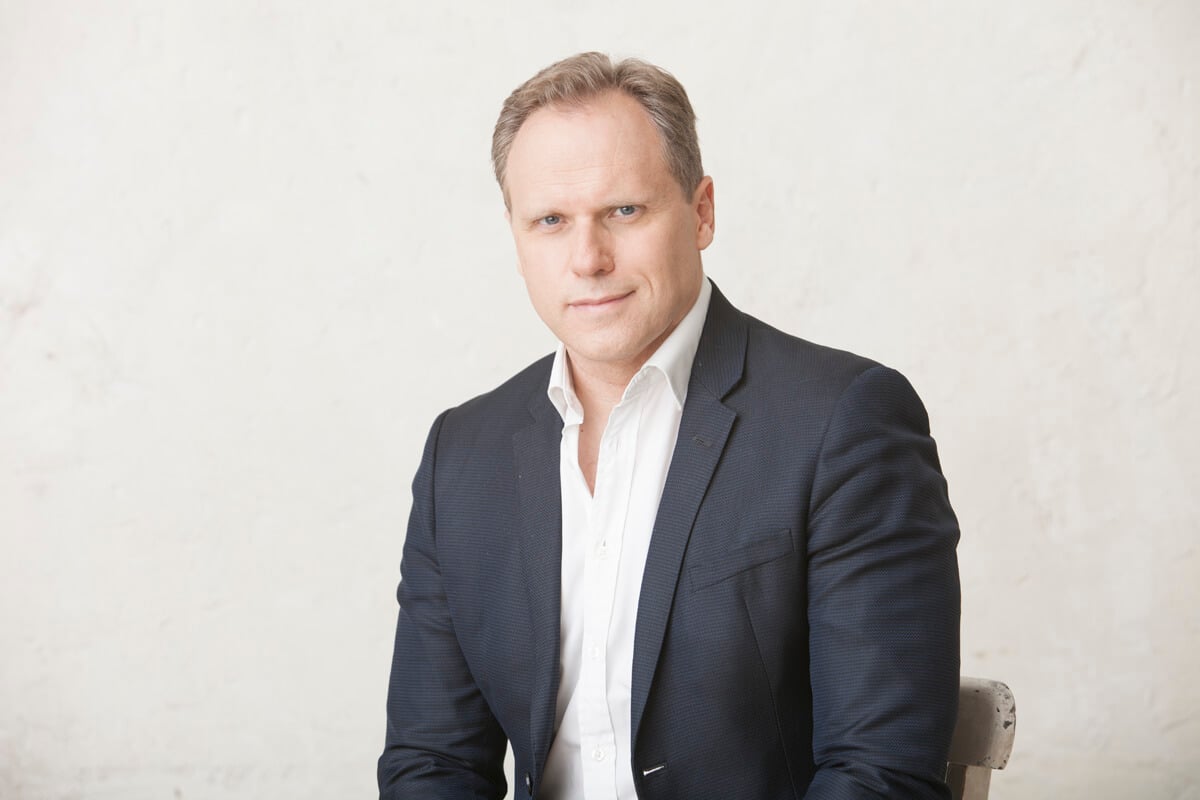 The challenge for any future government will be to rebuild an economy that serves citizens rather than a narrow circle of officials - Daniel Lacalle
The human cost of this mismanagement created poverty and unrest. Years of high inflation have pushed most of the middle class into poverty by wiping out savings and eroding wages in real terms.
By the time the current war began, the economy was already in deep crisis.
The main obstacles to recovery are political rather than technical. Iran needs fiscal discipline, central bank independence, transparent budgeting, a sharp reduction in the IRGC’s economic dominance, and a credible commitment to the rule of law and property rights.
Instead, the regime has consistently chosen its survival, imposing a system of terror and sacrificing growth and prosperity to maintain political control.
Long before the first bomb fell, the regime had already destroyed the economy and any prospect of sustainable growth and social stability.
The challenge for any future government will be to rebuild an economy that serves citizens rather than a narrow circle of officials.
Ending the war is urgent; ending the current regime’s economic model is essential.
