The UN headquarters in New York will soon gather world leaders for the 81st annual General Debate of the UN General Assembly. Once again, there will be no shortage of major global crises on the agenda; this time the war in Iran, with all its global consequences, has been added as one of the most serious crises the UN has faced since its foundation.
Beyond the main stage, where, from 22 to 26 September, in line with tradition, world leaders will speak in turn, a great deal of political manoeuvring will take place away from the public eye.
On the agenda is the election of a new UN Secretary-General, who will lead the world organisation from January 2027, as António Guterres’s second five-year term comes to an end.
UN procedures require that the Secretary-General be elected by the end of this year, but in previous cases this has happened precisely in the period we have now entered, from August to November.
This means that the upcoming annual UN meeting will also mark the conclusion of the complex process of selecting the next Secretary-General. Although the decision will be formally confirmed later, the real choice will be made during the New York summit.
An uncertain race
The outcome of the election of the next UN Secretary-General will reflect the positive assessments of the most influential UN members, the great powers, above all the five permanent members of the Security Council: the US, China, Russia, the UK and France.
Moreover, this choice will be determined by the least negative attitudes of the great powers towards each candidate.
Guyana's top diplomat in New York, Carolyn Rodrigues-Birkett, is in the strongest position
At this moment, after several informal votes (straw polls) in the Security Council, Guyana's top diplomat in New York, Carolyn Rodrigues-Birkett, is in the strongest position, with eight encourage votes, just one short of the critical threshold, which in practice means a green light for election.
She is followed by the Costa Rican Rebeca Grynspan, head of the UN Conference on Trade and Development (UNCTAD), and the Argentine Rafael Grossi, head of the International Atomic Energy Agency (IAEA).
This ranking of candidates may change during the next stages of decision-making, but it already reveals several trends that are likely to persist until the end.
A woman at the head of the UN
The next Secretary-General will probably come from Latin America: six candidates are from that continent and two are from Africa.
This results from a system of geographical rotation, so it is now Latin America's turn among the global regions. The last Secretary-General from this continent was the Peruvian Pérez de Cuéllar, who served from 1982 to 1991.
Second, the new head of the UN will most likely be a woman for the first time, a point on which the most influential countries have little disagreement.
The UN Secretary-General is expected to be someone with extensive leadership experience within this large and complex system
Furthermore, over the next five years the UN Secretary-General is expected to be someone with extensive leadership experience within this large and complex system, rather than an outsider, which will be very important for the functioning of a large bureaucratic apparatus facing major financial and organisational problems.
From a political point of view, the outlook is much more uncertain, although it will be crucial in the final phase.
Rafael Grossi, for example, is the target of a negative campaign from Russia, which criticises him for refusing to visit the Russian-controlled Zaporizhzhia nuclear power plant in the occupied area of Ukraine.
His prospects have been diminished by the recent escalation by Argentine President Javier Milei in relation to the Falkland Islands, given that Grossi's nomination came from the government in Buenos Aires.
As a permanent member of the Security Council, the UK will probably not publicly oppose Grossi's candidacy, but the shadow of cooling relations with the Argentine government that nominated him will certainly hang over the decision-making process behind closed doors in New York.
Great powers do not stand aside
The major powers are not indifferent to the election of the UN Secretary-General, even though they increasingly seek to address global problems and crises outside the UN.
Their ambivalent position is unsurprising. On the one hand, they will continue to exert global influence through their own economic, military and diplomatic power.
On the other hand, none of them has any interest in completely marginalising the role of the UN, bearing in mind that at some point they will need UN mechanisms to advance aspects of their political and economic agendas, whether concerning security crises, climate issues or global financial models.
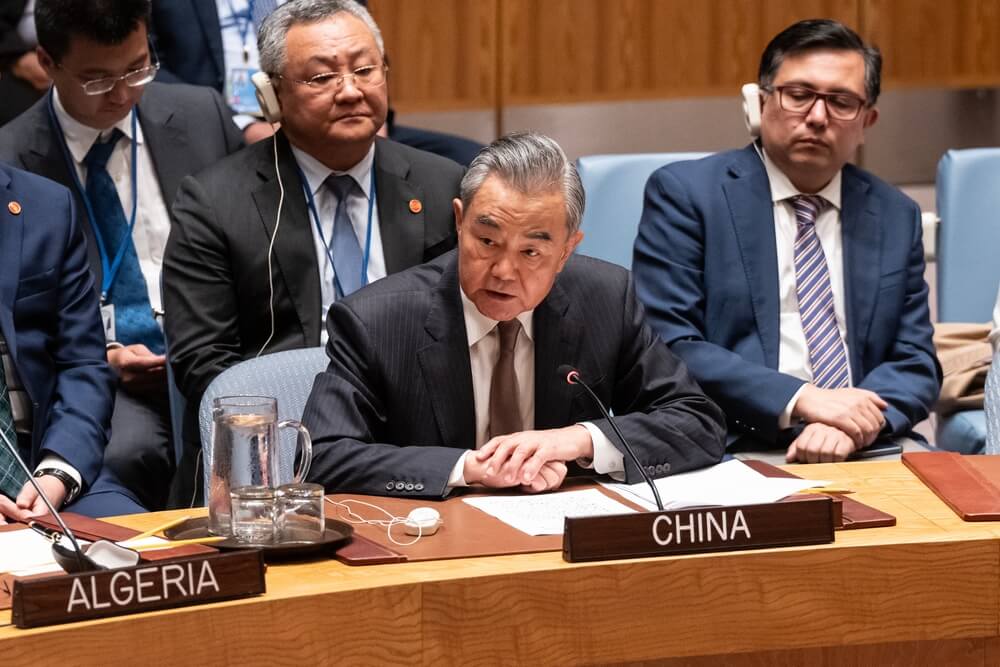 China wants a diplomat at the top of the UN who will not challenge Beijing’s stated commitment to a multilateral model for addressing global issues
The US government, the strongest opponent of multilateralism, is certainly interested in who will lead the UN over the next five years, and thus in shaping the agenda of the world organisation.
The fact that the future UN Secretary-General will be Latin American aligns with the foreign policy and security strategy of the Trump administration, in which Latin America occupies a central and top-priority position.
China wants a diplomat at the top of the UN who will not challenge Beijing’s stated commitment to a multilateral model for addressing global issues.
Excluded from many international diplomatic and economic channels because of its aggression against Ukraine, Russia does not want to lose its influence in the UN, one of the few forums in which it still plays a significant role.
Not without reason, Moscow has previously insisted, and will do so even more in future, that any peace agreement regarding Ukraine be verified by the UN. Moscow will want the UN’s stamp on the resolution of its most important interest because, as a permanent member of the Security Council, it will be able to influence developments concerning Ukraine in the postwar period.
Taken together, this makes the election of the UN Secretary-General a major battleground of global diplomacy, even though the organisation is almost paralysed as a forum for resolving crises.
No one expects the future head of the UN to engineer a turnaround and restore the organisation to the position it held until recently. But none of the major actors is relinquishing its role entirely, and none of them wants to hasten the UN’s demise. Each of them will need it at some point.
