On 9 September, Edson Fachin, President of Brazil's Federal Supreme Court (STF), suspended two mutually incompatible decisions by his colleagues on the leadership of the Federal Police and called an extraordinary plenary session for 15 September.
Justice André Mendonça had ordered the temporary removal of the Federal Police Director-General, Andrei Rodrigues, and the Intelligence Chief, Leandro Almada, the previous day.
Justice Flávio Dino reinstated them the following morning, and Fachin halted both the removal and the reinstatement a few hours later, leaving Rodrigues in charge of the police until he had considered Rodrigues’s petition and the plenum had opened a debate on the conflict engulfing the court.
The STF is Brazil’s highest court and the main guardian of the federal constitution, but in certain criminal cases it also tries the highest state officials at first and only instance. Its plenary session is a full session of the court at which all serving judges sit.
The constitution provides for 11 members, but one seat is currently vacant, so the plenum consists of 10 judges. When a case is brought before the plenum, the decision is made by the court as a whole, not by the single judge responsible for the proceedings.
In less than 24 hours, Brazil received three court orders concerning who leads the most important federal investigative body.
Under Brazil’s procedure, the judge in charge of a particular case, called the judge-rapporteur, may make an emergency interim decision alone before the other members of the court vote.
Such individual decisions do not have a mutual hierarchy, so a subsequent order by one judge does not automatically override the order of a colleague.
In this case, the decisions were issued in different proceedings that began to overlap because they relied on the same police documents and involved the same state officials. Fachin considered that such overlap was causing serious damage to public order and to the integrity of the court. His intervention temporarily restored order, but at the same time confirmed that the institution’s normal way of working could no longer contain the conflict among its members.
Two judges changed the leadership of the police in a single day
André Mendonça, a member of the STF since December 2021 and former Justice Minister in Jair Bolsonaro’s government, is handling cases related to Banco Master as the judge-rapporteur.
On 8 September, he removed Rodrigues and Almada over allegations that units of the Federal Police were producing intelligence reports intended to monitor him and other government officials.
The decision included suspending the preparation of certain police reports until their purpose, legal basis and method of use are determined. In a virtual vote by the Second Chamber, one of the two smaller chambers of the STF, a majority supported Mendonça’s measure before further deliberations were halted at the request of one judge, who wished to examine the case in more detail.
The presidential administration challenged the removal of the police chiefs
The presidential administration challenged the removal of the police chiefs. Brazilian law stipulates that the Director-General of the Federal Police is appointed by the President of the Republic and that only a police delegate of the highest career rank can perform this role.
The Advocacia-Geral da União, the state body that represents the federal government in legal proceedings, argued that Mendonça had exceeded his authority, encroached on the president’s prerogatives and jeopardised investigations that Rodrigues leads or oversees.
However, the president’s power to appoint does not shield any official from legal action when lawful grounds exist. The dispute concerns whether such grounds were established and whether the judge, who appears in the documents whose legality he is examining, was permitted to rule on them.
Flávio Dino, a former federal judge and Minister of Justice in the government of Luiz Inácio Lula da Silva before moving to the STF in 2024, intervened on 9 September in another confidential case for which he is the judge-rapporteur. In that investigation, police are examining suspicions that funds which Brazilian parliamentarians can direct to individual projects have improperly ended up with organisations and individuals associated with the production of the film Dark Horse, about Jair Bolsonaro.
Dino accepted Rodrigues’s submission that a sudden change in police leadership could derail the investigation and the execution of his court orders. In his ruling, he openly questioned Mendonça’s impartiality, arguing that a judge should not determine the consequences of police reports that directly implicate him.
His decision reinstated the two officials, but at the same time created a situation in which two separate court rulings, issued in different proceedings, required conflicting actions by the President and the Federal Police.
Fachin suspended both orders in proceedings he had instituted on 3 September to collect documents and statements on the work of the police intelligence service. Rodrigues effectively remained in office but was given 48 hours to respond to the allegations, while Mendonça was given 72 hours to explain the basis for his decision.
On 15 September, the plenary will also consider proceedings that could lead to an investigation into Alexandre de Moraes, the Vice-President of the STF and a judge who has led a wide-ranging investigation into threats, false accusations and organised campaigns against the court since 2019.
It was Moraes’s possible contacts with the owner of Banco Master and his request to investigate Mendonça’s conduct that triggered much of the current conflict.
Banco Master brought the court into its own investigation
At the centre of the crisis is Operation Compliance Zero, a major police investigation into Banco Master, a private bank liquidated by Brazil’s Central Bank in November 2025.
Investigators are examining suspected financial fraud and how Master dealt with Banco de Brasília, a bank controlled by the Federal District government, where the capital is located.
The investigation then turned to the connections of Master’s former owner, Daniel Vorcaro, with politicians, regulators and members of the judiciary.
When officials appear in the evidentiary material who, under the constitution, must be tried directly by the STF, the corresponding part of the case goes before that court and is assigned its own judge-rapporteur.
Vorcaro and other suspects dispute the allegations, while a large part of the case has not yet gone to trial or reached the stage at which the facts are established by the court.
Material extracted from Vorcaro’s telephone contains 52 messages sent between 28 October and 17 November 2025 to a number identified by the Federal Police as belonging to Moraes.
The police investigated the banker and recorded his contacts with the judge. Another judge released some of that material
According to the published police report, Vorcaro asked about the progress of the proceedings against the bank and whether he should leave the country.
These messages justify examining the nature of their relationship, but they do not prove that Moraes intervened in favour of the banker or committed an offence. For such a conclusion, the identity of the participants, the full content of the communication, any responses and specific actions taken after those contacts would have to be established.
During the proceedings, Mendonça asked the Federal Police for information about Daniel Vorcaro’s alleged network of influence, and the police material he received mentioned Moraes.
When Mendonça made part of that material public, Moraes asked the President of the court to review his actions for possible abuse of authority, breach of official duty and responsibility for the publication and use of data.
Moraes relied on an internal police report on the way Mendonça handled cases related to Master. Mendonça then cited the creation and use of such intelligence reports as the basis for removing the two men who lead the Federal Police.
The police investigated the banker and recorded his contacts with the judge. Another judge released some of that material. That judge then requested a review of his colleague, and the colleague responded by removing the people who run the police. Then, in another case, Dino annulled the practical effect of that measure. No single step in that sequence alone proves the guilt of Moraes, Mendonça, Rodrigues or Almada, but taken together they reveal that the proceedings are linked in a way that makes it difficult to independently verify each individual allegation.
When the judge decides on matters that concern him
The Brazilian Supreme Court has extensive powers, derived from its constitutional status, the large number of proceedings it handles and the right of individual judges to issue urgent interim decisions. This framework allows swift protection of constitutional rights and the effective functioning of state bodies, but it becomes unstable when cases assigned to different judges begin to intersect and the decision of one member of the court immediately affects the position of another.
A judge who believes he has been subjected to unlawful police surveillance has the right to seek protection and an independent investigation. However, his personal determination of the consequences for the heads of the authority he alleges carried out that surveillance raises serious questions of impartiality, even if his suspicions are justified.
A similar problem arises when another judge attempts to neutralise the practical effect of a colleague’s decision, having publicly and institutionally clashed with that colleague in a separate case.
The focus then shifts to identifying a body that can decide the matter without being constrained by its own position in the dispute, since even a convincingly reasoned individual order cannot dispel doubts about the impartiality of its author.
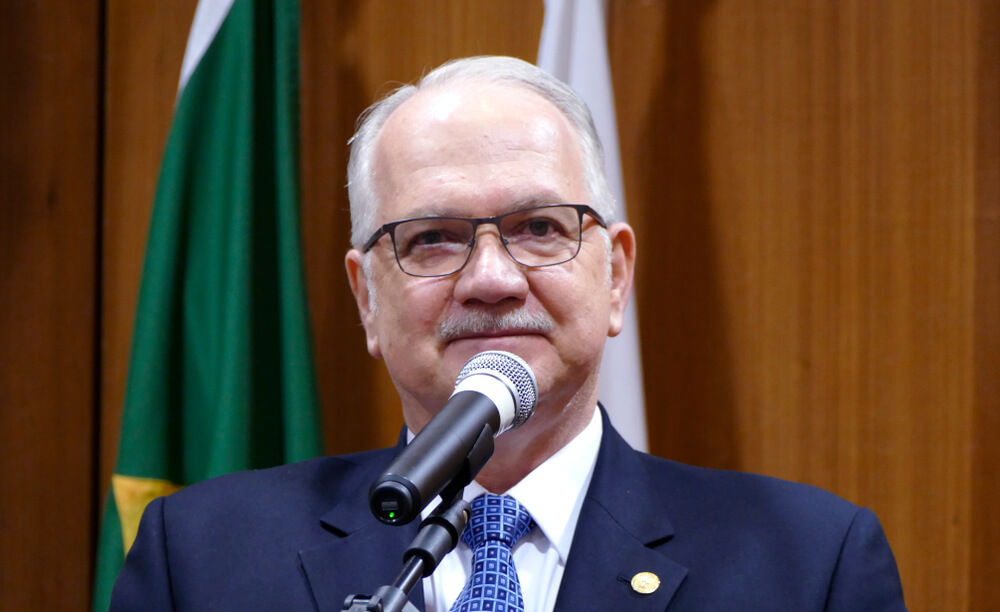 Edson Fachin halted the conflict of individual decisions by placing all related proceedings under the supervision of the President of the Court and the full plenum
Fachin halted the conflict of individual decisions by placing all related proceedings under the supervision of the President of the Court and the full plenum.
At the same time, he ruled that any initiative to investigate a member of the STF must first be submitted to the President of the Court. In doing so, he prevented the adoption of new contradictory orders, but his decision did not resolve the issue of impartial oversight, since the initiation of an investigation into judges is still decided by the institution whose members may be the subject of that investigation.
A credible inquiry would have to examine separately Moraes’s and Vorcaro’s contacts, the lawfulness of the police reports, Mendonça’s handling of classified material and the possible responsibility of the police leadership. Turning these issues into a personal and institutional confrontation increases the risk that the decision will be assessed according to who benefits politically, rather than according to the evidence and the competences on which it rests.
Who really runs the Federal Police?
The Federal Police is part of the Ministry of Justice; its Director-General is appointed by the President of the Republic and, as the federal criminal police, it executes court orders and conducts investigations that may involve the highest state officials.
This position requires genuine operational independence from the government, but also protection against any judge who might use a change in leadership to influence a case in which they have a personal interest. Police autonomy, however, cannot serve as a shield against scrutiny of potentially unlawful data collection.
With the temporary removal of both chiefs, the senior leadership of the body responsible for many politically sensitive investigations was immediately changed
Mendonça’s decision went beyond his order to determine who had requested the disputed reports, what data the police were collecting and what legal basis they had for doing so. With the temporary removal of both chiefs, the senior leadership of the body responsible for many politically sensitive investigations was immediately changed.
Dino issued an order protecting the chiefs until the police complied with his directions in an entirely unrelated case. Both of them subordinated the position of the entire institution to the needs of proceedings they were personally managing.
The plenum cannot restore trust simply by choosing one of these two options. It must establish a rule that will remain valid even when judges, police leadership and the governing party change. Without such a rule, any future dispute over a police investigation involving a member of the court may once again turn into a contest of individual orders.
Fachin interrupted a never-ending investigation
On 9 September, Fachin took another step whose impact is likely to outlast the Rodrigues dispute. Order No. 189 revoked Moraes’s authority to lead the investigation known as the inquérito das fake news.
The then President of the STF, Dias Toffoli, opened it in 2019 on the basis of the court’s rules and appointed Moraes as judge-rapporteur without the usual random selection of judges. The case initially covered threats, false accusations and organised campaigns against judges and the Supreme Court itself, but in the following years it expanded to include networks that attacked the electoral system and encouraged the overthrow of the democratic order.
The measures adopted earlier remain in force, while the criminal proceedings in which the indictment has already been accepted remain with Moraes.
The investigation was launched during a period of serious attacks on the court
Unfinished preliminary investigation matters, petitions and other preliminary proceedings are returned to the President of the Court, who will decide on their referral to the Federal Police and the Prosecutor-General’s Office. Fachin limited Moraes’s further control without reopening the question of the legality of every order issued over the previous seven years.
The investigation was launched during a period of serious attacks on the court, and later came to include proceedings related to campaigns against the electoral system and an attempt to overthrow the constitutional order by violent means. Over time, however, its scope expanded, its duration lengthened and extensive investigative and judicial powers remained concentrated in a single judge. When Moraes himself appeared in the police material related to Banco Master, this concentration became a burden on the credibility of the entire proceedings.
By taking over unfinished cases, Fachin preserved legal continuity while acknowledging that the investigation could no longer be maintained as a long-term exception without a clear conclusion. His next step is likely to be reviewing the remaining cases and referring them to the police or the Prosecutor-General’s Office, retaining only those for which his jurisdiction is clearly established.
The plenary can only halt the conflict temporarily
At the hearing on 15 September, the court is unlikely to remove Moraes, Mendonça or Rodrigues immediately. Most judges have a strong institutional interest in preventing a new series of individual orders, preserving ongoing investigations and avoiding a decision that would appear to be a victory for an internal or political faction just a few weeks before the presidential and parliamentary elections.
The most likely course is to confirm Fachin’s control over the related proceedings, to review technically the creation and use of police reports, and to define more precisely how a member of the Supreme Court is investigated.
If an investigation into Moraes’s contacts with Vorcaro is approved, its scope is likely to be narrow, and the Prosecutor-General’s Office will need to play a more visible role. Broad proceedings led by a judge who has already become a party to the conflict would, from the outset, undermine the admissibility of his findings.
 The Banco Master case exposed a weakness that extends far beyond a single bank and its owner’s communications with people at the top of the state
Fachin is also likely to accelerate the winding down of the fake news investigation in its current form, separating the remaining cases and handing them over to authorities with ordinary jurisdiction. A return to the current situation, in which a single judge determines the direction of a broad investigation, rules on attacks against the court and participates in disputes with colleagues and the police, is unlikely to restore trust in the institution.
Such an outcome would bring relief, but the underlying problem would remain unresolved. The Supreme Court can suspend contradictory decisions, replace judge-rapporteurs and transfer the dispute to the plenum.
Without clearer rules on urgent individual decisions, the disqualification of conflicted judges and oversight of investigations involving members of the court, the same kind of conflict may recur as soon as the next investigation touches one of the 11 holders of enormous individual power.
The Banco Master case exposed a weakness that extends far beyond a single bank and its owner’s communications with people at the top of the state.
The institution authorised to constrain the president, Congress and the police has not arranged in advance a sufficiently reliable procedure for vetting its own members.
The outcome of the session on 15 September will show whether Brazil’s Supreme Court can establish such a procedure before any decision in the case begins to be interpreted as another move in the conflict between the judges themselves.
