The argument over migration and asylum in Europe is no longer confined to familiar disputes over borders, numbers, and conditions of residence.
The debate is shifting towards a more fundamental question: who genuinely belongs to the nation?
This change exposes a contradiction between two competing conceptions of the nation, which the figure of the refugee brings into sharp focus.
Recent developments in Germany give this topic particular urgency. In September 2026, the populist right-wing party Alternative für Deutschland (AfD) made fresh electoral breakthroughs.
It topped the poll in Saxony-Anhalt, then came first in Mecklenburg-Western Pomerania with about 38% of the vote. In Berlin it recorded its best result yet, about 16%, although it finished third.
The Christian Democratic Union (CDU) of the chancellor, Friedrich Merz, meanwhile suffered punishing losses, perhaps the worst in its history.
The AfD can no longer be dismissed as a fringe protest movement. It has become a central force in the remaking of German politics, even as the mainstream parties, for now at least, refuse to govern with it.
Immigration alone cannot explain this rise. Economic pressures, the divide between the former East and West Germany, the future of the welfare state, the war in Ukraine, energy policy, and declining trust in established parties all form part of the picture.
But immigration remains one of the defining issues around which the AfD has built its political identity.
Refugees and the ethics of democracy
There is nothing inherently undemocratic about wanting less immigration. A state has every right to control its borders and to set the terms on which people may settle and become citizens.
Voters, in turn, have every right to object to how their government goes about this.
But asylum is not simply immigration policy by another name. The body of law that has developed around the 1951 Refugee Convention rests on the principle of non-refoulement: no one may be returned to a country where they face persecution. In law, the refugee is a special case.
Refugees have no party, and no means of rewarding or punishing the politicians who speak about them
Refugees are exceptional in a second, political sense. For the most part, they cannot vote.
They have no party, and no means of rewarding or punishing the politicians who speak about them.
Yet they can become one of the defining issues in an election. Here lies a striking paradox: someone with no vote at all can become one of the most influential figures in a campaign, not as a participant able to argue their own case but as an object of political fear.
This is where the question of belonging meets the ethics of democracy. The refugee is the limit case: protected by law, yet standing outside the political community that decides their fate.
Even when they pay taxes and obey the law, they have no say in the debate that will determine whether they may stay.
Democracy is not merely a mechanism for counting votes. It is also a constitutional and moral order that protects human rights, never more so than when the person in question is vulnerable and has no political power with which to defend themselves.
It is precisely this conception of democracy that the populist right disputes, as is made clear by the shift in the terms of debate from “Who may enter our country?” to “Who can become one of us?”
At that point we have left immigration policy behind and entered the politics of identity and citizenship.
When does a person stop being a migrant?
Nowhere is this clearer than in the spread of the idea of "remigration".
Officially, the AfD defines the term as a set of legal measures to return foreign nationals who are obliged to leave, those whose grounds for protection have lapsed and foreign offenders, combined with incentives for voluntary return.
Yet its leader, Alice Weidel, has said that even the status of naturalised Syrians would be re-examined to establish whether they have genuinely met the criteria for citizenship.
At this point, the claim that remigration concerns only those with no right to remain begins to unravel.
The party's wider programme points in the same direction. It favours a more restrictive approach to naturalisation, opposes any extension of dual nationality, and wants to strengthen citizenship by descent at the expense of citizenship by birth.
This raises a deeper question: when does a person stop being a migrant? The answer determines what kind of nation we are talking about.
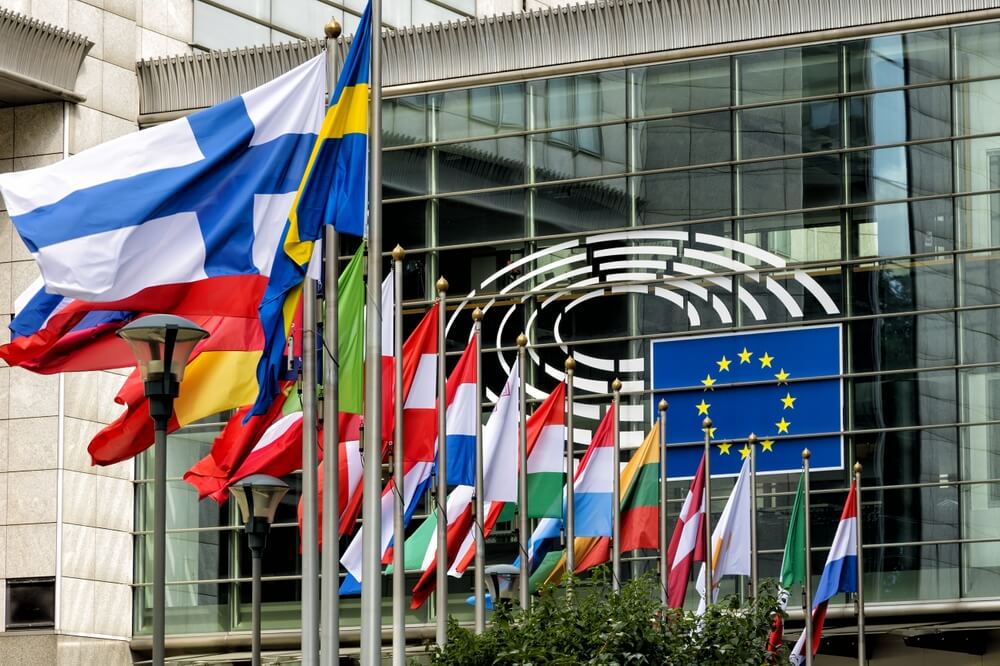 Dual nationals can be stripped of their citizenship, but those with only a single nationality cannot - European Parliament
If citizenship and integration are enough, the nation is a civic one. If origin remains a permanent test of belonging, we drift towards an ethnic conception.
That conception quietly divides society into "native" citizens and those who hold a passport but are deemed to belong just a little less.
A similar argument arose in the 1930s, when the Nazi Party began to recast citizenship as belonging determined by ancestry rather than by a legal bond.
Many of the Jews targeted by the Nuremberg Laws of 1935 were German citizens. What the state did was to redefine who could be a full citizen, using descent as the measure.
It is true that several European states allow citizenship to be revoked in specific circumstances, for example when it has been obtained by fraud, or in certain cases of treason or terrorism.
However, the European Parliament has highlighted a significant problem: dual nationals can be stripped of their citizenship, but those with only a single nationality cannot, since international law prohibits making people stateless.
Integration itself changes meaning
In practice, therefore, citizenship comes in different grades of security, which raises a fundamental question of equality between citizens.
Today's European discourse rarely uses the language of "blood" and race that marked the ethno-nationalisms of the last century. Instead, it speaks of culture, values, integration, religion, and security.
Much of this is legitimate: every democracy has an interest in shared values and in the successful integration of the refugees it takes in.
Integration itself changes meaning once "culture" becomes a barrier that can never be crossed
But integration itself changes meaning once "culture" becomes a barrier that can never be crossed.
Consider someone born in Berlin who speaks German, holds German citizenship, works, pays taxes and obeys the law.
If they are still treated politically as a migrant because of their surname, religion or parents' origins, the issue is no longer integration; it is the definition of the nation itself.
Exclusion and the security paradox
There is a further consequence that receives too little attention. A discourse that seeks to strengthen national identity through cultural and ethnic distinction may, for some groups, achieve the opposite of what it intends.
This happens when it convinces citizens of migrant background that society will never accept them as full members, however well integrated they become.
The European Commission lists personal grievances, marginalisation, and discrimination, whether real or perceived, among the factors that can feed into pathways to radicalisation, alongside political, ideological, and psychological drivers.
That is why Europe's prevention policies now place integration, social cohesion, and the reduction of discrimination alongside the tools of security.
Europol's 2026 terrorism report adds an important dimension. It finds that, in some contemporary forms of extremism, identity, recognition, and belonging now matter alongside ideology.
It also finds that online environments allow individuals and small cells to radicalise and act far more independently of established organisations.
Extremisms of opposite kinds can end up feeding one another. This reveals a security paradox
The danger, then, is a vicious circle. On one side stands the discriminatory, often racist, rhetoric of the populist right.
On the other stand extremist groups eager to claim that the European right speaks for a Europe that "hates us and must be fought".
Extremisms of opposite kinds can end up feeding one another. This reveals a security paradox.
Policies that claim to strengthen security and combat extremism can, once they harden into collective exclusion, erode some of the very social conditions that help to prevent it.
Loyalty, after all, is not a one-way street. The state asks its citizens to respect its laws and to commit themselves to it.
In return, it makes them a fundamental promise: once you are a citizen, you are one of us, and the status of outsider will not be passed to your children and grandchildren in perpetuity.
Europe's new paradox
This brings us back to the recent German elections. The significance of the AfD's advance lies not only in the seats it wins, but also in its capacity to shift the axis of political competition.
As a radical party gains ground, mainstream parties face an obvious temptation: to win back voters they have lost by borrowing its language and policies.
The new right's greatest influence may therefore lie not in entering government but in redrawing, from outside it, the boundaries of acceptable political debate.
The question facing Europe, then, goes beyond how many refugees it will admit or deport; it concerns the nature of the democratic nation itself.
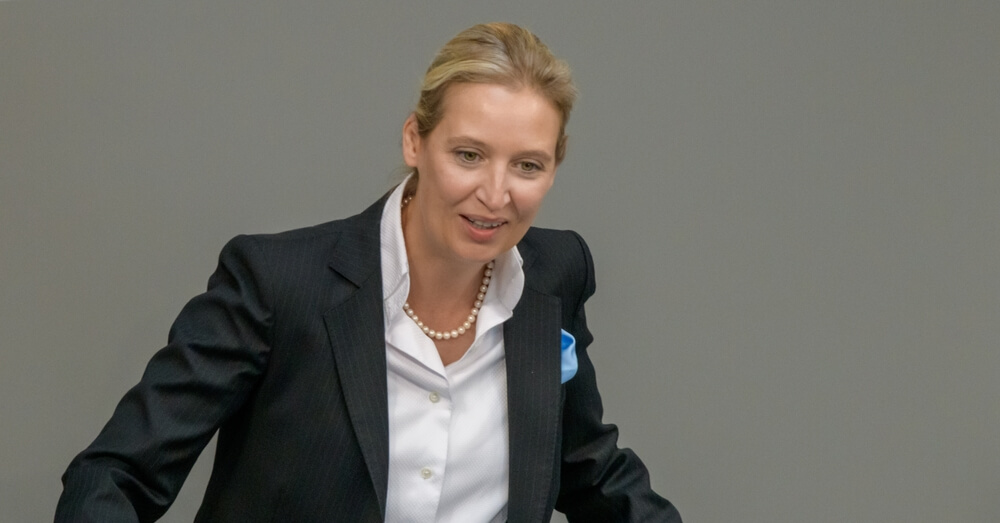 The question facing Europe goes beyond how many refugees it will admit or deport; it concerns the nature of the democratic nation itself - Alice Weidel
Is the nation a political community that people can choose to join, or an inherited one in which only origin confers full membership? It is at this point that migration, citizenship, integration, security, and democracy converge.
The state has a right to protect its borders. Society has a right to debate how much immigration it can absorb.
Governments have the right to deport, through due legal process, those with no lawful right to remain.
But refugees have rights that cannot be reduced to the arithmetic of opinion polls, and citizens of migrant background have the right not to see their citizenship placed permanently on probation because of where their families came from.
In a democracy, the majority is fully entitled to set immigration policy, but on two conditions.
The first is that it remains bound by the moral values of democracy, above all that refugees are treated according to the law rather than political expediency.
The second is that majority rule must never become a licence to decide which citizens are more "authentic" than others.
It is fidelity to genuine democratic values that protects a society from extremism, not policies of exclusion that hand extremists the very climate in which they thrive.
The state must guard its borders without reducing those who seek its protection to mere raw material for electoral competition.
The future of European democracy will not be decided solely by the question of who may enter Europe. It will be decided by a harder one: who may become European, and when does that belonging become final, no longer open to question on the grounds of origin?
That may prove the real test, both of the new right and of European democracy itself.
Siba Madwar is a Syrian political commentator and PhD researcher at King’s College London, specialising in conflict resolution in divided societies and post-conflict statebuilding.
