Prime Minister Andy Burnham's revelation that Russia sought to interfere in the UK's 2016 Brexit referendum hardly came as a shock to those who raised the issue before and after the vote.
Allegations about the hidden hand of the Kremlin seeking to influence the outcome of the vote to quit the European Union were widely reported at the time.
They even figured in the unsuccessful Remain campaign, in which it was argued that Moscow was seeking a leave vote that would weaken European unity.
In remarks on a weekend podcast, Burnham revived the debate, saying he had asked on taking office whether Moscow had attempted to influence the referendum and received confirmation that it had.
That sparked accusations from political opponents that he was seeking to delegitimise the outcome of the people’s vote.
He denied that charge in answers to the House of Commons this week in which he reaffirmed that he respected the 2016 result. He nevertheless cautioned MPs that it would be a dereliction of duty to stick with the status quo in current UK-EU relations.
Burnham’s podcast remarks and his subsequent statements to parliament were clearly aimed at keeping Europe at the forefront of his foreign policy agenda.
He told parliament the EU and UK would hold a summit in Brussels on 20 November, following his earlier commitment to examine “all options” for improving their post-Brexit ties.
The downside of sparking a parliamentary squabble over what Moscow did or didn't do a decade ago is that it risks overshadowing the present consensus on the very real threat that the Kremlin now poses in terms of hybrid warfare and the spread of misinformation.
A "hot potato" for post-Brexit governments
When MPs on the Intelligence and Security Committee raised the issue of Russian interference in the Brexit vote back in 2020, they received the less than comforting assurance from Boris Johnson’s Conservative government that it had seen no evidence of “successful” interference in the referendum.
The committee’s main gripe was that, given the political sensitivity of the vote and its outcome, post-Brexit governments failed to make an adequate assessment to prepare for future threats of malicious cyber activity by Russia.
If UK governments and intelligence agencies did indeed fail to seize what the committee called the “hot potato” of Russia’s disinformation campaigns and political influence operations, what have subsequent administrations done to catch up?
It was only on the eve of publication of the intelligence committee’s long-delayed 2020 report that the Johnson government finally acknowledged that Russia had interfered in the UK's democratic process.
The previous reluctance to examine suspected Kremlin skulduggery surrounding Brexit looks either positively naive or deliberately obtuse
But a statement from the then foreign secretary, Dominic Raab, ignored the Brexit vote and instead focused on the 2019 UK general election.
He said Moscow had almost certainly attempted to influence the outcome of that vote with the online leak of documents on UK-US trade talks, which the opposition Labour Party had latched on to in its election campaign.
It was the first time a British minister had directly linked Russia to meddling in a UK election. But at least it was a start and the government followed up by launching an intelligence inquiry into the document leak.
In retrospect, the previous reluctance to examine suspected Kremlin skulduggery surrounding Brexit looks either positively naive or deliberately obtuse.
A proposed weapon in the UK's defensive armoury
However, since Russia’s 2022 full-scale invasion of Ukraine, there has been growing recognition that the Kremlin is engaged in cyber warfare to target the UK and other allies supporting the Ukrainian war effort.
The identified threats range from fake websites and social media accounts seeking to generate domestic political discord to cyber attacks on organisations providing assistance to Ukraine.
One proposed weapon in the UK’s defensive armoury is a new National Centre for Information Defence
One proposed weapon in the UK’s defensive armoury is a new National Centre for Information Defence whose creation Burnham announced in a speech to the United Nations last month.
He told the UN General Assembly that the centre would work alongside intelligence agencies, government departments, law enforcement and social media to bring together expertise to combat information warfare.
He claimed the Kremlin was spending the equivalent of £1.3 billion a year on an insidious campaign of fake information “that reaches into people's homes and twists what they feel about their own country and community, creating a narrative of decline, stoking division and sowing despair”.
With friends like these, who needs Russia?
Not everyone is happy. A number of commentators and free speech groups have warned that the new centre could turn into an Orwellian Ministry of Truth that would end up stifling legitimate debate.
Former Conservative MP Bob Seely wrote in The Telegraph that he feared that, rather than being a valuable weapon in the battle against disinformation by Russia and other authoritarian states, the initiative could come to be used by the Left to stifle free speech.
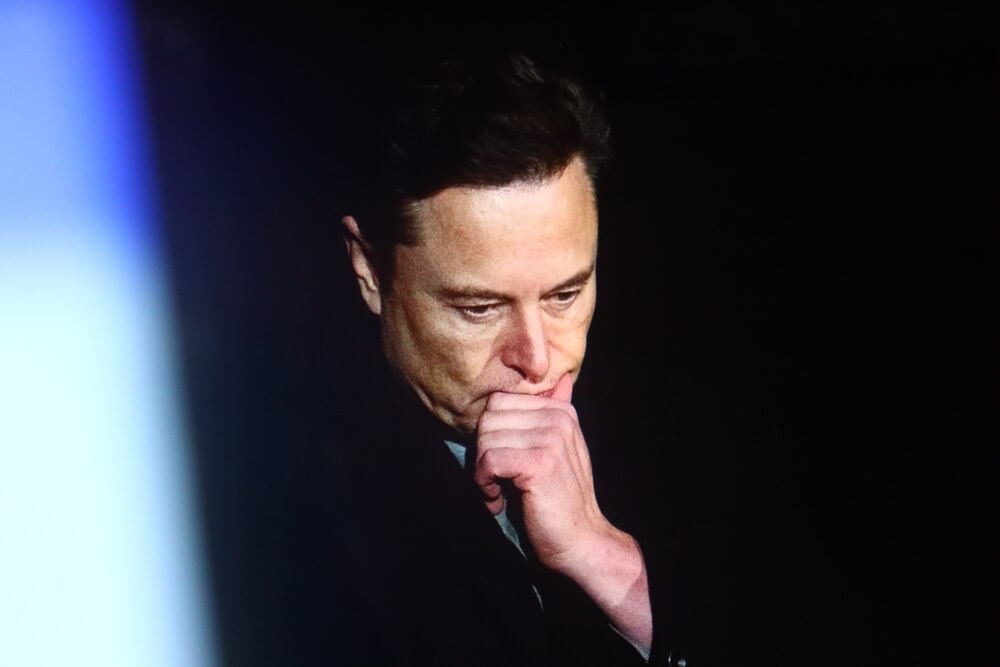 Donald Trump, Elon Musk and other US political figures have also used social media to propagate falsehoods about Labour-run Britain
His caution was echoed by free speech advocates at Big Brother Watch, which nevertheless acknowledged it was right to take action against the disinformation campaigns of hostile foreign states.
“But the public also deserves assurances that such action is strictly limited to overseas threats,” it said in a statement on its website. “We have already seen the mantle of countering ‘disinformation’ being abused by our Government in attempts to malign and silence dissent.”
At least such interventions have the virtue of contributing to a debate on how best to tackle the current Russian threat, rather than resurrecting one that harks back to what the Kremlin might or might not have been up to pre-Brexit.
In Parliament, meanwhile, Liberal Democrat MP Calum Miller this week sought assurances from Burnham that the new information defence centre would look everywhere to identify sources of misinformation, including the US.
It was a question clearly targeted at the likes of Donald Trump, Elon Musk and other US political figures who have also used social media to propagate falsehoods about Labour-run Britain.
Their input has ranged from warnings of impending civil war to claims of no-go zones in crime-ridden cities where Sharia law is said to prevail.
With friends like these, who needs Russia?
