Pope Leo XIV is convening an extraordinary “consistory”—a gathering of the College of Cardinals—in late June at the Vatican. One of the four scheduled sessions will be devoted to the “just war” doctrine.
This emphasis is hardly new. The Catholic Church has sought for nearly two millennia to provide guidance about when war is justified (jus ad bellum) and the right way to fight one (jus in bello). The goal was, and remains, to limit the frequency of warfare and its toll.
Leo has twice spoken on the subject in recent weeks. In Magnifica Humanitas, the encyclical on artificial intelligence that was released last month, the pope questioned the essence of just war theory.
“Today, more than ever, without prejudice to the right to self-defense in the strictest sense, it is important to reaffirm that the ‘just war’ theory, which has all too often been used to justify any kind of war, is now outdated. Humanity possesses far more effective and capable tools for promoting human life and resolving conflicts, such as dialogue, diplomacy and forgiveness.”
Then, in early June, the pope returned to the theme, telling a group of journalists, “The notion of a just war no longer applies. The problem is that just war theory developed in centuries when no one could have imagined the weapons we have today or humanity’s capacity for destruction.”
These comments strongly suggest that Leo is seeking to limit the scope of just war to self-defense, such as the war Ukraine is fighting against Russia.
The proportionality standard
I expect he has been heavily influenced by recent history. The 2003 US-led war against Iraq, Hamas’s October 2023 attack on Israel, elements of Israel’s response in Gaza, Russia’s invasion of Ukraine, and the US-Israeli war against Iran were all wars of choice that would not be considered “just” in design, execution, or both.
To be just, a war must be fought for a worthy cause, judged as likely to succeed, authorized by a legitimate authority, and undertaken only as a last resort.
Just wars must be conducted in a manner that uses no more military force than is necessary
Just wars must be conducted in a manner that uses no more military force than is necessary (the proportionality standard) and respects the safety of noncombatants.
This guidance is meant to influence the thinking of the 1.4 billion Catholics around the world, individuals and leaders alike. But it is also meant to influence policy and policy debates more broadly.
Preventive attacks
It turns out that determining what should constitute a just war is easier said than done.
It is widely agreed that preemptive military intervention against imminent attacks is covered under the definition of self-defense.
More controversial are preventive attacks to avert gathering but not yet imminent threats.
The fear is that a world where preventive wars were seen as legitimate would become a world of frequent conflict
The fear is that a world where preventive wars were seen as legitimate would become a world of frequent conflict.
But what is to be done when the means of war are being produced or acquired by an enemy, and there can be no certainty of sufficient warning to act before those means are used?
Some Americans argued this fear justified the 2003 invasion of Iraq. Many Israelis argued the same in the case of Iran last year and again in recent months.
What makes for a worthy cause?
So, what makes for a worthy cause? And how much risk should a country take in not resorting to force if the penalty for being wrong could mean thousands of its own citizens being killed?
Determining what constitutes a worthy cause can be difficult. At what point does stopping repression of a population (not to mention genocide) justify the proper use of military force? When does inaction become unjust?
Then there is the question of what constitutes a legitimate authority. The United Nations often fails to endorse or condemn wars, because one or more veto-wielding permanent member of the Security Council blocks collective action. Russia and China, for example, refuse to condemn Russia’s invasion of Ukraine.
Popular approval of a war does not make it legitimate
Years earlier, Russia prevented UN approval of military action against Serbia when there was evidence it was committing ethnic cleansing against Kosovar Albanians. Did the fact that NATO blessed the action make it any less legitimate?
Adding to the complexity is the reality that popular approval of a war does not make it legitimate—even when the country’s constitutional practices are followed.
A leader calling for war may be acting out of domestic political or personal interest rather than principle.
Overhaul of the just war doctrine
Much of just war theory is a matter of judgment. I have no doubt that Russian President Vladimir Putin expected success when he decided to attack Ukraine, as did US President Donald Trump and Israeli Prime Minister Benjamin Netanyahu when they went to war against Iran. Obviously, they were wrong.
But any leader about to initiate a war expects success. And wars are inherently uncertain, which makes this long-standing requirement close to meaningless.
Questions about how force should be used are equally complex. A new question concerns when and how to respond to potentially devastating attacks carried out through non-military means, such as cyberattacks or, in the future, AI-enabled attacks designed to cripple a society. What constitutes proportionality in such cases?
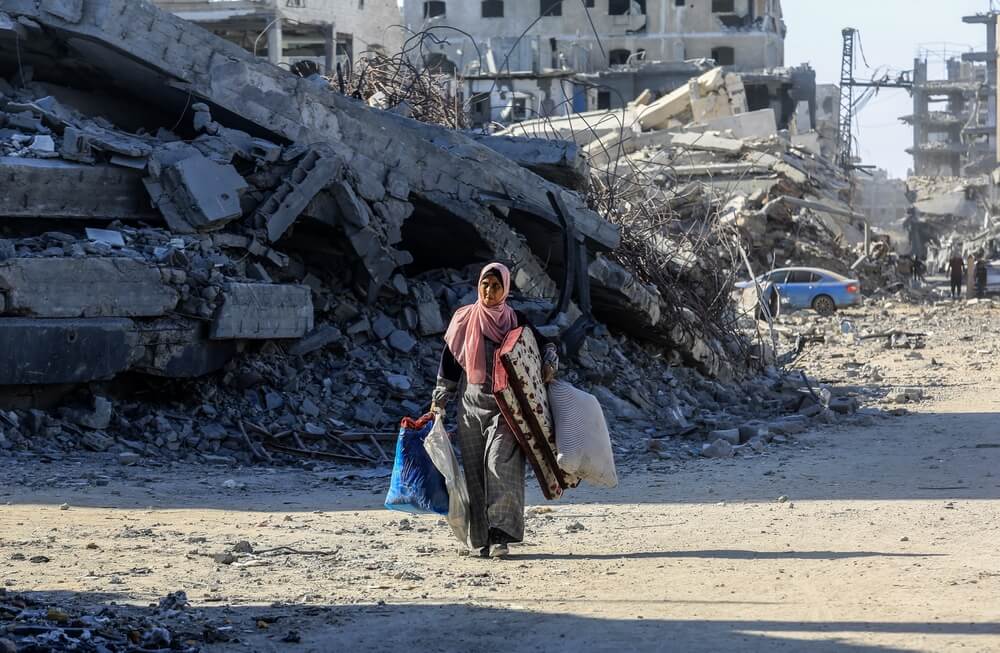 With war becoming more frequent and more lethal to civilians, it is understandable that Leo and the Cardinals are wading into the debate over its legitimacy
Likewise, just war theory emphasizes not attacking civilians. But what is to be done when countries or non-state actors (such as Hamas in Gaza) hide fighters and weapons in schools or hospitals?
Leo has gone on record criticizing attacks on such sites, but to rule them out invites the use of civilian sites as military sanctuaries.
This would be untenable, which again raises the question of what practical guidance the church is prepared to offer.
With war becoming more frequent and more lethal to civilians, it is understandable that Leo and the Cardinals are wading into the debate over its legitimacy.
They will be frustrated, though, if they rely on the Church’s traditional criteria for useful guidance.
The best outcome of the consistory would be to authorize an overhaul of the just war doctrine for the modern era—and to ask the necessary questions.
Richard Haass, President Emeritus of the Council on Foreign Relations, senior counselor at Centerview Partners, and Distinguished University Scholar at New York University, previously served as Director of Policy Planning for the US State Department (2001-03), and was President George W. Bush's special envoy to Northern Ireland and Coordinator for the Future of Afghanistan.
