For a year and a half, Giorgia Meloni was regarded as the European leader closest to Donald Trump. After 19 June, it is difficult to assert that this relationship still exists.
A few of Trump’s statements were enough to dissolve the political alliance that was one of the most important links between Washington and the European right.
Speaking to the Italian television channel La7, Trump said that the Italian Prime Minister begged him for a joint photo at the G7 summit and that he agreed because he felt sorry for her.
A few hours later, he added that Meloni was a big fan of his, but she no longer supports him on issues he considers important.
The response from Rome arrived almost immediately. Meloni stated in a video message that Trump’s claims were entirely fabricated and concluded with a sentence that quickly became the political message of the day:
“Neither I nor Italy ever beg.”
On the same day, Foreign Minister Antonio Tajani cancelled his visit to the United States. The President of the Republic, Sergio Mattarella, spoke with the Prime Minister, while almost the entire Italian political elite, including some members of the opposition, supported her.
An alliance that seemed solid
When Trump returned to the White House in January 2025, Meloni was the only European leader present at the inauguration. The US president described her as one of the most important leaders in the world. During their meeting in Washington, he referred to her as a friend and ally.
For Meloni, this represented significant political capital. She was able to demonstrate to her European partners that she had a direct channel to the White House at a time when relations between Washington and much of Europe were uncertain.
Personal closeness never meant that Rome and Washington shared the same interests
Trump, on the other hand, saw in Meloni confirmation that European conservative politics was moving in a direction that suited him.
However, personal closeness never meant that Rome and Washington shared the same interests. This became clear when issues of war, security, and foreign policy emerged.
Iran has altered the relationship
The first serious conflict arose during the US-Israel operations against Iran.
Meloni refused Italy's participation and did not permit the use of the Sigonella base in Sicily for operations not authorised under the 1954 bilateral agreements or approved by Parliament.
Italy will not automatically support every US military decision
The formal explanation was legal, but the political message was much more significant. Italy will not automatically support every US military decision.
For Trump, this was a serious disappointment. For Meloni, it was a matter of state policy. For the first time, it was demonstrated that friendship has its limits.
The Pope and the Vatican
The second dispute was even more sensitive. After Pope Leo XIV criticised US policy towards Iran, Trump sharply attacked the head of the Catholic Church. Meloni responded promptly, stating that attacks on the Pope were unacceptable.
For the Italian Prime Minister, this was not only a religious issue. It concerned the head of the Catholic Church and the state at the centre of which is the Vatican. Trump also regarded this as a lack of loyalty.
From that moment, relations began to cool publicly. In April, Trump openly expressed his disappointment with Meloni, questioning her political resolve and stating that they no longer have the same relationship.
Evian seemed like a truce
The G7 summit in Evian suggested that both sides were prepared to ease tensions. Trump and Meloni spoke on camera, and the atmosphere seemed relaxed. There were also signs that the April conflict had been left behind.
Meloni spoke of the positive atmosphere at the summit and stated that no further explanations were needed. However, this lasted less than a day.
Meloni's response was perhaps the harshest she has ever directed at the US president
Trump himself raised the Meloni issue during an interview with Italian television, although no one had asked him about her. The claim that she begged him for a photo was not political criticism but a personal insult. Even more significant, politically, was his message that he was no longer on her side.
Meloni's response was perhaps the harshest she has ever directed at the US president. In particular, her remark that Trump does not show the same determination towards the opponents of the West as he does towards its allies was notable.
The discussion was no longer about a photograph; it had become a criticism of Trump’s attitude towards Russia and other adversaries of the West.
Italy responded as a state
Antonio Tajani, Deputy Prime Minister and Minister of Foreign Affairs, is one of Italy’s most experienced politicians. His decision to cancel his visit to the United States showed that the crisis was no longer viewed as a personal conflict between Trump and Meloni.
A similar message was sent by Guido Crosetto, Minister of Defence and one of the Prime Minister’s closest political associates since the founding of Brothers of Italy.
He warned that such statements damage not only relations between Rome and Washington, but also the entire Western alliance.
This gave the Italian response institutional weight. The dispute quickly ceased to be a conflict between two politicians and became a matter of relations between the two states.
Europe stood by Meloni
Support for Meloni quickly came from other European capitals. Emmanuel Macron said he was surprised by Trump's attack and announced a conversation with the Italian Prime Minister.
Spanish Prime Minister Pedro Sánchez expressed his support during a meeting of European Union leaders in Brussels.
For Meloni, this held particular political significance. Two leaders with whom she had serious political disagreements for years supported her in the conflict with the American president.
The paradox of the conflict is that Trump, while trying to weaken Meloni, actually strengthened her position in Europe
Thus, the dispute between Trump and Meloni was no longer merely an Italian-American issue. In the eyes of some European leaders, it became another example of the unpredictable relations that Trump is developing with allies.
This is perhaps the most important immediate consequence of the entire event.
The paradox of the conflict is that Trump, while trying to weaken Meloni, actually strengthened her position in Europe.
The end of a special relationship
For the past year and a half, there has been a belief in Rome that Meloni had a special relationship with Trump, which gave her additional political weight in Europe.
After 19 June, that argument almost no longer exists. Sigonella showed that Italy has its own security interests.
The crisis over Iran and the Strait of Hormuz showed that Rome and Washington no longer view the world in the same way
The conflict over the Pope has shown that political and cultural boundaries exist that even an alliance with Washington cannot cross.
The crisis over Iran and the Strait of Hormuz showed that Rome and Washington no longer view the world in the same way.
Trump only stated what had been apparent for several months.
After 19 June
The most significant consequence of this conflict may not appear in relations between Rome and Washington. It will be evident in how European capitals assess their own relations with the Trump administration.
If even the leader considered the closest European interlocutor of the US president for almost two years could not rely on political loyalty, it is difficult to expect that any European government will base its strategy on personal relations with the White House in future.
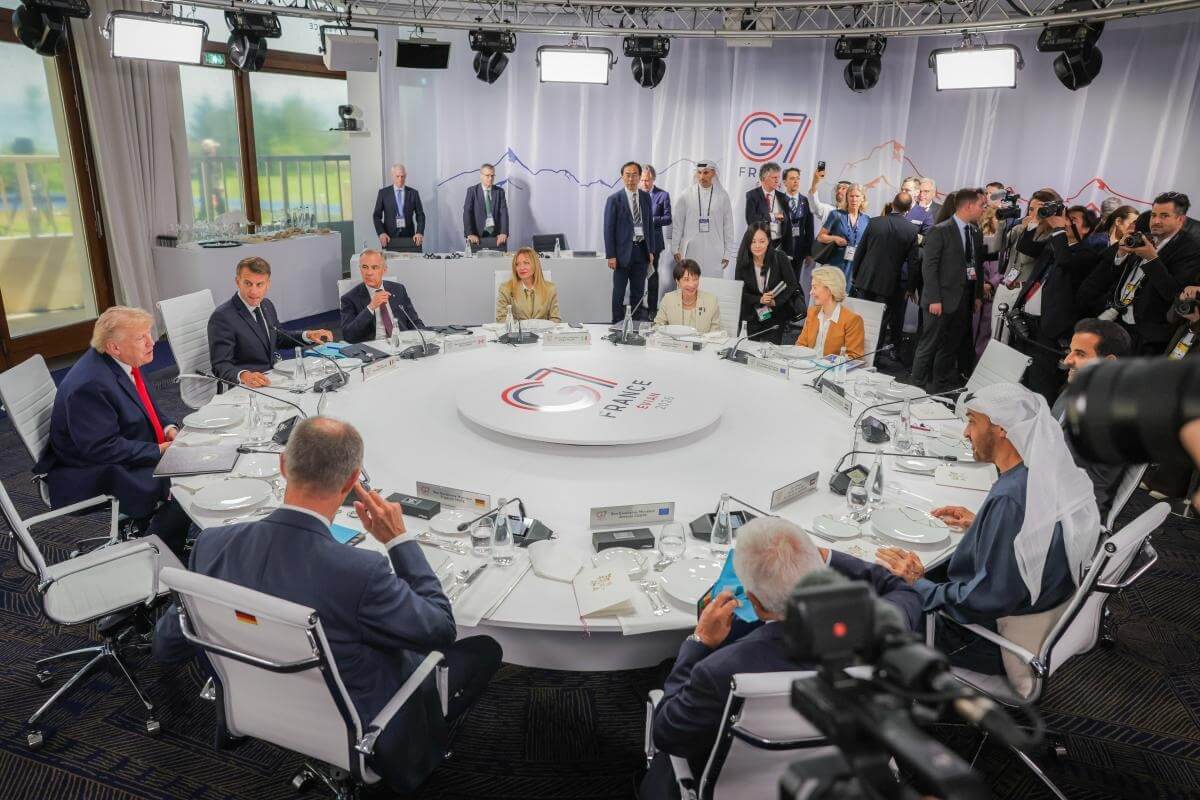 Any future European leader seeking to build a special relationship with Donald Trump will have to consider Giorgia Meloni's experience
Meloni lost the argument that she had a special channel to Washington, but at the same time strengthened her position in Europe. Many European partners who were suspicious of her for years, precisely because of her closeness to Trump, now see her differently.
Therefore, it is unlikely that Rome will return to the policy of a special relationship with Washington.
It is much more likely that the Italian government will continue to strengthen its position within the European Union and NATO, where support for Ukraine, relations with Russia, and European security have become more important than personal ties with the US President.
Trump has said for years that he respects leaders who show strength. The irony of the conflict is that it was Meloni, by refusing to remain silent about her country's public humiliation, who showed the political fortitude that the US president has always claimed to value.
Perhaps this is precisely why this conflict extends beyond Italy. Any future European leader seeking to build a special relationship with Donald Trump will have to consider Giorgia Meloni's experience.
That experience shows that personal closeness lasts only as long as political benefit persists.
