Major Asian currencies’ exchange rates are again at the center of debates in international monetary economics.
With China, Japan, and South Korea all running trade and current-account surpluses, and the United States running corresponding deficits, some argue that the renminbi, yen, and won are undervalued.
But given the fundamentals underlying these imbalances, foreign-exchange intervention is unlikely to do much good.
Brad W. Setser, a former deputy assistant secretary at the US Treasury, recently argued that a “weak renminbi directly led to China’s latest export boom,” and urged major economies to press China to revalue the currency. (China used to intervene in the currency market to impede exchange-rate appreciation, but it abandoned the practice in 2014.)
Harvard’s Gita Gopinath, Pierre-Olivier Gourinchas of the University of California, Berkeley, and the London Business School’s Hélène Rey disagree.
In their view, the renminbi-dollar exchange rate is not the root cause of current-account imbalances and thus does not warrant action by other countries.
While economists debate whether intervention is appropriate for the renminbi, action is already being taken on the yen and the won.
The US, in cooperation with Japanese authorities, recently intervened in the foreign-exchange market to strengthen the yen, purchasing the currency while Japan sold dollars. South Korea also reportedly participated in this coordinated intervention.
The idea was that, because the won’s value is closely linked to that of the yen, a joint intervention would enhance the impact on both.
No end to US unilateralism
Does this rare three-country currency operation signal a break with the US unilateralism that has taken hold under President Donald Trump? Probably not.
Though Treasury Secretary Scott Bessent described the intervention using the language of US-Japan comity, the Trump administration’s motivations were most likely self-serving: the US wanted to forestall a selloff of US Treasuries by Japan, for fear that this could put upward pressure on US interest rates.
That the US used euros, rather than dollars, to make its yen purchases supports this view.
So does the fact that Bessent did not bother to consult with the European Central Bank. No end to US unilateralism.
Many economists believe that market intervention cannot affect the exchange rate, except to the extent that it affects the money supply
Did the intervention have the desired effect? Many economists believe that market intervention cannot affect the exchange rate, except to the extent that it affects the money supply.
And since the turn of the century, the G7 countries have largely refrained from such measures.
But in 1985, the US spearheaded the Plaza Accord, under which the G5 countries took coordinated action to weaken the dollar against the yen and the Deutschmark.
The subsequent interventions often succeeded at moving the exchange rate in the desired direction—at least for a while.
Operations in the 1980s and 1990s were more likely to be effective when they included the US (in coordination with others), when they were publicly announced, and when they caught markets by surprise.
The recent US-Japan-Korea intervention met these conditions, and, sure enough, both the yen and won immediately appreciated.
China must rebalance its economy
But such interventions can do only so much. The US Treasury’s most recent Report to Congress on Macroeconomic and Foreign Exchange Policies of Major Trading Partners of the United States, issued last month, lists ten “major trading partners whose currency practices and macroeconomic policies merit close attention,” of which seven are Asian: China, Japan, Korea, Taiwan, Thailand, Singapore, Vietnam, Germany, Ireland, and Switzerland.
Unlike during Trump’s last administration, however, it does not yet call any country an outright manipulator.
Those who worry that the renminbi, yen, and won are undervalued vis-à-vis the dollar are usually looking not at the exchange rate so much as trade and current-account imbalances: the large surpluses China, Japan, and Korea run, and the large deficits the US runs with all three.
Bilateral trade balances are not among economists’ standard criteria for determining whether a country’s currency is undervalued
But bilateral trade balances are not among economists’ standard criteria for determining whether a country’s currency is undervalued. (Those criteria, according to the International Monetary Fund, are “protracted large-scale intervention in one direction in the exchange market,” excessive international reserves, and an overall current-account imbalance. Also relevant is whether the country is selling its goods at below global prices, even after adjusting for productivity.)
The fundamental reason why China is running a large current-account surplus is its high national saving rate.
Even if foreign-exchange intervention spurred renminbi appreciation and reduced the current-account surplus, that would merely divert more of China’s large savings into investment (probably mediated by a low real interest rate).
That is not what China needs at a time when it is facing deflation.
The right prescription for China is not new. As countless economists (including me) have recommended, it must rebalance its economy from manufacturing to services, reduce its reliance on investment spending and export demand, and expand household consumption.
A stronger social safety net, including health care and old-age and disability pensions, would free up precautionary savings. And there is a strong case for improving land- and labor-market flexibility.
Inflationary pressures
The yen’s weakness can likewise be attributed to economic fundamentals. The interest rate in Japan is still very low, especially in light of recent inflation.
Markets apparently expect Japan to continue to monetize its huge government debt. Instead, the Bank of Japan should probably raise the interest rate.
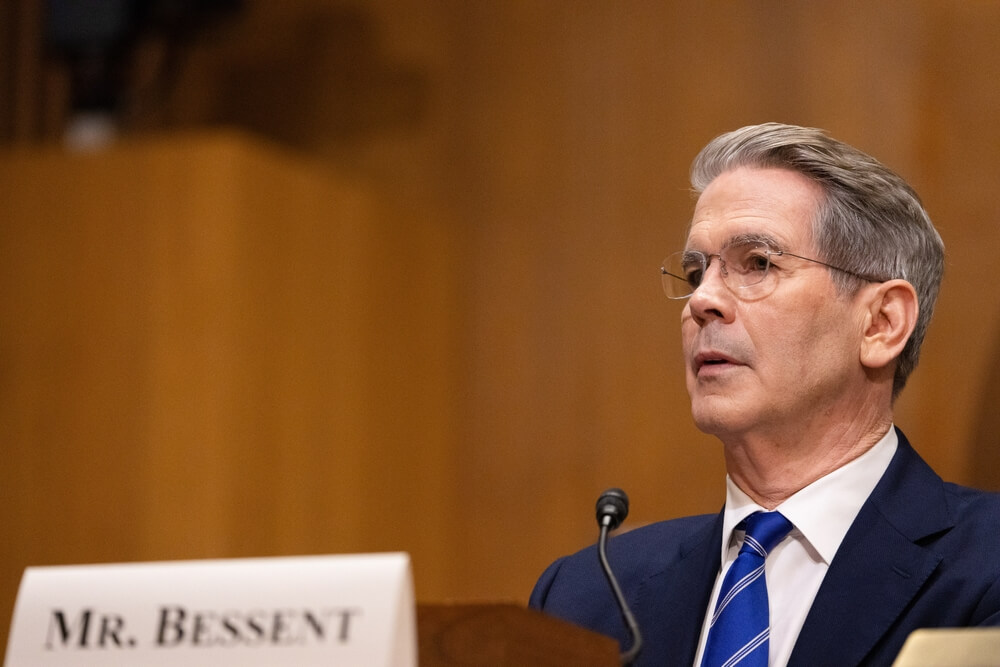 The Trump administration has systematically destroyed America’s capacity to persuade other countries to act - Scott Bessent
For its part, the US owes its large current-account deficit largely to its low national savings rate, especially the negative fiscal balance.
Were foreign-exchange intervention to weaken the dollar, the US would face intensifying inflationary pressures, which Trump’s tariffs and war on Iran are already fueling.
This could force the Federal Reserve to raise interest rates faster—precisely what the Trump administration does not want—crowding out investment.
The Trump administration has systematically destroyed America’s capacity to persuade other countries to act.
Rather than squander what little influence it has left on dubious exchange-rate actions, it should work on boosting domestic savings. The best way to do that is to strengthen its fiscal position.
Jeffrey Frankel, Professor of Capital Formation and Growth at Harvard University, served as a member of President Bill Clinton’s Council of Economic Advisers. He is a research associate at the US National Bureau of Economic Research.
