There is a widely held belief in the gold market: when the risk of war increases, gold prices rise. This belief is not entirely wrong. As uncertainty grows, investors tend to move away from equities, corporate bonds and risky currencies and seek assets that are liquid and carry little or no counterparty risk. Gold often benefits from this search for safety.
Historical price movements, however, reveal a more complicated pattern. Gold frequently performs better while the possibility of war is increasing than after the fighting has actually begun.
Once a conflict starts, markets begin to assess whether the worst-case scenario is really taking place. If the war remains contained, energy supplies continue and major powers avoid direct involvement, the risk premium built into gold prices can quickly decline.
This resembles the familiar market behaviour known as “buy the rumour, sell the fact”. Investors price in the possibility of war before the first attack. When the fighting begins, profit-taking can follow unless the conflict produces a new and more serious threat.
From Gulf War to Ukraine
The 1990–1991 Gulf War offers one of the clearest examples. After Iraq invaded Kuwait, months of military mobilisation added a war premium to both oil and gold. Yet when the US-led air campaign began on 17 January 1991, markets quickly concluded that the war might be short.
Gold rose briefly in the first hours, then reversed direction and fell by more than $30 in one day to around $397. By the end of January, it had declined to roughly $365. The war had begun, but the prolonged energy crisis feared by the market had not materialised. The premium already included in the gold price began to disappear.
A similar movement occurred before the 2003 Iraq War. As the prospect of military action grew, gold climbed to around $388, its highest level in six years. But shortly before the invasion, it fell to around $340. Investors increasingly believed that the campaign would be brief and that oil production outside Iraq would not suffer serious disruption.
Monetary policy gradually became more important for gold than the conflict itself
Traders at the time openly expected a short rise when the war began, followed by selling. Research published by the National Bureau of Economic Research also found that the probability of war had supported gold and energy shares before the conflict started.
Russia’s invasion of Ukraine in 2022 initially gave gold a strong boost. The price rose by about 6 per cent in February and 8 per cent in the first quarter. Yet the gains did not last, even though the war continued.
The US Federal Reserve began raising interest rates, government bond yields climbed and the dollar strengthened. Monetary policy gradually became more important for gold than the conflict itself. Gold finished the first half of the year only around 0.6 per cent higher.
Recent conflicts: Israel, Gaza, and Iran
The conflict between Israel and Hamas, which began in October 2023, showed the same pattern. Gold was trading below $1,810 before the attack and rose above $2,000 by the end of the month.
The increase was driven not only by events in Gaza, but also by fears that Iran, Lebanon and other regional actors could become involved. When the risk of a wider regional war appeared to decline, safe-haven positions were reduced and gold gave back some of its gains.
Gold had risen above $5,400 in January as geopolitical tensions intensified
The war involving the United States, Israel and Iran in 2026 provided an even more striking example. Gold had risen above $5,400 in January as geopolitical tensions intensified. After the conflict began on 28 February, however, the expected surge did not follow. By June, the price had fallen as low as $4,002.
The European Central Bank linked the decline after the initial rise to higher real interest rates, forced liquidation by leveraged investors and some sales by central banks.
The World Gold Council also noted that movements in the first half of the year reflected excessive positioning and profit-taking as much as fears about the war.
War fears vs interest rates
This does not mean that gold always falls when a war begins. The key questions are how much of the danger has already been priced in and how serious the economic consequences become.
If a conflict begins unexpectedly, spreads to other countries, damages energy infrastructure or disrupts global trade, gold may continue to rise. If war has been expected for a long time, the first attacks remain limited and the worst scenarios do not materialise, the war premium can fade.
The inflationary impact of a conflict also matters. Higher oil and natural gas prices may initially support gold. But if the energy shock pushes inflation higher and prevents central banks from cutting interest rates, the second-round effect may become negative. Gold pays no interest, so it becomes less attractive than bonds and deposits when real interest rates rise.
Fear of war supports demand, while higher interest rates and a stronger dollar put downward pressure on prices
This mechanism became visible during the 2026 conflict with Iran. Disruption around the Strait of Hormuz lifted energy prices, increased inflation expectations and weakened market expectations for interest-rate cuts.
The World Bank expected energy prices to rise by 24 per cent in 2026 and overall commodity prices by 16 per cent. The International Monetary Fund warned that the decline in global inflation had stalled and that further military escalation could create renewed volatility in commodity markets.
This environment creates two opposing forces for gold. Fear of war supports demand, while higher interest rates and a stronger dollar put downward pressure on prices.
Drivers of future movement
For gold to enter another strong upward phase, investors may need more than headlines about conflict. A renewed escalation involving Iran, a prolonged closure of the Strait of Hormuz, further attacks on energy facilities or the direct involvement of major powers could increase safe-haven demand.
A clear weakening in global growth and a return to interest-rate cuts by central banks would also support gold. Falling real yields and a weaker dollar reduce the opportunity cost of holding a non-interest-bearing asset.
Central-bank demand may continue while the pace of buying slows
Renewed inflows into gold-backed investment funds and stronger purchases by central banks could add further support. In the World Gold Council’s 2026 survey, 89 per cent of reserve managers expected global central-bank gold holdings to increase over the following twelve months. Around 45 per cent believed that their own institution would buy more gold.
These responses show intention, not the actual quantity that will be purchased. Central-bank demand may continue while the pace of buying slows. High prices could also encourage some reserve managers to become more cautious.
Different economic scenarios
The World Gold Council suggested that if economic conditions remained broadly unchanged, gold might trade within a range of roughly 5 per cent during the second half of 2026.
If the economy weakened, interest-rate expectations fell or a new geopolitical shock emerged, it saw the possibility of a gain between 5 and 20 per cent. Strong growth, higher rates and calmer markets could instead produce a decline of between 5 and 15 per cent.
These figures are not firm price forecasts. They describe possible movements under different economic scenarios.
The IMF has stressed that gold can provide long-term diversification but remains highly volatile in the short term
A clearer decline in gold would become more likely if a lasting ceasefire were reached in the Iran conflict, the Strait of Hormuz fully reopened and energy prices fell. Continued strength in the US economy, persistent inflation and a decision by the Federal Reserve to keep interest rates high for longer could also increase downward pressure.
If the dollar strengthens, real bond yields rise and investors return to equities and fixed-income assets, money could flow out of gold. High prices may also weaken jewellery demand and encourage holders of old gold to sell.
The European Central Bank has noted that central-bank purchases slowed in 2025 compared with the previous three years and that elevated prices could limit new demand.
The IMF has also stressed that gold can provide long-term diversification but remains highly volatile in the short term. Its safe-haven characteristics do not operate in exactly the same way during every crisis.
Bank price targets
Investors should also treat bank and investment-house price targets with caution. Many institutions raise their forecasts after gold has already risen and reduce them when prices fall. They then explain the revision by pointing to changes in interest rates, the dollar or geopolitical conditions.
Goldman Sachs, for example, raised its end-2026 target from $4,900 to $5,400 in January. In June, it reduced the forecast back to $4,900 after concluding that the Federal Reserve would remain tighter for longer.
UBS lifted its short-term target from $5,000 to $6,200 in January, before later lowering its year-end estimate from $5,900 to $5,500. Bank of America cut its average 2026 forecast by 14 per cent in July to $4,360, while continuing to argue that the price could return to $5,000 over the longer term.
Expectations should change when interest rates, wars, energy prices and central-bank behaviour change
Changing a forecast is not necessarily a mistake. Expectations should change when interest rates, wars, energy prices and central-bank behaviour change. The problem begins when a revised forecast is presented as a confident new conclusion while the earlier forecast is quietly forgotten.
Price targets often follow the market. When gold is rising, bullish forecasts become more common. When the price is falling, institutions become more cautious.
The scale of uncertainty can also be seen in the London Bullion Market Association’s 2026 survey. Professional analysts produced forecasts ranging from $3,500 to $5,500. Even experts examining the same market and the same information reached very different conclusions.
Geopolitical risk
Gold investors should therefore avoid making decisions based on a single war headline or one bank’s price target. They should first consider how much of the geopolitical risk has already been included in the price.
They should then watch oil prices, the dollar, real interest rates, central-bank purchases and actual flows into gold investment funds.
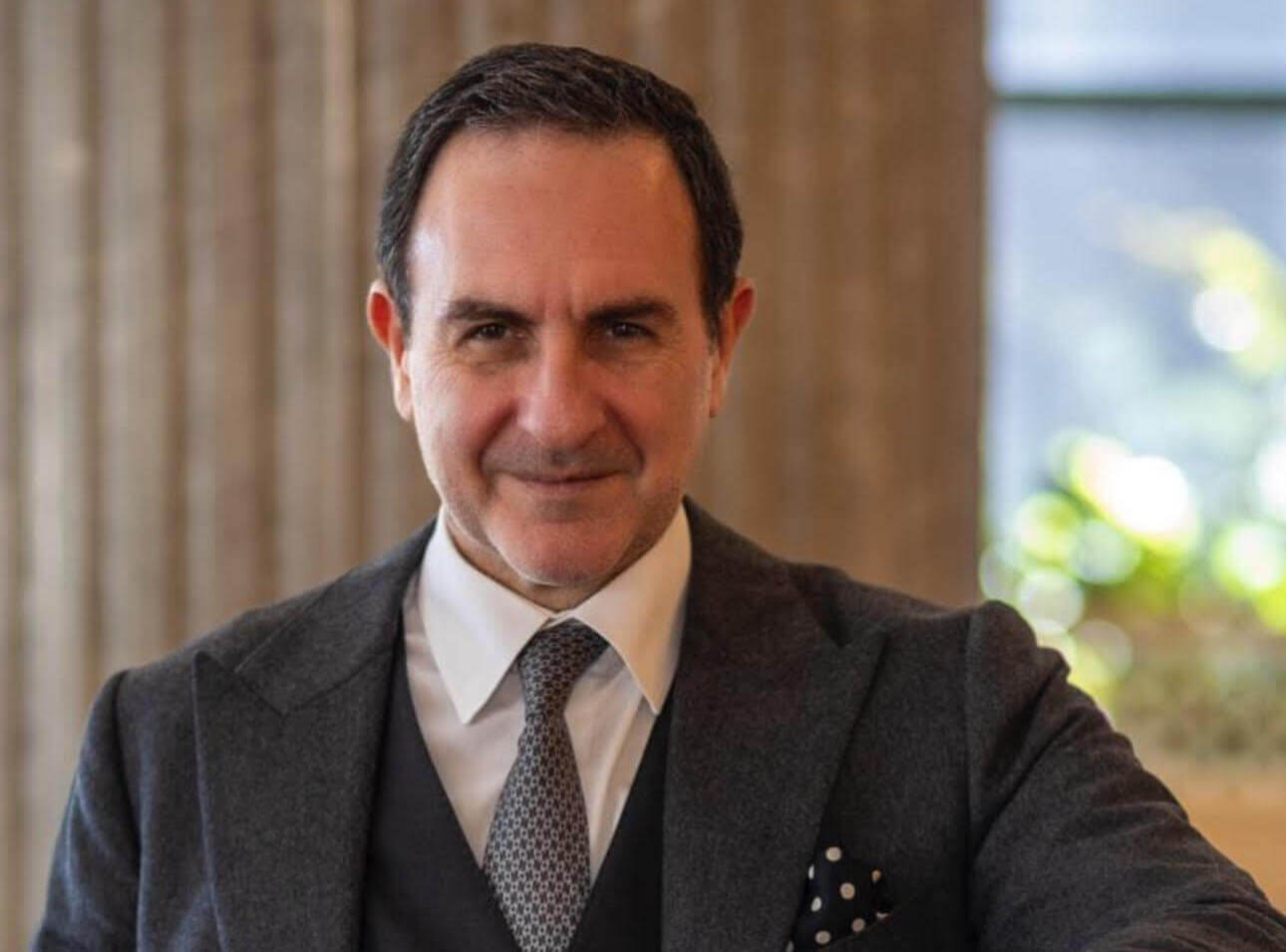 Gold may serve as a safe haven, but it is not an insurance policy that rises under every form of stress - Emre Alkin
What central banks do matters more than what they say. Actual purchases matter more than stated intentions. Fund flows matter more than confident forecasts issued after the price has already moved.
The possibility of war can push gold higher. The beginning of war can reduce uncertainty and trigger profit-taking. A widening conflict may produce another rally, while high interest rates and a strong dollar can cause gold to fall even while the fighting continues.
Gold may serve as a safe haven, but it is not an insurance policy that rises under every form of stress. One of the biggest mistakes an investor can make is to assume that gold must rise whenever a war begins. Another is to treat a higher target published after a rally as independent confirmation that the rally will continue.
Forecasts can change. Institutions can also change their views. But it is the investor, not the forecasting institution, who pays the cost when those changing predictions prove wrong.
