Speculation that UK prime minister Andy Burnham is pondering an early general election refuses to die, despite his repeated assurances that a snap poll is not on the cards.
The former Manchester mayor inherited the final three years of a five-year parliamentary term when he took over the premiership from Keir Starmer this summer.
That technically gives his ruling Labour Party and its rivals until August 2029 before their MPs next have to face the judgment of the electorate.
A number of factors, not least Labour’s recovery of a modest lead in opinion polls, have nevertheless fuelled the prospect that Burnham might risk an early vote to secure a fresh mandate for a more radical agenda than that of his predecessor.
His plans include a much tighter relationship with the European Union as he prepares to press for enhanced post-Brexit deals at a summit with the 27-member bloc later this month.
In his first 100 days in office, Burnham’s more positive and people-friendly style has played as big a role as his policy offerings in restoring Labour’s waning popularity after the frequent doom and gloom of Starmer’s tenure.
A concern within the Labour camp is that this so-called Burnham bounce might start to evaporate unless voters see some early tangible improvement to their economic prospects.
His promise of a radical 10-year plan – it is due to be unveiled before Christmas – might have only limited appeal to voters looking for some significant short-term relief from their current problems.
Beyond the Westminster bubble
Since Burnham’s speech to the annual Labour Party conference in September, talk of a possible early election has spread beyond the gossip-mill of the much-derided Westminster bubble of MPs, advisers and parliamentary lobby journalists.
When the prime minister has been questioned on the issue, including in his sporadic encounters with the mainstream media (he appears to favour TikTok to engage with the public), he has so far answered in the negative.
“All of this speculation on an early election, I can knock that dead,” he told a local broadcaster ahead of his conference speech, confirming the next general election would be held in 2029.
Displaying a note of impatience in a more recent exchange with an interviewer who wanted to know if he would call a snap election within the next year, he replied: “I don't know how many times I've done this now but yes, I can rule out calling a general election in the next 12 months.”
That naturally left political pundits asking whether he had signalled the possibility of a nationwide vote by the end of 2027.
Labour prime minister Gordon Brown went through months of election fever dithering after he succeeded Tony Blair in 2007
On Europe, as on the economy, Burnham is constrained by Labour’s 2024 election manifesto on which it won an overwhelming parliamentary majority on the strength of barely a third of the votes cast.
He is committed to abiding by the manifesto’s post-Brexit red lines which rule out rejoining the EU single market or customs union. Any switch in policy in that direction would have to await the outcome of the next election, whenever it might be held.
Parliamentary history teaches that delay, as much as haste, can be risky when it comes to calling an early election.
Labour prime minister Gordon Brown went through months of election fever dithering after he succeeded Tony Blair in 2007. He finally decided against an early vote and in favour of continuing to implement his vision for the country.
Three years later, in the wake of the global financial crisis, Labour lost its majority and was replaced by a Conservative-Liberal Democrat coalition.
Pros and cons: going early or waiting out
For Burnham and the current government there are pros and cons both in going to the electorate early and in waiting out the rest of the five-year term.
Although Labour now leads the polls, and even the defeated Conservatives have regained second place ahead of right-wing Reform, the margins are slim.
The recovery of the two established parties can be traced in part to the current dilemmas of their insurgent rivals.
On its current showing, Labour might win the largest number of seats but still be short of the overall majority it presently enjoys
Reform has been embroiled in questions about party funding and candidate selection since its surge in support in local elections earlier in the year.
The left-wing Greens have meanwhile alienated potential voters by adopting a policy that equates Zionism with racism, a step that also prompted Labour to suspend cooperation with the party at municipal level.
On its current showing, Labour might win the largest number of seats but still be short of the overall majority it presently enjoys.
With the Greens ruled out as potential allies, Burnham’s party might have to fall back on an alliance with the Liberal Democrats and Welsh and Scottish nationalists, no doubt at a price, in order to continue governing.
Will Burnham take the bait?
Scotland’s former first minister, Nicola Sturgeon, addressed Burnham’s dilemma in remarking to the BBC that she found it really difficult to see how he could avoid calling an early general election.
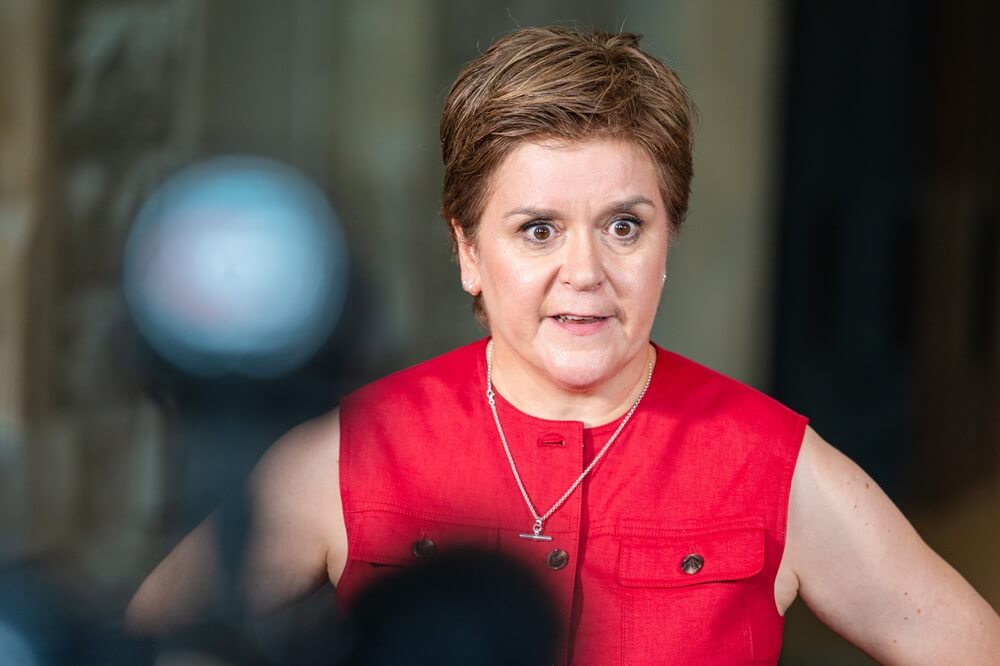 He's got to start delivering - Nicola Sturgeon
She said the public wanted to see the prime minister start delivering on his promises, listing his pledges to reform social care, sort out the relationship with the EU and reverse neo-liberalism.
“These weren’t small promises,” said Sturgeon, adding: “He's got to start delivering.”
Will Burnham take the bait or will he hold off, at least for now?
Some commentators spotted a potential clue in last week’s cautious, steady-as-you-go budget from the new chancellor, John Healey. For once, here was a financial statement that left both the bond markets and consumers relatively happy.
The former welcomed limited spending increases and the deferment of bigger decisions until a spending review next year. The latter received some minor relief on retail prices and energy bills.
The Treasury itself described the budget as providing breathing space for today and hope for the future.
It may have offered Burnham himself some limited breathing space to resolve his election date conundrum.
But when the long-awaited spending review comes around in a year’s time, voters will be expecting more than just hope for the future but also some decisive action on implementing the policies he has promised.
Despite Burnham’s current denials, there is therefore a likelihood that he will take the risk of calling an election at a time of his choosing rather than waiting for public disillusionment to set in.
