US President Donald Trump has been remarkably candid about his plans for Venezuela. In an interview with Fox News, he vowed to rebuild the country’s oil infrastructure, adding that the United States would be “in charge” and that he expects oil companies to invest at least $100 billion.
He also made his approach explicit: reconstruction first, elections at an unspecified future date.
Asked when Venezuelans would be able to vote for new leadership, Trump dismissed the premise altogether. “They couldn’t have an election,” he insisted. “They wouldn’t even know how to have an election right now.”
Never mind Edmundo González’s landslide victory in the stolen 2024 presidential election, and that recent polls show broad support for opposition leader and Nobel Peace Prize laureate María Corina Machado.
The implication was not merely that elections must wait, but that Venezuelans are incapable of self-government until a foreign power has “rebuilt” the country.
Others in the administration have echoed Trump’s statements. White House Deputy Chief of Staff Stephen Miller has derided the “neoliberal frame” of demanding immediate elections, advocating a “judicious, thoughtful, careful transition process.”
Secretary of State Marco Rubio, for his part, has outlined a three-stage plan: “stabilization,” followed by “economic recovery and reconciliation,” and only then a democratic “transition.”
Laura Dogu, Trump’s envoy to Venezuela, has also described a final stage culminating in “a friendly, stable, prosperous, and democratic Venezuela.”
Delay is not neutral
In this framework, democracy is not the source of political legitimacy; instead, it is the last – and least important – goal.
For Venezuelans at home and abroad, Trump’s rhetoric is deeply unsettling. It suggests that democracy is merely window dressing for control of Venezuela’s oil wealth.
“Stabilization” and “recovery” have no clear finish line; they can drag on indefinitely. And if elections are perpetually postponed, they may never happen.
This is a classic signaling problem. In economics, commitments become credible when they involve costs that only a sincere actor would be willing to bear.
A transition that puts oil first and elections last imposes no such costs. It is easy to announce and even easier to prolong.
Moreover, delay is not neutral. It gives incumbents time to consolidate power, rewrite the rules, intimidate opponents, and normalize the idea that democracy is a privilege to be granted later, once authorities decide the country is “ready.”
In the meantime, the dictatorship retains its power and further enriches itself.
Companies commit capital in exchange for decades of expected returns, predicated on stability and institutional continuity
Ironically, the same logic applies to the oil industry itself. Oil investment is not humanitarian aid. It is a long-term contract.
Companies commit capital in exchange for decades of expected returns, predicated on stability and institutional continuity.
The US cannot plausibly seek $100 billion in private investment while signaling that political legitimacy is negotiable.
Without credible institutions, Venezuela is as ExxonMobil CEO Darren Woods put it, “uninvestable.”
If the US was serious about eventual Venezuelan democracy, it would not be announcing vague commitments. Instead, it would be acting now to fix what needs to be fixed, of which there is plenty.
Doing so would be a credible signal of real democratic intentions. Not acting to address these issues suggests lack of commitment to democracy and the rule of law.
What needs to be fixed?
What needs to be fixed? Venezuela’s National Electoral Council, which has long been captured by the regime and presided over the stolen 2024 election, is the obvious place to start.
Restoring credibility requires appointing a new Council through a transparent process that involves jurists and civil society, ensures participation by all major political forces, and establishes robust safeguards against partisan capture.
Appointing referees the incumbent cannot control sends a clear signal that the game will not be rigged.
Another step would be to reopen and update the voter registry. In 2024, illegal requirements blocked millions from voting, Venezuelans overseas were effectively disenfranchised, and many young citizens were unable to register.
A short registration period – say, four months – should be established, accompanied by an expansion of consular registration sites, secure online access, and international monitoring.
If Venezuela’s eight-million-strong diaspora and the three million eligible voters – mostly young people – who were unable to register, cannot participate, the legitimacy of the process will be questioned, and so will that of any major economic decisions made in the name of “reconstruction.”
Political pluralism must also be restored. Under Chavismo, courts and regulators have hollowed out opposition parties by removing their elected leadership and installing regime proxies.
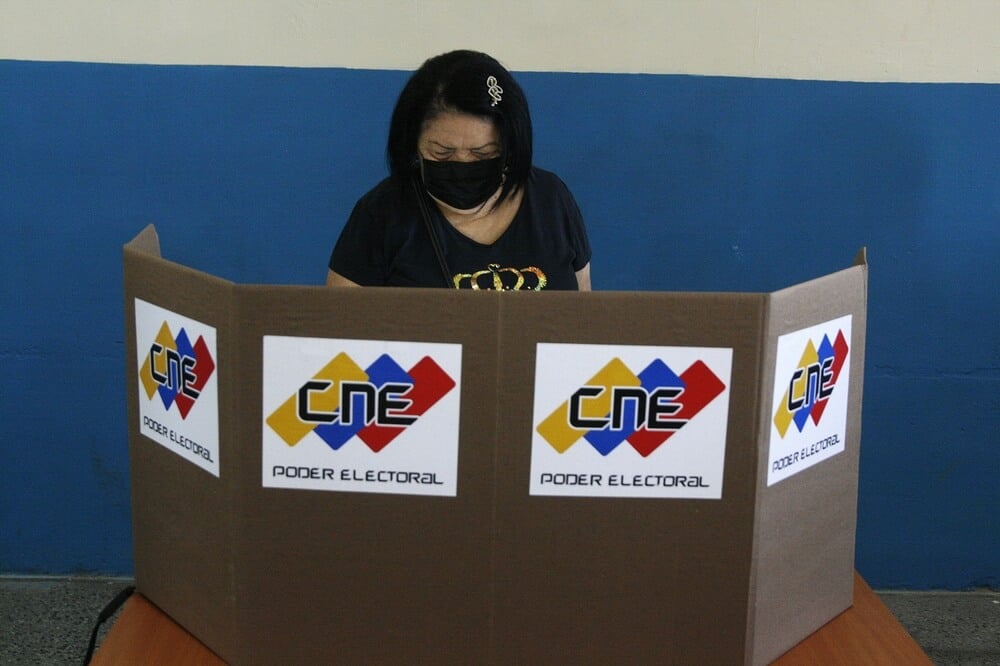 A national election should be held this year under independent international observation
Reestablishing a level playing field means reinstating legitimate party leaders, unbanning movements, guaranteeing equal access to the media, and barring the use of public resources for political campaigns.
Pluralism presupposes an end to political persecution. Hundreds of political prisoners remain behind bars, and many exiles cannot return safely.
Paper amnesties are not credible signals. Prisoners must be released, and exiled opposition leaders – including Machado – must be provided with enforceable security guarantees so that they can return, travel, and campaign without fear of arrest or violence.
The totalitarian laws that criminalize legitimate political activity must be repealed. A genuine democratic transition requires protecting dissent.
An election date must be announced now to provide a clear timetable for reforms and anchor society’s expectations.
Elections require rules and security, not a perfect economy. Venezuelans have repeatedly shown they can mobilize politically amid hardship; what has been missing is an incumbent willing to concede defeat.
A national election should be held this year under independent international observation, with full vote tallies published immediately and a pre-agreed mechanism for resolving disputes.
Credibility matters
Lastly, oil profits must not become a substitute for democracy. Resource revenues should be placed in escrow on behalf of the Venezuelan people, and their disbursement should be conditioned on meeting these democratic benchmarks.
Using those funds to promote institutional reform would help counter claims that Trump’s plan amounts to taking Venezuelan oil at “gunpoint.”
Credibility matters as much in politics as in financial markets
Credibility matters as much in politics as in financial markets. If the US wants Venezuela to be a reliable partner and a country that investors can trust, democracy must be the organizing principle of US policy.
That means putting in place the legal and institutional guarantees that ensure free, fair, competitive elections. Anything less will be viewed – correctly – as cheap talk.
Ricardo Hausmann, a former minister of planning of Venezuela and former chief economist at the Inter-American Development Bank, is a professor at Harvard Kennedy School and Director of the Harvard Growth Lab.
