A few days ago, President Donald Trump, responding to journalists' questions, stated that the United States is not planning an attack on Iran, adding that he "does not want war" and that "there is no need to take military action at this time."
Delivered in his typically brief and direct manner, the message appeared intended to calm speculation that has been growing in Washington and across the Middle East in recent weeks.
The president's statement was not matched by corresponding redeployment of forces on the ground, raising questions about the current phase of US policy towards Iran.
Although the president said that an attack on Iran is not planned, American forces in the region remain at a high level of combat readiness, with a schedule that allows for rapid decision-making and immediate implementation.
Washington is currently at a stage where the military option is fully available, but the political decision to use it has not been made. US military plans for limited strikes exist and are ready for implementation, but a final decision on their use is pending.
This means that US forces are prepared to act quickly, but the decision to strike is deliberately withheld to avoid being automatically drawn into a wider escalation. Thus, military preparedness serves as a form of pressure rather than an immediate trigger for action.
Operating from a distance
The current American approach to Iran relies on operating from a distance. The emphasis is on naval and submarine platforms with missile capabilities, as well as long-range air strikes from strategic depth.
Reliance on land bases near Iran is being consciously reduced to limit the exposure of regional partners and reduce opportunities for Iranian countermeasures.
That approach is not limited to plans; it is already implemented in the current deployment of US forces. A particularly important signal is the transfer of a carrier strike group from the Indo-Pacific region to the area of responsibility of US Central Command (CENTCOM – US Central Command for the Middle East).
Such a move cannot be explained by routine rotation. The United States has thereby significantly strengthened its military capabilities in the region.
The Nimitz-class aircraft carrier, with a full air wing and an escort of ships equipped with the Aegis system (an integrated air and missile defence system), enables long-term operations without relying on regional infrastructure. Thus, Washington ensures complete operational autonomy but at the same time accepts significant costs.
The level of readiness is maintained, and the military option remains open and under serious consideration
Those costs are not only budgetary. The temporary withdrawal of high-value naval capabilities from the Indo-Pacific region means accepting additional risk in an area where the balance of power with China is carefully measured.
Sustained high alertness has a real cost. It places a burden on the manpower, logistics, and technical maintenance of forces. Despite this, the level of readiness is maintained, and the military option remains open and under serious consideration.
At the same time, field adjustments remain carefully controlled. At Al Udeid Air Base, the main hub of US air operations in the Gulf, some protective measures have been eased compared to the highest level of alert recorded earlier.
However, key readiness parameters remain unchanged. DEFCON (Defence Readiness Condition) and LERTCON (Local Emergency Readiness Condition) are still at a high level, and command and strike elements retain the ability to move quickly into the execution phase.
A similar pattern is present at other points of American presence in the region. In Bahrain, home to the US Fifth Fleet Command, naval and command functions remain at full capacity.
In the United Arab Emirates, US air and support units maintain an operational rhythm that allows for rapid escalation without visibly increasing the political profile of the presence. The absence of dramatic force deployment is part of a crisis management strategy, not a signal of retreat.
A political decision above all
In this context, the most important issue is not military but political. The decision to strike depends on an assessment of whether limited military action would produce a strategic effect that outweighs its consequences.
The internal situation in Iran makes that assessment even more complex. The stability of the regime in Tehran today relies above all on coercion.
External military action remains an instrument of punishment and deterrence, not a means of political change
Security and intelligence structures continue repressive operations in several parts of the country, especially in peripheral and ethnically sensitive regions. The regime maintains control through constant security operations and repression.
Under such conditions, limited US strikes would not alter the internal balance of power in Iran. They would cause material damage and send a strong political message but would not lead to the collapse of the regime or significant divisions within the ruling elite.
In this case, external military action remains an instrument of punishment and deterrence, not a means of political change.
Why delaying has become a risk
This is precisely where America's dilemma lies. The military option is feasible and prepared, but its scope is limited. Prolonged waiting, however, brings increasing costs and raises the risk of an unplanned incident that could force escalation beyond political control.
President Trump's administration is apparently trying to buy time, maintaining full military readiness while publicly rejecting the prospect of an imminent strike.
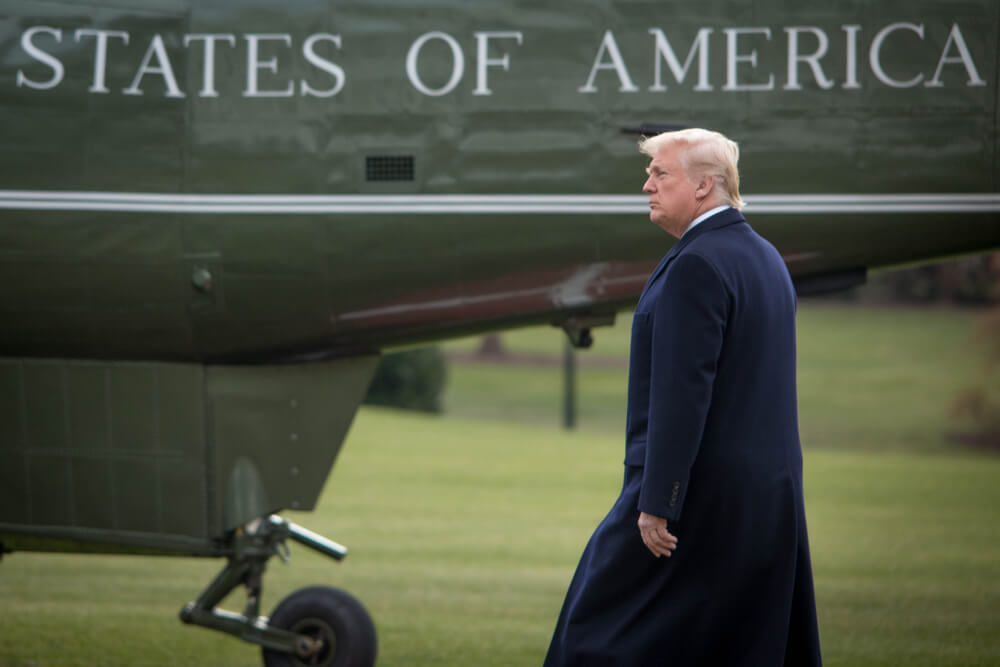 America's military capability is not in question. Only the timing of the political decision remains unresolved - Donald Trump
This is a high-risk strategy. Time in such crises is not neutral; it consumes resources, influences the behaviour of actors, and alters perceptions of determination.
Iran is using this period to strengthen internal control and demonstrate resistance to external pressure. Regional US allies are trying to assess how long this situation can last and how it will affect their security and economies.
European countries observe the situation through the lens of energy flows and the stability of maritime traffic.
America's military capability is not in question. Only the timing of the political decision remains unresolved. While it is delayed, forces remain deployed, and the cost of this situation continues to rise.
Currently, American policy towards Iran focuses on maintaining military readiness without making any decisions about its use.
This approach requires constant engagement of expensive resources, prolonged exposure of personnel, and acceptance of risks that increase over time.
At the same time, there is no indication that the mere presence of these forces changes Tehran's behaviour or affects the internal structure of the regime.
In this respect, postponing the decision does not represent a stable situation but a temporary solution that consumes resources without a clear political effect.
