Barely four years after as many as 600,000 people died in the Tigray war of 2020-2022, fears are rising of renewed civil conflict in the northern Ethiopian region.
Addis Ababa has stepped up verbal hostilities with leaders in the Tigrayan capital of Mekelle and their alleged backers in the Eritrean capital of Asmara amid reports of Ethiopian and Eritrean troops mobilising on the Tigray border.
The situation is made all the more volatile because new hostilities threaten to drag in outside powers backing opposing sides in the Sudan war next door, including the United Arab Emirates and Saudi Arabia.
The Horn of Africa has become one of the world’s most inflammable regions, and there is no international consensus on how to dial down the temperature.
A regional powerhouse seeking international legitimacy
Ethiopia is a regional powerhouse, and its government’s desire for international legitimacy should provide leverage to major powers such as the European Union and the US, along with global bodies such as the International Monetary Fund and the African Union.
But there has been no concerted action to date. A key factor might be Ethiopia’s general election in June, when Prime Minister Abiy Ahmed is seeking a renewed mandate as well as international investment.
Long-standing grievances have been left to fester and were not addressed in the 2022 peace deal to end the last Tigray war
Abiy was awarded the 2019 Nobel Peace Prize for ending a 20-year border war with Eritrea, but this did not stop him from launching a military offensive in Tigray in 2020, causing a subsequent humanitarian crisis.
Now there are fears of another civil war, which last time around was marked by massacres, ethnic cleansing and sexual violence and has left thousands of people still languishing in displacement camps. Long-standing grievances have been left to fester and were not addressed in the 2022 peace deal to end the last Tigray war.
The rapprochement has fallen apart
In 2020, Ethiopia joined forces with Eritrea and other militias to fight the Tigray People’s Liberation Front (TPLF), which had dominated Ethiopian national politics until Abiy’s rise to power in 2018, when he began a purge of its officials.
The rapprochement between Addis Ababa and Asmara has fallen apart since 2022. Eritrean President Isaias Afwerki believes the TPLF should be excluded from any political position in Ethiopia because of its role as the main party during the war between Ethiopia and Eritrea in 1998-2000.
Addis Ababa has accused Asmara of supporting rebel forces
In recent weeks, there have been military clashes between the Ethiopian National Defence Forces and the regional Tigray Security Forces, while Addis Ababa has accused Asmara of supporting rebel forces. There has also been increased factionalism and fighting between different Tigrayan groups.
Analysts say a proxy war fought by groups backed by Ethiopia and Eritrea centred on Tigray is highly possible and more likely than another full-scale war between the two countries.
A critical juncture for an already precarious region
“The situation remains highly volatile and we fear it will further deteriorate, worsening the region’s already precarious human rights and humanitarian situation,” UN human rights chief Volker Türk said last week.
The UN also warned that recent tensions between Ethiopia and Eritrea risked worsening the already serious human rights and humanitarian challenges across the wider Horn of Africa.
“This is a critical juncture,” said an open letter sent by the TPLF to the African Union last week, urging the body that brokered the 2022 Pretoria peace accord to do more to preserve it.
The TPLF said measures constraining civilian life in Tigray, including restrictions on movement, economic pressure and political exclusion, were raising the risks of “renewed confrontation.”
Under Abiy many human rights groups and independent media groups have been shut down or forced into exile
Ethiopia’s federal government has withheld foreign funds from Tigray, and civil servants there have not been paid for months. Many people are leaving Tigray, many to the neighbouring region of Afar, as they seek safety ahead of any war.
Many people also fear Abiy will use this year’s elections to entrench authoritarian rule by his Prosperity Party by fanning ethnic grievances amid insurgencies not only in Tigray but also in the provinces of Amhara, Oromi and Somali.
In many regions, Prosperity is the only party allowed to run. The TPLF, for example, was deregistered as a political party last year, but the election board did allow the formation of a rival party, the Tigray Democratic Solidarity Party. Furthermore, under Abiy, many human rights groups and independent media groups have been shut down or forced into exile.
The omens for Tigray are not good
Abiy raised tensions with Eritrea earlier this month by again speaking of his ambitions for landlocked Ethiopia to gain access to the sea. Eritrea has accused Ethiopia of seeking to invade and reclaim the Red Sea port of Assab after losing it in 1993 with the independence of Eritrea.
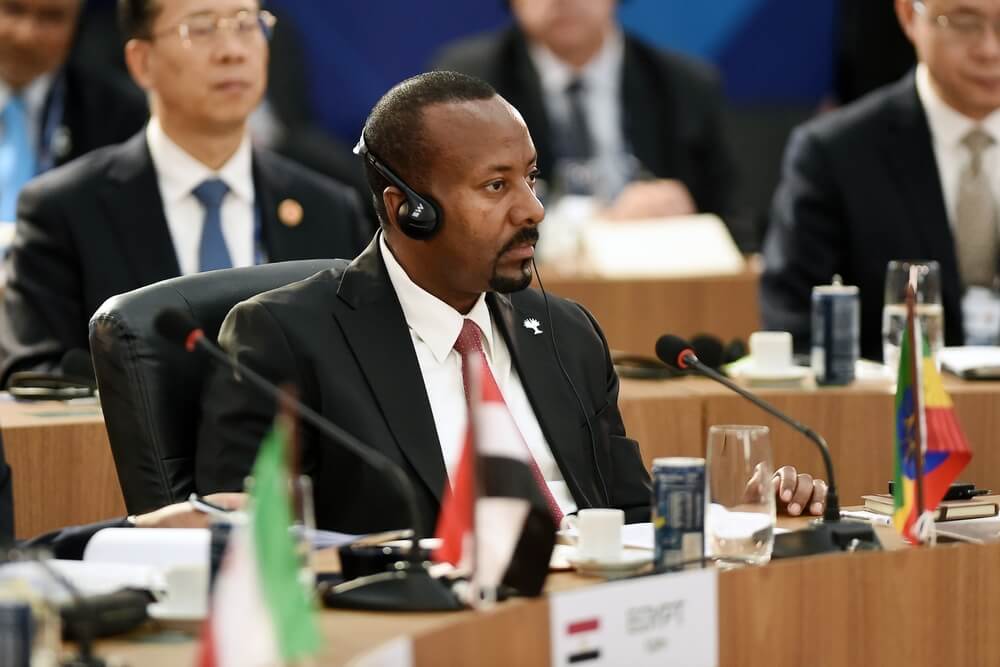 Abiy Ahmed raised tensions with Eritrea earlier this month by again speaking of his ambitions for landlocked Ethiopia to gain access to the sea
Adding to the volatile mix is a Reuters report that the UAE has financed the construction of a military camp in Ethiopia to train thousands of fighters for the Rapid Support Forces, which has been fighting the Sudanese army since 2023.
Ethiopia is a key UAE partner in the Horn of Africa and received extensive Emirati backing during the last Tigray war. Eritrea, meanwhile, has sided with the Sudanese army, as has Saudi Arabia.
The omens for Tigray are not good. “Ethiopia, Eritrea and Tigray are at risk of descending into a new conflict only four years after the region’s last major conflagration ended,” says the International Crisis Group.
“While all sides appear wary of igniting a new war, simmering grievances, overblown rhetoric and military preparations indicate that they are readying themselves for that eventuality.”
