Europe is facing its most severe security crisis in decades. While this has become obvious since Donald Trump’s return to the White House, the crisis is rooted in a deeper strategic failure: the outsourcing of defense.
Europe remains a center of soft power – through its promotion of democracy, human rights, and good governance – but it urgently must achieve strategic autonomy by developing a credible security framework.
The response must be not only broad and inclusive but also realistic, complementing NATO and incorporating indispensable members such as Turkey.
Europe’s security architecture has been the subject of intense debate for many years.
Barely two years after French President Emmanuel Macron lamented NATO’s “brain death,” Europe found itself adjacent to the largest military confrontation since World War II.
Yet the United States has signaled discomfort with its longstanding role as the continent’s primary security guarantor, and the broader international system has begun to crumble as opportunism and narrow self-interest replace alliances and partnerships.
These trends are global, but Europe is feeling the effects more than others. The Trump administration’s hostile rhetoric has served as a wake-up call.
The US shouldered a significant share of the burden for European security, while the continent itself has enjoyed prosperity without caring too much for the security bill.
Washington is now making it clear that it will not serve as the perpetual protector of the continent.
Security cannot be outsourced
There is no point in blaming Trump. European leaders should have anticipated what is now happening. The continent needed to be reminded that security cannot be outsourced.
The tone of the reminder has been unfortunate, but this moment was always going to arrive.
The quest for strategic autonomy has begun, and there is no turning back
Regardless of the turn that future US administrations take, Europe can no longer rely on American supremacy and goodwill. The quest for strategic autonomy has begun, and there is no turning back.
Despite its strategic shortcomings, Europe has underestimated itself. It remains the cradle of democracy and a source of inspiration for others around the world who value its parliamentary tradition, good governance, rule of law, and respect for human rights.
These “soft” assets have been sidelined in recent years, but they remain among the continent’s greatest contributions to the modern world.
Democracies still need one another and must defend their shared values in turbulent times. Europe must increase its hard power without abandoning its principles.
It is the EU that is in a position of need
A new European security arrangement should not try to substitute for NATO, nor should it rest solely on the EU’s political and bureaucratic foundations.
Europe lacks the capacity to defend itself without its non-EU NATO allies. A credible security framework would extend from the Atlantic to the Black Sea, encompassing both Turkey and the United Kingdom.
It must embrace Europe in its broadest geographical and strategic sense, rather than being confined to the institutional boundaries of the EU.
The bloc cannot afford to repeat the mistakes made during Turkey’s EU candidacy, when one-sided rules and political arrogance derailed progress.
Now it is the EU that is in a position of need. Becoming a strategic force requires not only a change in policy but a change in mentality.
The tendency to lecture others must give way to genuine cooperation and honest dialogue.
As the person who led Turkey’s EU accession negotiations, I witnessed the dishonesty of some EU leaders firsthand.
I well remember how they used the Cyprus issue as a pretext to block our accession.
They knew that accepting the Greek Cypriots into the bloc violated a core EU principle, namely that all border problems must be resolved before accession.
This time, European leaders must be more honest and sincere in pursuing cooperation with Turkey.
They also must ensure that European security cannot be held hostage by a few EU member states pursuing their own narrow interests.
Turkey brings not only ample military capabilities but also its regional reach and geopolitical clout
Turkey brings not only ample military capabilities but also its regional reach and geopolitical clout.
We have NATO’s second-largest army (after the US). We have emerged as a regional power with influence stretching from the Caucasus to the Middle East and beyond. Our growing defense industry has become a major source of military-technological innovation globally.
Moreover, Turkey has consistently responded when European security required it.
We played a central role in defending NATO’s southeastern flank during the Cold War, often sacrificing our own needs in the name of contributing to European security.
Europe should acknowledge this moral debt, not least to signal its commitment to shaping the continent’s shared future.
Turkey also bore significant costs during the Syrian civil war and refugee crisis. We continue to help stabilize Syria and the broader region.
We have demonstrated our importance during the war in Ukraine, voicing our support for territorial integrity, pursuing diplomacy with Russia, and taking decisive action in the Black Sea as a guarantor of the Montreux Convention.
Turkey is a natural pillar of European security
A renewed Turkish-EU partnership would benefit both sides. As in the 1950s, we now have an historic opportunity to commit to a collective security arrangement.
Turkey needs to remain part of the democratic world, especially in a new global context where norms and rules are increasingly contested.
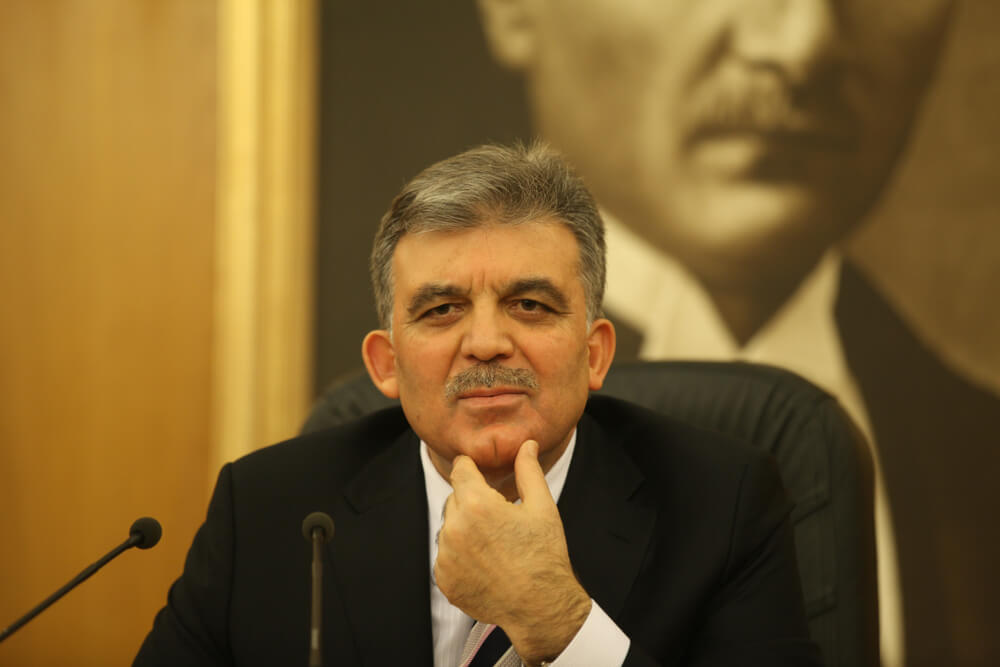 A renewed Turkish-EU partnership would benefit both sides. We now have an historic opportunity to commit to a collective security arrangement - Abdullah Gül
Turkey is a European country. We belong to the continent culturally, geographically, historically, and politically.
By re-engaging with European partners and renewing strained relationships, we can support domestic improvements in political standards and good governance, as well as increase our economic attractiveness.
Relations between Turkey and some EU countries may remain tense, but necessity tends to have a thawing effect.
Turkey is a natural pillar of European security; without it, the entire structure remains incomplete.
As many observers have noted, whether and how Turkey is included in European defense mechanisms such as SAFE (Security Action for Europe) will be decisive.
Such commitments would also signal Europe’s seriousness about building a credible security architecture. Turkey can help enhance security, while also benefiting from renewed engagement with Europe’s normative framework.
Such cooperation would benefit all sides. In times of crisis, meeting the moment requires creative thinking and ambition. It is time for Europe to grow to its full potential.
Abdullah Gül is a former president of the Republic of Turkey.
