Multilateralism scored a rare victory last week after the US failed to stop the adoption of a concluding statement about women’s rights at a UN meeting in New York, the largest annual gathering on gender equality.
But activists are gearing up for another battle over a proposed merger of two UN agencies that protect women and girls, and a UN assessment of such a move is expected later this month.
The fight could reach a vote at the UN General Assembly in September, when women’s rights groups fear Washington might muscle its allies to dilute the UN’s work for women.
Since taking office, President Donald Trump has withdrawn from several agencies, including UN Women and the UN Population Fund (UNFPA), leading to proposals for their merger.
Washington has also expanded the Mexico City Policy, which bars groups from accessing US aid if their activities include abortion provision, “gender ideology” or diversity, equity, and inclusion - even if funded by another donor.
But last week there was global pushback. The US was the only country to cast a “no” vote and failed to prevent the UN Commission on the Status of Women (CSW) from adopting its Agreed Conclusions on strengthening access to justice for all women and girls.
The annual meeting of the CSW, which was established in 1946 and is the main global body dedicated to gender equality, was held on 9-19 March.
Global pushback
In the two weeks before the vote, the US had sought to remove a number of provisions, including “ambiguous language promoting gender ideology” and “vague, unqualified commitments to sexual and reproductive health that can be interpreted as implying abortion rights,” said Dan Negrea, US ambassador to the UN Economic and Social Council.
In the end, there were 37 votes in favour and six abstentions from Côte d’Ivoire, the Democratic Republic of Congo, Egypt, Mali, Mauritania, and Saudi Arabia.
The UN General Assembly Hall erupted into standing applause after the vote, as good a gauge as any to measure Washington’s low global standing.
The Agreed Conclusions, in which countries reaffirmed their commitment to repeal discriminatory laws, among other measures, was an important move, said Sima Bahous, executive director of UN Women.
No country has yet achieved full equality between women and men, according to a recent UN Women report
“By coming together, governments are once again demonstrating to the world what this Commission can achieve - and what our multilateral system can deliver for women and girls,” she said.
No country has yet achieved full equality between women and men, according to a recent UN Women report, while facts on the ground are not stopping aid cuts by the US and other previously generous western donors.
An estimated 70,000 women die from postpartum haemorrhage, which is highly treatable. Some 54% of countries lack consent-based legal definitions of rape, while 72% allow child marriage in all or some circumstances.
Reforming the UN system amid geopolitical fractures
More than 670 million women now live within 50 kilometres of conflict, but 90% of women-led and women’s rights groups in crisis zones have been hit by global aid cuts. The US and Israeli war against Iran will add to these numbers.
"In 2026, what is urgently needed is clear: remove barriers that prevent women in fragile settings from accessing health care, safety and recovery from violence, financing, markets, and decision-making spaces,” said Kelly Razzouk of the International Rescue Committee.
Antonio Guterres proposed the merger of UN Women and UNFPA as part of UN80
Antonio Guterres, the UN secretary-general who steps down at the end of this year, proposed the merger of UN Women and UNFPA as part of UN80, an initiative to reform the entire UN system amid the sustained US attacks on it and the fracturing geopolitical situation.
But activists point to the agencies’ differing mandates that could be lost in a merger: UN Women focuses on policies and co-ordinates action on gender equality, while UNFPA implements programmes on access to sexual and reproductive health services, including in conflict settings.
Furthermore, their budgets are relatively small: $1.45 billion for UNFPA and $500 million for UN Women.
Protecting sexual and reproductive health rights
More than 500 rights organisations have signed an open letter to Guterres urging him to protect sexual and reproductive health rights.
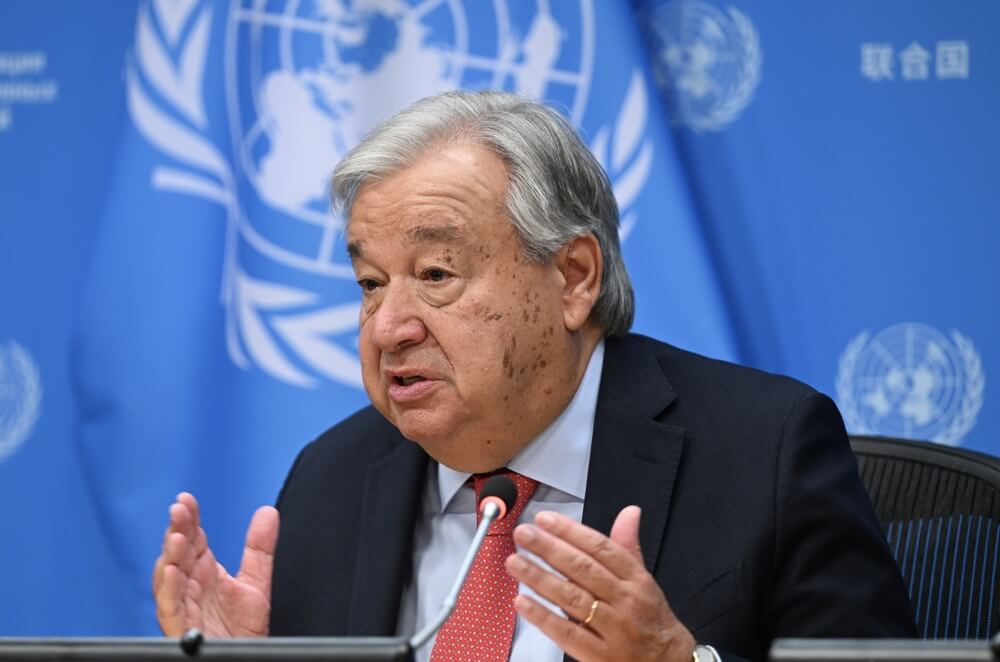 A bitter wind is blowing around the world. That wind is hardening attitudes and fuelling a backlash against women’s rights - Antonio Guterres
“As donor governments slash their development budgets and look for places to scale back, funding for both gender equality and sexual and reproductive health and rights is already declining precipitously,” Shannon Kowalski and Jessica Stern wrote in Devex. “A merger risks accelerating, not reversing, that trend.”
Washington is focused on what it calls its “Promoting Human Flourishing in Foreign Assistance Policy” in how it directs US non-military aid that has three main rules: “protecting life”, “combating gender ideology” and “combating discriminatory equity ideology”.
The human flourishing rule will have serious real-world implications. For example, non-governmental organisations will not only have to keep US donations financially separate but also ensure physical separation, so that a clinic that provides abortions would have to offer different entrances, waiting and exam rooms for services funded by the US, says the International Crisis Group.
“These are trying times,” Guterres told women’s rights defenders last week. “A bitter wind is blowing around the world. That wind is hardening attitudes and fuelling a backlash against women’s rights.”
