European unpreparedness for the geopolitical, security and economic crises that are currently ripping across the globe should have alarm bells ringing in every capital on the continent, as well as finally creating a sense of urgency.
Instead, progress on structural change, especially on defence, is still glacially slow, and even the EU’s vaunted aid to Ukraine is now being blocked by ultra-nationalists in Hungary, Slovakia and, indeed, originally, Belgium.
Donald Trump’s latest taunts aimed at European countries over the Iran war are disingenuous but do touch on a sore point: Europe still cannot, or will not, invest in the hard power needed to look after its own interests.
Charting a more independent course
It stands to reason that even amid the Iran war ructions, Europe will not abandon Ukraine. And to underline this, European foreign ministers this week attended the commemoration of the infamous Bucha massacre at the start of Russia’s full-scale invasion, four years ago.
Yet, under pressure from the effects of the Iran war but likely also with an eye on European inability to act, Ukraine has started charting a slightly more independent course on the world stage.
It is easy to dismiss Volodymyr Zelensky’s overtures to the Gulf countries as a gimmick, to point out that the defence needs are quite different there and that Ukraine can hardly afford to divert its own capacities.
But that would be at least partly inaccurate – despite the differences, there is a defence overlap – and it would also be largely beside the point.
Ukraine has been working to structurally expand its support base beyond the West, both to the global South and to Asian powers
Ukraine is not just trying to prove its worth as an ally to an intrinsically transactional US government, it’s also been working to structurally expand its support base beyond the West, both to the global South and to Asian powers.
This has met with mixed success so far, at least in practical terms, but the opening to the Gulf states could help nudge it further along.
All this comes amid a mostly stalemated situation on the battlefield and the low likelihood of successful peace talks.
A much longer hot war stand-off than had until now been anticipated is on the cards in Ukraine. Russia is attempting to exhaust the country and make incremental gains, yet is not currently making the progress that it needs to force a surrender or more concessions.
Ukraine is accordingly reorganising its defences, including changes to its recruitment policies and confronting its manpower challenge, building up its defence and industrial base, with a geographical shift away from the frontline to the west, and also changing expectations of Western support.
A fickle partner
The US under Donald Trump will remain a fickle partner, even if the Democrats gain control of the House in the upcoming midterm elections. A major rupture, possibly before then, is still a possibility if Trump becomes displeased with a Ukrainian response to a Russian peace proposal.
The Trump administration is already warning of a slowdown in weapons shipments to Ukraine, giving the Iran war as the reason, or excuse.
This also poses a problem for European military aid to Ukraine, which still, for a significant part, relies on paying for US arms deliveries.
Ukraine’s own arms production is ramping up, and an increasing share of weapons and munitions is being produced in Europe, but for some advanced systems, both remain reliant on the US for years to come.
‘Punishment’ for European reluctance to act against Iran could for Trump and his officials quite easily translate into reduced support for Ukraine
However unthinkable it might sound, Ukraine will also have to take a scenario into account where European support will wane over time or where it will become less effective or even a liability.
The latter could be the case with Trump’s pique over Europe’s stance on the Iran war. Just as Trump is framing free navigation in the Strait of Hormuz as a European interest, he also sees Ukraine as mainly a European affair in which the continent hasn’t stepped up sufficiently.
‘Punishment’ for European reluctance to act against Iran could for Trump and his officials quite easily translate into reduced support for Ukraine.
Zelensky’s support for the Gulf states cleverly seeks to counter this scenario by distancing him from Europe’s stance. Yet, it’s doubtful this will be enough in the hardball politics being played in the region and in Washington D.C.
Ukraine’s path towards greater self-reliance
Europe will therefore, despite the geopolitical and financial strains caused by the Iran war, remain the main source of aid for Ukraine.
But even amid the current high level of public support for the country in the EU, it’s fair to wonder about both the bloc’s steadfastness as well as its effectiveness.
Germany, for example, is on the one hand upping its military aid for 2026-2027, but Merz has walked back his promise, made while in opposition, to provide Ukraine with the German Taurus missile. He’s also one of the major European leaders most opposed to a speedy EU accession for Ukraine.
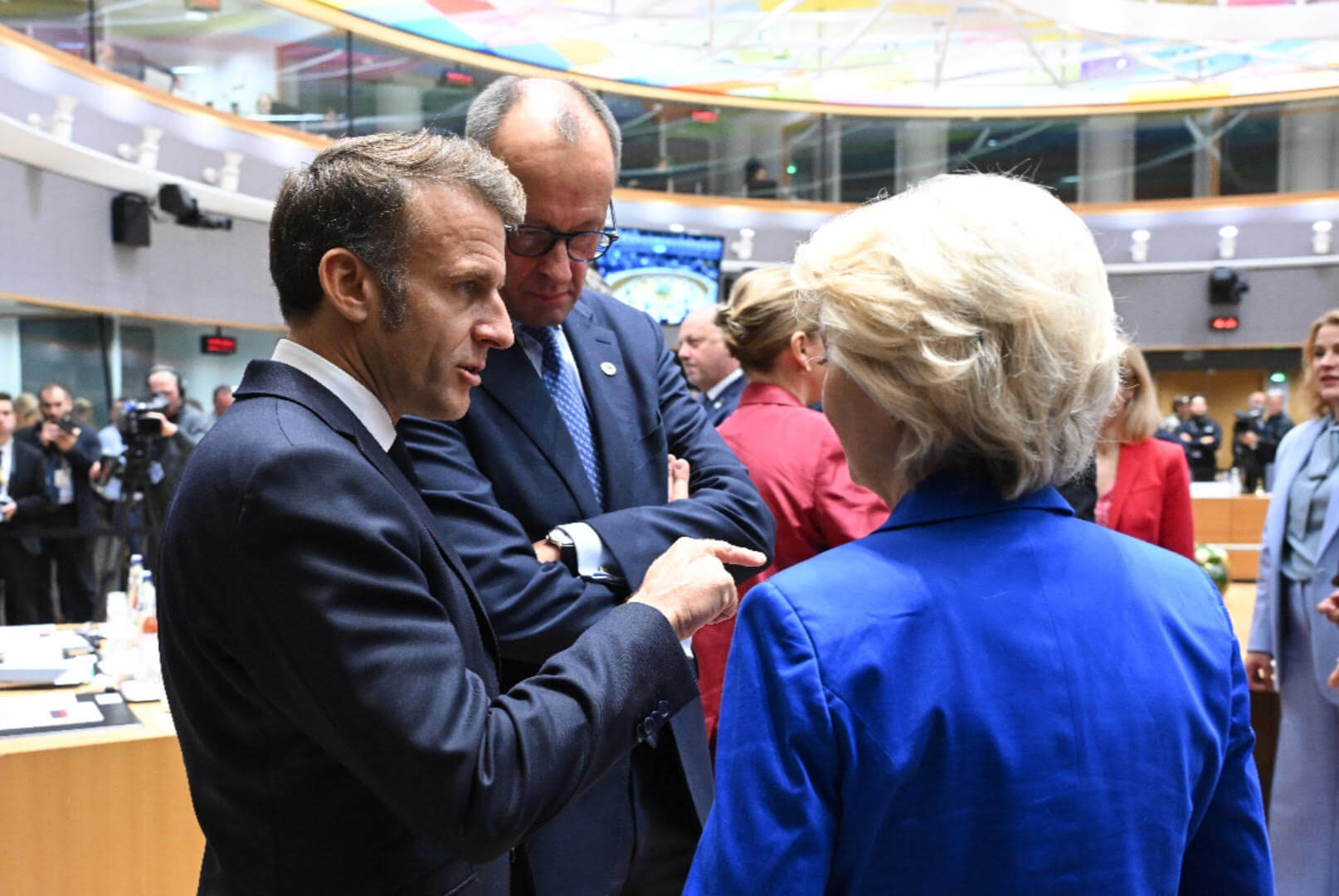 European leaders are balancing security and defence issues with other concerns – economic, political and the like
While France has been a steadfast supporter, the 2027 presidential elections and the end of the Macron era could also see at least a subtle shift in that country’s commitment.
Even now, with the political winds still relatively favourable to Ukraine in Europe, the EU is failing to step up on its financial commitment, unable to unblock the €90 billion loan it has promised.
And the military commitment of the coalition of the willing, which includes the UK, is also starting to show signs of retreating from some of the firmer proposals, such as European peacekeepers and boots on the ground.
If the European stance, both on Iran and Ukraine, was born mainly out of a justified concern not to escalate unnecessarily, that could help shape a responsible policy.
The reality is, however, that it’s informed mostly by a lack of options. Russia knows that Europe will not step in harder to help Ukraine, Iran knows it could target European ships in the Strait of Hormuz with relative impunity.
European leaders are balancing security and defence issues with other concerns – economic, political and the like.
This is understandable and only right, but there are at least two big problems: Europe currently doesn’t appear very successful on any of these fronts, and delayed action on defence and security is only likely to pose bigger problems down the road.
For a Ukraine that’s increasingly looking at a long-lasting war and enduring limits on European capacities, the only choice seems ever greater self-reliance and extending its alliances further afield.
