While Donald Trump states that securing the Strait of Hormuz is not an American obligation, Emmanuel Macron signs agreements on defence, rare earths, and nuclear energy in Tokyo with Japanese Prime Minister Sanae Takaichi.
Macron arrived in Tokyo on 31 March with a package of pre-prepared agreements. Over the course of two days, fifteen documents covering key sectors of security and industry were signed.
At the same time, Trump declared that Hormuz was an issue for others to address and called France "very unhelpful." Macron did not respond. He completed the visit and signed the agreements.
Japan is among the economies most exposed to this crisis. About 90 per cent of its oil is imported, with two-thirds coming from the Middle East. The blockade of the Strait of Hormuz since 4 March has directly affected this supply route.
Japan has no domestic resources, no short-term alternative routes, and no influence over the decisions that led to the crisis. The price of Brent crude reached 116 dollars per barrel by 1 April, about 60 per cent higher than at the end of February.
This is not an abstract increase; it is a cost immediately reflected in production, transport, and energy prices.
France’s role in regional security
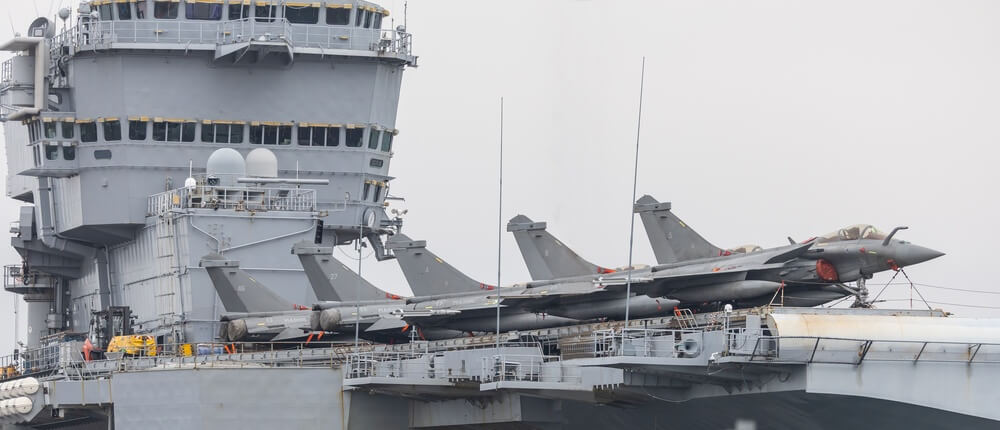
France is not in the same energy situation, but it faces its own limitations. Macron sent an aircraft carrier to the region to secure French and allied interests, but without engaging in combat operations.
This is not a military assessment but a political decision. The French public does not view this crisis as their war. The scope for direct involvement is limited.
In Washington, the French position was seen as insufficient support. Macron did not respond. In Tokyo, he concluded agreements that stand independently of the American framework.
The United States remains a major partner, but access to key systems comes with restrictions
In defence, cooperation takes concrete form. Japan made the decision in 2022 to increase defence spending to two per cent of GDP by 2027.
This requires technological and industrial cooperation. The United States remains a major partner, but access to key systems comes with restrictions.
France does not impose such restrictions. For Japan, this means greater scope to develop its own capabilities. For France, it means a long-term presence in a rapidly expanding market.
Addressing supply chain vulnerabilities
The rare earths deal addresses a clearly defined problem. China controls about 60 per cent of global production and about 85 per cent of processing of rare earths.
Without these materials, there are no modern weapons systems, no electric vehicles, and no advanced chips.
This dependence has existed for years. The crisis in Hormuz has not changed this, but it has increased the consequences at a time when supply chains are already strained.
Paris and Tokyo are trying to secure alternative sources and processing. If they succeed, even partially, they will reduce their direct exposure to Chinese control in key industries.
The agreement on nuclear energy is moving in the same direction. It includes the development of advanced reactors and fuel recycling. Japan is attempting to revive a sector that was practically halted after the Fukushima nuclear disaster.
Before 2011, nuclear energy accounted for about 30 per cent of electricity production. Reconstruction is progressing slowly and faces constant public resistance.
A planned joint visit to a company involved in space debris removal demonstrates that cooperation extends beyond traditional sectors
Rising energy prices and supply uncertainty are changing attitudes towards this issue. Nuclear power is being reconsidered as a stable source, rather than a political burden.
France, which obtains about 70 per cent of its electricity from nuclear sources and has a developed industrial infrastructure, is a logical partner.
For Japan, it is a way to reduce dependence on fossil fuel imports. For France, it is confirmation of the role it seeks to maintain outside Europe.
A planned joint visit to a company involved in space debris removal demonstrates that cooperation extends beyond traditional sectors.
A unique position in the Indo-Pacific
Tokyo is not an exception but part of a wider shift in the Indo-Pacific.
Japan is increasing its military budget and developing counterattack capabilities. Australia is entering the nuclear submarine programme through AUKUS. The Philippines is reopening bases for US forces. South Korea is rapidly modernising its military.
 France remains the only European actor with a realistic capacity for a military presence in the Indo-Pacific
Alliances with the United States formally remain, but operational assumptions are changing. States in the region are building capacities that enable them to act without direct reliance on American intervention.
In this context, France holds a unique position. It is the only EU country with nuclear capability, a global military presence, and a permanent seat on the UN Security Council.
France can operate in the Indian Ocean, the Pacific Ocean, and the Persian Gulf.
With Britain no longer in the European Union and the slow pace of German military build-up, France remains the only European actor with a realistic capacity for a military presence in the Indo-Pacific.
A limited time frame for long-term impact
The visit to Tokyo will not influence the course of the war in the Middle East. Paris and Tokyo lack the capacity to change it. The significance of these agreements lies elsewhere.
Cooperation in rare earths reduces exposure to Chinese control in key industries. Nuclear projects pave the way for a more stable energy supply in Japan.
The defence deals give France a long-term role in a region where it has previously had little operational influence
The defence deals give France a long-term role in a region where it has previously had little operational influence.
The time frame is limited. Macron is nearing the end of his term and faces internal constraints and political pressures. Washington is moving towards resolving open crises on its own terms. The scope for long-term initiatives is narrow.
The visit to Tokyo was prompted by circumstances beyond the control of either Paris or Tokyo. That is why the agreements were concluded quickly and without political delay.
At present, France and Japan are acting as countries that do not rely on others to solve problems that directly affect them.
Photo: Official Website of the Prime Minister’s Office of Japan
