Under President Donald Trump, US foreign policy has reached a new low. His administration’s war on Iran, coming just after its kidnapping of Venezuela’s dictator, will damage the United States and change how the rest of the world views American power.
Of course, this is not the first time the US has pursued an ill-fated, poorly planned intervention abroad.
One of the most significant, given the current context, was the CIA’s toppling of Iran’s popularly elected prime minister, Mohammad Mossadegh, in 1953, following his nationalization of the country’s British-owned oil industry.
While it would be a stretch to say that Mossadegh’s ouster caused the 1979 Iranian Revolution, there can be little doubt that the CIA’s brazen intervention shaped how many Iranians viewed the absolute monarchy that the US installed in his place.
That is why so many segments of the Iranian population – including communists, conservatives, and liberals – initially supported the overthrow of the Shah.
Tragically, Ayatollah Ruhollah Khomeini was anything but a consensus leader. He quickly turned on his erstwhile allies and established the hugely repressive theocratic regime that remains in power today.
The lesson is that US interventions tend to have many unforeseen consequences. Not only do they create long-lasting resentments.
They also shape the soft power (the power of persuasion and attraction) that America has always used to hold together its global alliance network and convince others that its hegemony is benign, contributing to international stability and predictability.
US soft power
This matters, because most people will naturally object when the hegemon behaves like a bully.
Frequent, gratuitous displays of hard power have a way of eroding soft power, especially when an intervention lacks a coherent justification.
During the Cold War, the US at least had the overarching objective of stopping the spread of communism, which was a real threat.
Even worse for a country’s soft power is an ill-planned campaign that shows utter disregard for the lives of those affected.
Trump’s impulsive war is sure to bring US soft power to an all-time low
That is what we are now witnessing in the Middle East. Trump’s impulsive war is sure to bring US soft power to an all-time low, and no one in his administration cares about trying to rebuild what has been lost.
Far from valuing soft power, this White House sees threats and bilateral dealmaking as a substitute for winning the hearts and minds of foreign leaders and publics.
True, the Iranian regime has been singularly vicious and repressive. Most Iranians have no love for the new supreme leader, Mojtaba Khamenei (the previous supreme leader’s son), or the Islamic Revolutionary Guard Corps.
But that doesn’t mean the regime will collapse, much less imply that US intervention will bring peace and stability to the region.
Poorly planned war
The most remarkable thing about this war is how poorly planned it was – even compared to some of the CIA’s most disastrous interventions during the Cold War.
The US and Israeli militaries had plenty of well-scoped targets and precision bombs but no apparent exit strategy.
It should have been obvious that the Iranian regime would not collapse immediately, even if its top leadership was decapitated.
And it was all too foreseeable that Iran’s retaliation would aim to destabilize the region and push up oil prices.
Everyone has always known that the Strait of Hormuz is the regime’s trump card. Yet the Trump administration seems to have ignored these considerations, at least judging by senior officials’ recent statements.
The Iranian regime may have come to believe that it holds the stronger hand
As a result, the Iranian regime may have come to believe that it holds the stronger hand.
It knows that Americans have no appetite for a prolonged war, and it is prepared to endure the current blockade and suppress the population for as long as it takes to ensure the Islamic Republic’s survival. Global markets’ growing consternation reflects this.
At a time when the economy already seemed fragile – reflected in widespread talk of an AI bubble – energy-market turmoil and deepening global uncertainty could spell trouble.
The sharp increase in oil prices will slow investment and economic growth, as well as pushing up prices.
The resulting higher unemployment and inflation will be costly for incumbent governments, including those in Europe facing challenges from right-wing populist outsiders (even though most European leaders oppose the war, flatly rebuffing Trump’s appeal to send warships to help the US reopen the strait).
Trump can weaken institutions further
At home, it stands to reason that Trump should pay a steep political price for his war in November’s midterm elections.
But Trump is the supposed anti-establishment leader, and if his diehard supporters blame the establishment, rather than him, for a deteriorating economy, that could further polarize the country and weaken its institutions.
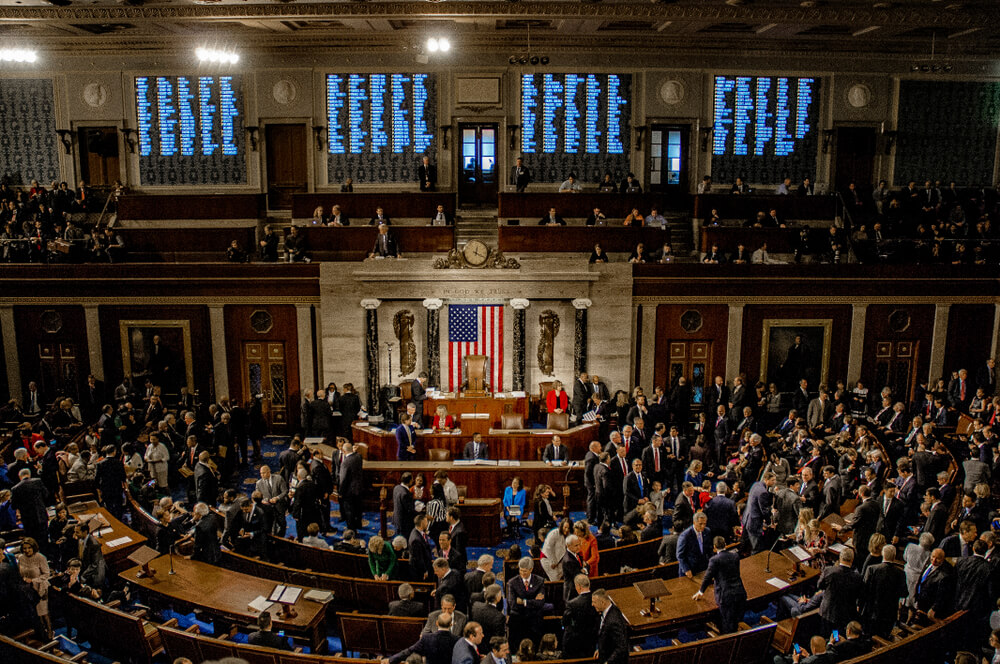 Trump will seize any opportunity he can to weaken institutions further
Trump himself is likely to throw oil on this fire by trying to polarize Republicans and Democrats – and perhaps by pursuing even more incendiary domestic actions.
After all, US institutions are already weak, with many of the norms and checks that are supposed to constrain presidential power having ceased to function.
This benefits Trump’s agenda, and he will seize any opportunity he can to weaken institutions further.
It remains to be seen how much more damage US democracy and soft power will suffer because of this ill-conceived foreign adventure.
But one thing seems likely: It is Americans who will pay the toll, and it will be greater than we can fully comprehend.
The threat to US democracy, social stability, and economic resilience is now greater than at any time in living memory.
Daron Acemoglu is a 2024 Nobel laureate in economics and an Institute Professor of Economics at MIT.
