Fog of war doesn’t even begin to describe the level of confusion, obfuscation and outright nonsense generated by protagonists and others in the current war in the Middle East.
The lack of clarity, especially about the war aims of Israel and the US, is dangerous, as it is a recipe for open-ended conflict and unintended consequences. If war is the continuation of politics by other means, then what does this war say about American and Israeli politics?
The main takeaway is that both countries are deliberately misidentifying the core of many of the Middle East’s security problems as being Iran while ignoring a root cause: the fate of the Palestinians.
They’re also being cavalier about regional stability, which flies in the face of decades of evidence that this is actually in both their interests.
To try and arrive at some level of understanding of the current situation and the way forward, elimination might be a start.
Trump’s regional approach
Suggestions that the US and Donald Trump are purely in this because they’re being led by Israel and Benjamin Netanyahu are most likely unfounded. They don’t tally with the balance of power, the character of Trump and his advisers, the high stakes, and other realistic considerations.
That being said, the war does essentially revolve around Israel’s position in the Middle East and the challenges Iran poses to it.
Iranian-American animosity and, as the world is seeing once again, the importance of energy supplies from the region have a role but, in this case, play second fiddle to the Iranian-Israeli dynamic.
Could this still be fitted into a neat explanation of what Trump’s, or the American, interest in the region is? Maybe with some degree of difficulty.
Iran has long been both the main target of this loose alliance as well as the biggest impediment to a US pivot
The Americans have, through several presidencies now, attempted to pivot away from Europe and the Middle East to Asia. Trump’s overall attitude has been to let the US allies pay their own way and reduce Washington’s material involvement.
In the Middle East his preference appears to be a security and economic architecture underpinned by Israeli cooperation with the Sunni Gulf countries, especially the UAE and eventually, or in the background, Saudi Arabia.
Iran has long been both the main target of this loose alliance as well as the biggest impediment to a US pivot.
The last man standing
Especially in the wake of the removal of Saddam Hussein in Iraq, the defeat of Islamic State and the more recent downfall of the Assad regime in Syria, Iran can be seen as the last man standing against this US-led arrangement.
For a long time, Iran was handled by a combination of sanctions, containment and hybrid warfare, including some occasional, limited flare-ups. With the Abraham Accords in Trump’s first term, things appeared to move nicely in his direction.
This process was knocked back by the Hamas attack on Israel on 7 October 2023 and the subsequent Israeli response in Gaza and beyond.
It is this attack and the perceived role that Tehran plays in supporting groups such as Hamas and Hezbollah in Lebanon that unite the US and Israeli purpose in the current war on Iran.
Israel is now a regional hegemon but still will not find peace and stability as long as it doesn’t come to some kind of accommodation with the Palestinians
Rather than first and foremost recognising the 7 October attack for what it was – the culmination of long-term Palestinian frustration and anger at being oppressed and their cause being sidelined – Israel and the US prefer to cast it as an Iranian ploy to disrupt their plans for the region.
This is not to say that there is no overlap between the two and that Iran, Hamas and Hezbollah don’t play a subverting and perfidious role. But putting the emphasis on them, rather than on addressing the underlying Palestinian issue, will only offer a temporary ‘fix’.
Israel is now a regional hegemon but still will not find peace and stability as long as it doesn’t come to some kind of accommodation with the Palestinians.
Even then there will be plenty of people in the region and beyond who will not accept the mere fact of its existence, but that is something that will have a chance to erode over time once an agreement is in place and daily outrages diminish.
Iran as existential threat
Instead, Israel is focusing on the regional context, casting Iran as both the puppet master and an existential threat due to its nuclear and ballistic missile programme. But even in its regional approach, Israel is either misguided or misleading.
The blithe assertions from Netanyahu and others that Israel is not interested in stability in neighbouring countries such as Lebanon and Syria, or in Iran, are not credible.
Fragmented, unstable or outright hostile regimes in the region have proven eventually to be costly to Israel.
Israeli public is again suffering and the country’s economy is being hit
Apart from the fact that the Israeli public is again suffering and the country’s economy is being hit, Netanyahu himself seemed pre-7 October to recognise the importance of stability and was disinclined to start major conflagrations.
He carried out dangerous attacks, such as the poisoning of Hamas leader Khaled Meshal in Jordan in 1997, but had not started an actual war.
The episode with Meshal, in fact, illustrates the importance that Israel and Netanyahu, at least used to attach to stability and friendly or neutral relations with neighbouring countries.
When Jordan’s ruler at the time, King Hussein, threatened to scrap the peace treaty between the two nations, Israel handed over the antidote to save Meshal.
‘Mowing the grass’ doctrine
The Israeli and American preference, surely, still is to have either friendly or neutral regimes in Lebanon, Syria and Iran that will curb anti-Israeli activity.
The chances of this being delivered by democratic systems are admittedly low, but especially under Trump and Netanyahu, that might be moot.
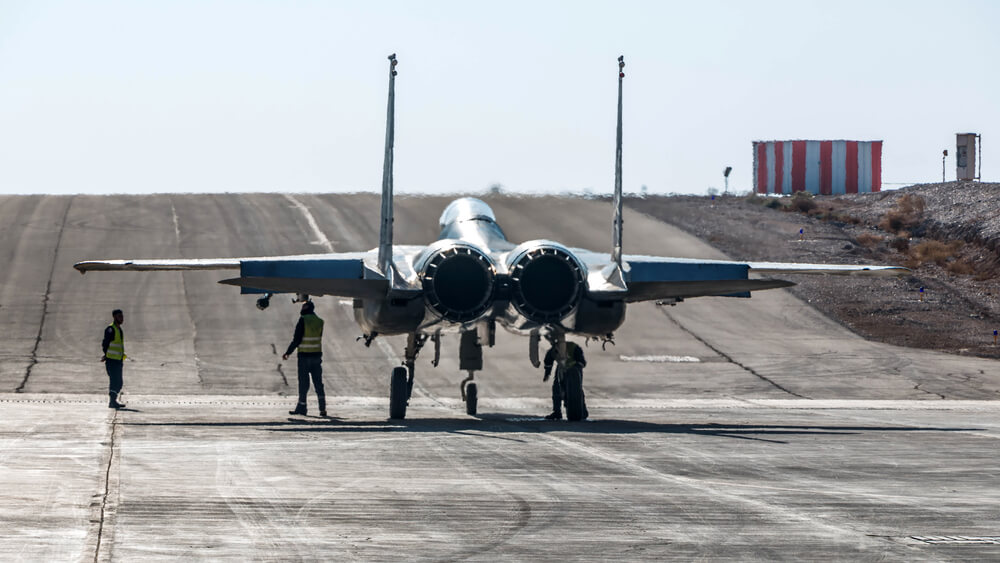 Israel has implemented the so-called Dahiyeh Doctrine: using devastating force in case it is attacked to establish a deterrent and prevent future outbreaks
In the absence of stable relations, the Israeli security establishment, under Netanyahu and others, has developed the nastily worded ‘mowing the grass’ doctrine: regularly assassinating their opponents and occasionally launching more intense attacks to curb ‘terrorist infrastructure’.
Additionally, Israel has implemented the so-called Dahiyeh Doctrine: using devastating force in case it is attacked to establish a deterrent and prevent future outbreaks.
Combined, these two doctrines have never been as effective, or lasting, as the peace treaties with Jordan and Egypt that have delivered secure borders over many decades.
Whatever the outcome of the current round of fighting, it’s no different from the two failed security doctrines. Israel will not have achieved anything other than a temporary respite until it comes to terms with the Palestinians and establishes peace with other countries in the region.
And the US, despite going all-in on Trump’s bet that diminishing the Iranian regime will ease the way for a more stable security arrangement in the region, will remain as vulnerable to things blowing up again as Israel itself.
A non-cynical Israeli counter to this, one not predicated on Netanyahu’s legal troubles and electoral considerations, might be that the Palestinian issue is genuinely unresolvable for now, and in the absence of it being settled, eroding the Iranian threat is the next best thing.
That might make some sense, were it not for the many ways in which Netanyahu especially has undermined any possibility of a compromise with the Palestinians. Until that changes radically, Israel will keep bearing a heavy share of the responsibility for regional instability.
