On 31 October, Alaska election officials asked a federal court to dismiss a lawsuit through which the Trump administration is trying to block the official certification of the results if Republican Senator Dan S. Sullivan loses, and would win only if all the votes cast for his nearly identically named opponent were credited to him.
The state’s Republican administration opposes a request to declare a winner before the completion of a federal investigation into whether voters confused the two candidates.
The president took personal responsibility for the lawsuit, telling reporters: “I'm the one that said do it.” Republicans hold 53 of the 100 seats in the Senate, and Democrats, together with two independent senators who vote with them, need to win four more seats to secure a majority.
In Alaska, the senator is being challenged by the Democratic candidate Mary Peltola, a former congresswoman, in a race that could determine control of the Senate, which explains the president’s intervention.
At the same time, the administration in California is seeking to discard the votes of people it suspects are not American citizens. Possible violations should be investigated in both states, including the actions of Democrats in Alaska, but the investigation must not become grounds for halting the electoral process.
If the court were to accept such a request, the presidential administration would gain the means to use a prosecutorial investigation to delay the confirmation of the election of members of Congress, which is supposed to oversee it.
A senator is not entitled to all the votes of his namesake
The actions of the Alaska Democrats deserve serious scrutiny following a report on 28 October that people associated with Peltola’s campaign were involved in bringing additional candidates into the race to take votes away from the senator.
Peltola claims she did not know about this, and the next day Republican Governor Mike Dunleavy ordered a state investigation into whether the law had been broken. Supporting a candidacy intended to take votes from an opponent can be politically dishonourable without violating any regulations.
In June, the Alaska Division of Elections removed retired teacher Daniel J. Sullivan from the ballot in Petersburg, stating that he had submitted his candidacy in order to confuse voters.
The court concluded that the administration had applied a good faith requirement that does not exist in election regulations, and that the claim of voter confusion was not supported by sufficient evidence.
The Alaska Supreme Court confirmed that the namesake could participate in the election. The state is implementing that decision today, even though it still has doubts about the candidate’s motives.
The namesake on the ballot is different from the senator, and in the August primaries he received 4,107 votes, compared with more than 68,000 for the senator.
If no candidate wins a majority in the general election, counting continues in rounds: the candidate with the fewest votes is eliminated, and those votes are transferred to the next candidate ranked by each voter.
With a balance of power similar to that of the primaries, the namesake would probably be among the first to drop out.
Subsequent questioning of voters about whom they actually intended to support would expose them to state pressure over a legally cast vote
If a voter mistakenly ranked the namesake first and the senator second, the vote would still go to the senator after the namesake was eliminated.
The Department of Justice acknowledges this in an amended complaint dated 29 October, but claims that some confused voters may have marked only the namesake and not ranked the senator at all.
The department does not request that the votes for the namesake be transferred to the senator. It asks that certification of the results be stopped if the senator loses, and would have won had he received all the votes for his namesake, until an investigation determines whom the voters really intended to support.
The lawsuit does not explain how that would be determined. The ballots do not bear the names of voters and are mixed after voting, so the only option would be to question the voters afterwards, which would violate ballot secrecy, and their answers could not be verified.
Such a threshold does not prove that confusion changed the winner, because among the votes for the namesake there may also be deliberate votes against the senator, and some of those votes would in any case have returned to the senator through later rankings.
The prosecution is citing the National Voter Registration Act of 1993 (NVRA) and the constitutional principle that federal law takes precedence over state law.
That law regulates voter registration and the maintenance of voter lists, and the administration derives from its general goal of protecting fair elections, the authority to block the certification of results due to confusion between candidates, a power that does not appear in the text of the law. It is precisely this step that the opponents of the lawsuit dispute.
The Alaska League of Women Voters, Common Cause and two constituents are asking the court to dismiss the lawsuit and consider sanctions against federal attorneys who, they say, filed it without merit.
Alaska’s election authorities also warn that the ballots do not bear voters’ names and that they intervene to protect the secrecy of the vote. Subsequent questioning of voters about whom they actually intended to support would expose them to state pressure over a legally cast vote.
The California list is not reliable enough for the requested intervention
On 15 October, the Justice Department sued California, claiming it had found more than 20,000 people on its voter rolls who likely do not have US citizenship. Before that, the electoral authorities were given a 48-hour deadline to check the names and extract already received ballots.
According to a filing by the Los Angeles County Elections Office, the ballot is separated from the voter-information envelope after signature verification and can no longer be linked to it, and the county had already processed more than 331,000 mail-in ballots as of 20 October.
For that portion of the ballots, subsequent selection based on the list of names was no longer possible.
Federal prosecutor Bill Essayli argued that the list was reliable. According to him, federal officials rechecked 200 names from the list and found only four American citizens among them. Los Angeles County checked another 200 names from the same list and obtained a very different picture.
For 112 of those 200 people, their registration on the voter list had already been cancelled or marked as inactive. This happens when the voter moves away or dies, or when election mail no longer arrives at the registered address. Such people were not even sent a ballot for these elections, so they could not vote.
Among those with a place of birth on record, nearly four in ten were born in the US, and anyone born in the US is automatically a US citizen. Of all 200 checked, 71% had never voted before.
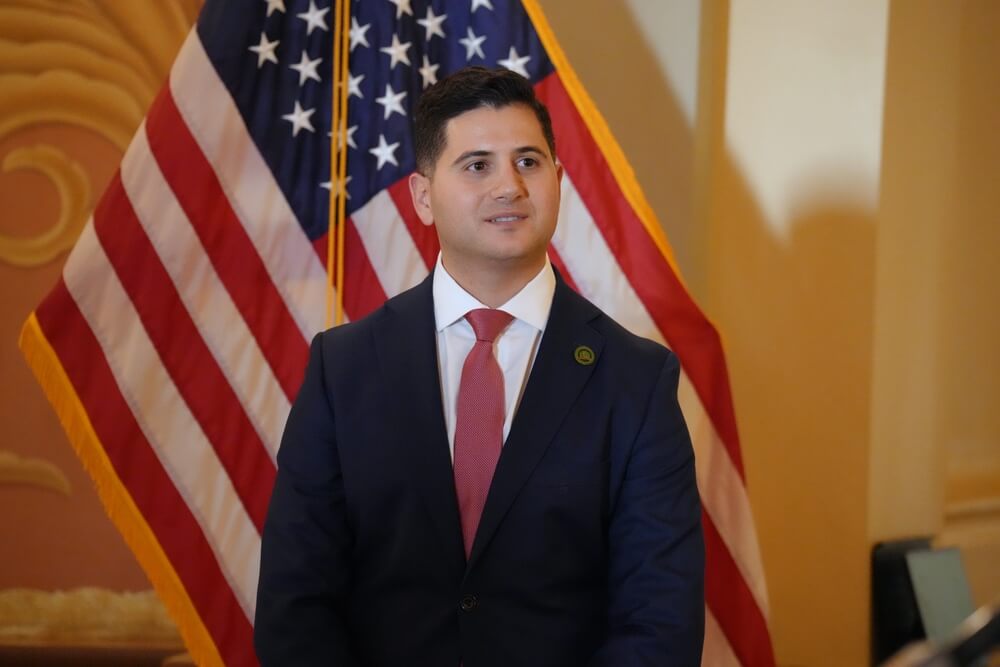 Federal officials rechecked 200 names from the list and found only four American citizens among them - Bill Essayli
Some of the people on the list may not actually be American citizens, but many are, and many were not even sent a ballot, so discarding votes on the basis of that list would also affect voters who have the right to vote.
Acting Deputy Attorney General Trent McCotter admitted that the list may include people who turn out to be citizens. The Department of Justice provided California with a list of 20,930 names of people it says are likely not US citizens yet are registered as voters.
Researchers at the University of California looked up each of those names on California voter rolls. For 8,880 names, about 42% of the list, they did not find a single registered voter.
This means that a large part of the federal list consists of people who are not on the voter rolls at all, so they do not even have a ballot that could be separated. The researchers submitted the analysis to the court on 31 October, and the Justice Department disputes their findings.
Federal prosecutors also filed indictments in California against 28 foreign nationals, accusing them of illegally registering to vote, voting or making false statements when applying for US citizenship. Each of those charges has yet to be proven in court for each accused person individually.
The administration, however, wants the votes of thousands of other people to be singled out based on suspicion alone. A citizen who is on the list by mistake would not even know that their vote had been singled out and would not have the opportunity to dispute it before the count.
Judges separated the prosecution of violations from the administration of elections
Appeals from decisions by federal judges in California, Alaska and seven other western states are heard by the Ninth Circuit Court of Appeals, a second-tier federal court based in San Francisco.
The administration contacted the court before the judge in California had even ruled, asking it to expedite the process.
On 26 October, the three-judge panel refused to rule because the trial judge had not yet had time to decide. It also found that the urgency had been partly created by the administration itself, which gave electoral services only 48 hours to extract the ballots and then claimed that there was no time to wait.
Two of the three judges on the panel were appointed during Trump’s term. Mark Bennett supported the decision, expressing serious doubts that the laws the administration is citing give the federal government the right to tell states how to handle ballots. Patrick Bumatay dissented, arguing that a federal law barring non-citizens from voting justified such an intervention.
On 28 October, Judge David Carter denied the request to separate the ballots. He argued that the criminal law barring non-citizens from voting does not give the Justice Department authority over state vote counting, and noted that the administration had not explained how it verified the data or how often such verification was wrong.
Voters would lose their votes before anyone could verify whether the administration’s claims were true
On 30 October, the Court of Appeal rejected the administration’s renewed request for an emergency measure while the appeal procedure is ongoing.
On the same day, 30 October, Judge Trina Thompson, in another proceeding in federal court in San Francisco, temporarily prohibited the federal authorities from doing two things.
They cannot ask election officials to extract someone’s vote solely because the federal government claims those people do not have the right to vote, without proof. Nor can they threaten election officials with criminal prosecution for doing their job according to the law.
She also ordered that she be notified every time federal authorities request access to ballots or other election materials related to the disputed list. The administration appealed this decision. The ban does not prevent prosecutors from bringing cases against people for whom they have evidence of illegal voting.
An official who processes votes in accordance with the law must not fear prison for disobeying a prosecutor. If prosecutors could use threats to force officials to discard votes, they would achieve what the court did not allow them to do.
Voters would lose their votes before anyone could verify whether the administration’s claims were true.
Sullivan is silent on the intervention from which he stands to benefit
Senator Sullivan has not said whether he supports the lawsuit that Trump ordered in his favour. When asked by reporters, campaign spokesman Nate Adams said only that he would let the lawsuit run its course.
Sullivan would be the sole beneficiary if the court halted confirmation of his opponent’s victory, yet he has not distanced himself from the lawsuit, even though it is opposed by Republican officials in his own state.
Trump is likely to resort to political pressure where the margin of victory is small
Trump’s request has therefore become a question of Sullivan’s personal responsibility: whether he would accept a mandate conferred on him by the president’s prosecutors, rather than by the voters.
Given previous court decisions and the resistance of the Alaska authorities, it is unlikely that the courts will give the administration the power to halt the confirmation of election results at will.
Trump is therefore likely to resort to political pressure where the margin of victory is small. Republican candidates and officials will be asked to agree voluntarily to delay announcing the winner while the investigation is ongoing.
The Senate has the final say on the mandate
Alaska can conduct the investigation without halting the election. Federal law requires that ballots and other election materials be kept for 22 months, so the evidence remains available even after the winner is announced.
If someone contests a senator’s election, the final decision is made by the Senate itself. It can allow a senator-elect to take their seat while objections are investigated, and an investigation by the president’s prosecutors does not oblige it to deny the winner a seat.
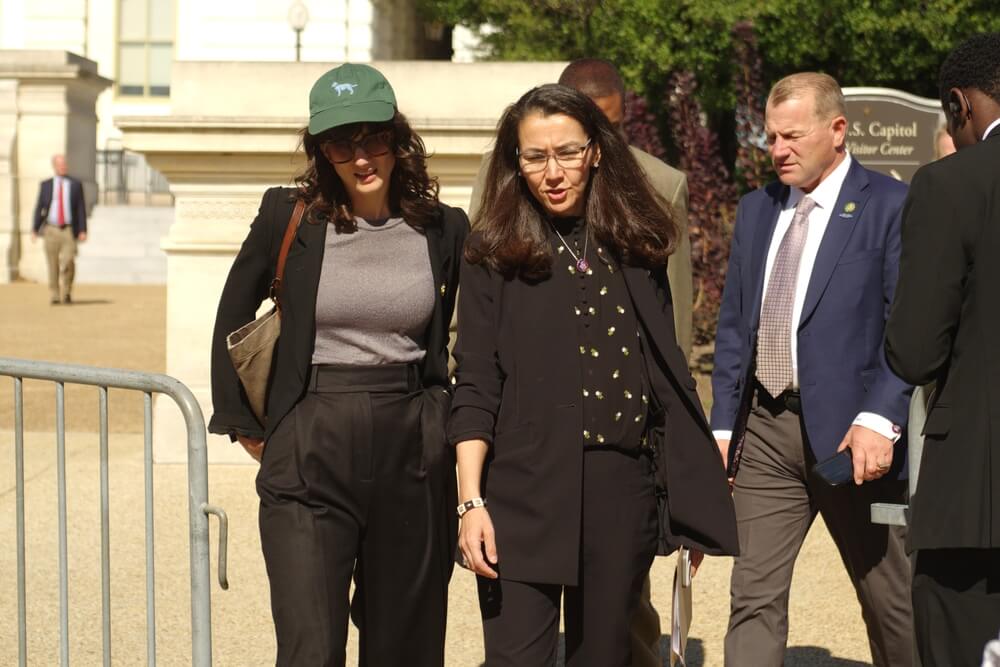 If Mary Peltola wins but does not take her seat while the investigation continues, her seat in the Senate will remain vacant
If Peltola wins but does not take her seat while the investigation continues, her seat in the Senate will remain vacant. The majority in the Senate would then be determined by the outcome of the investigation led by the president’s prosecutors rather than by the voters.
Judge Thompson’s injunction is valid only until 16 November, and the court will decide on 13 November whether to extend it until the votes are counted and the results confirmed.
The terms of the new senators begin on 3 January 2027, and the terms of the outgoing senators expire on that day, regardless of whether the investigation is completed.
Republicans who then agree to deny the seat to the winner simply because the investigation is ongoing will be giving the same tool to a future Democratic president, who could use it against their candidates.
In defending their right to conduct their own elections, Alaskan authorities have chosen a more responsible path, protecting their party’s future victories from any president who might try to block them through their prosecutors.
