In his second term, President Donald Trump has turned extortion and coercion into central features of American statecraft, deploying tariffs, sanctions, and other forms of economic pressure against adversaries and allies alike.
With each passing day, the damage caused by this gangster-like approach—for both the US and global economies—becomes increasingly evident.
Shortly after returning to the White House, Trump made clear that he viewed tariffs as weapons rather than instruments of trade policy.
In April 2025, he unveiled his “Liberation Day” tariffs, imposing steep country-specific levies on imports.
The stated goal was to shrink the United States’ trade deficit, though the rates were largely untethered from economic reality.
Instead, they were designed to extract concessions: countries willing to lower their own trade barriers, the administration promised, would be rewarded with reduced US tariffs.
In practice, however, these measures created enormous uncertainty, harming both exporters and importers.
Trump’s erratic behavior compounded the problem, as tariff rates were repeatedly announced, suspended, restored, and increased with little warning and no coherent rationale.
Protection racket
The confusion deepened as the courts began pushing back. In February, the Supreme Court ruled that Trump had exceeded the tariff authority granted under the International Emergency Economic Powers Act of 1977.
Earlier this month, the Court of International Trade followed suit, striking down his attempt to impose a blanket 10% tariff on imports from nearly every country under Section 122 of the 1974 Trade Act.
Predictably, the Trump administration has appealed the ruling and declared that it will seek other ways to keep its tariffs in place.
It has already launched proceedings against 16 countries accused of engaging in unfair trade practices.
Trump has succeeded in turning tariffs into a kind of protection racket
But with the Supreme Court appearing increasingly skeptical of Trump’s attempts to rule by executive fiat, he may find it difficult to impose the kind of sweeping tariff regime he has long envisioned.
Even so, Trump has succeeded in turning tariffs into a kind of protection racket, using trade negotiations to pressure trading partners—including Japan, South Korea, Taiwan, Saudi Arabia, and the European Union—into pouring vast sums into the US economy.
The nature of Trump’s tariff diplomacy
The deals with Japan and South Korea illustrate the nature of Trump’s tariff diplomacy.
His administration targeted both countries by imposing a 25% tariff on their car exports—a pillar of their economies.
The Japanese tariff was later raised to 27.5% and then reduced to 15% after Japan agreed to import more US agricultural goods, including rice, and commit $550 billion to “rebuild and expand core American industries” such as semiconductors, pharmaceuticals, and shipbuilding.
Like an experienced mobster, Trump sought to play one country against another, using the deal with Japan to pressure South Korea into investing $350 billion in the US in exchange for reducing its tariff rate to 15%.
Once foreign capital is steered toward politically favored firms, the line between free enterprise and state-backed industrial patronage disappears
Given South Korea’s dependence on the American security umbrella, its parliament reluctantly passed legislation establishing a fund to finance these investments.
It was still not enough: in January, Trump raised tariffs on South Korean products back to 25% after accusing the country of failing to honor its commitments.
South Korea’s reluctance was hardly surprising. Under the agreement, the US would effectively control how South Korean funds are allocated, with Commerce Secretary Howard Lutnick leading an investment committee that would select projects and present them to Trump for approval.
Nor do the investments themselves make much economic sense. If they were genuinely profitable, private firms would undertake them on their own.
Instead, many of the targeted industries are precisely those in which US production costs are far above those of foreign competitors.
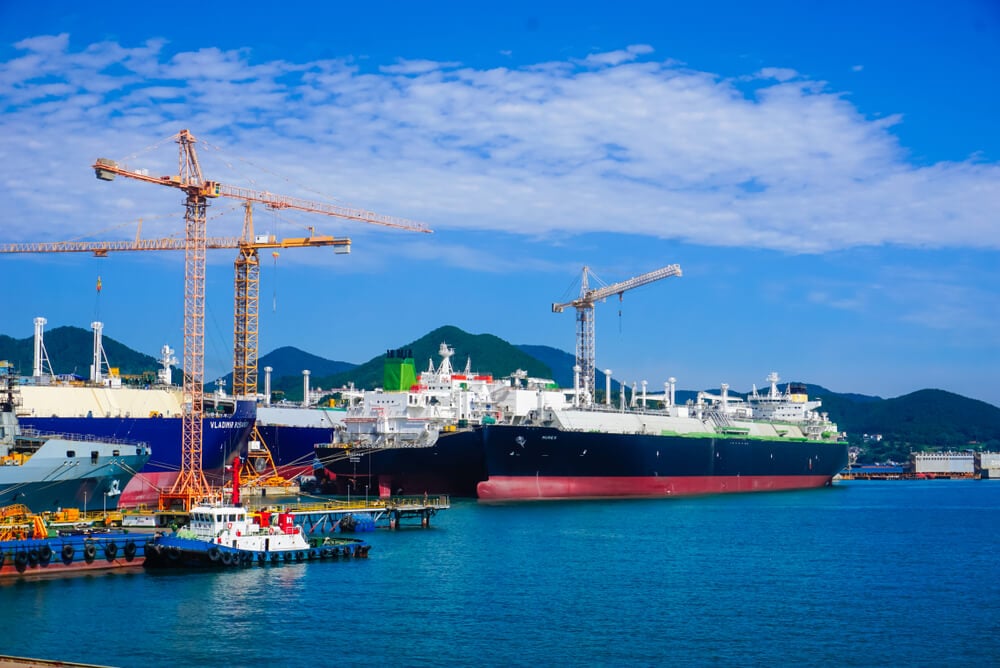
Shipbuilding, an industry where South Korea is a global leader, is a prime example.
To be sure, profitability depends on far more than efficient production. Taxes, subsidies, and other government policies matter as well.
But once foreign capital is steered toward politically favored firms, the line between free enterprise and state-backed industrial patronage disappears.
A stark message to American businesses and foreign governments
The extortion does not stop there. Once the principal and interest are repaid, 90% of the remaining profits would flow to the US, even though it contributed none of the initial investment.
Key questions also remain unanswered: How will these agreements be enforced? How much public money will ultimately be funneled into private firms? And will the projects themselves be subjected to any serious cost-benefit analysis?
By any reasonable definition, these are not investment agreements so much as tribute payments or, worse, graft.
 Trump’s approach sends a stark message to American businesses and foreign governments that the US no longer adheres to free-market principles
Moreover, it is far from clear that South Korea, or any country, can absorb commitments of this scale without suffering serious economic damage.
The irony is hard to miss. Trump has justified his tariffs as a way to shrink America’s trade and current-account deficits.
Yet if these massive investment inflows materialize, they are likely to strengthen the dollar, increase net imports, and widen the very trade deficits his tariff regime was ostensibly meant to target.
Even worse, Trump’s approach sends a stark message to American businesses and foreign governments that the US no longer adheres to free-market principles.
Instead, it is increasingly willing to use its economic might to extract resources from weaker countries by holding the threat of tariffs over their heads.
Once political favoritism supplants market competition as the organizing principle of international commerce, the resulting distortions are bound to reverberate through the global economy.
Anne O. Krueger, a former World Bank chief economist and former first deputy managing director of the International Monetary Fund, is Senior Research Professor of International Economics at the Johns Hopkins University School of Advanced International Studies and Senior Fellow at the Center for International Development at Stanford University.
