Speaking before the United Nations General Assembly, Donald Trump urged the member states of the International Criminal Court (ICC) to withdraw from the institution.
Two days earlier, Reuters, citing two well-informed sources, reported that the US administration was preparing sanctions against the Court as a whole, not just individual officials, although the final scope and start date of those measures have not yet been publicly confirmed.
Extending the sanctions would raise a much broader issue than Washington’s dispute with prosecutors and judges in The Hague.
The work of an international institution can be restricted by denying commercial services, without changing its statute or revoking any legal authority.
Banking transactions, maintenance of information systems and insurance thus become conditions that determine whether the Court can conduct investigations and hold trials at all.
The United States is not a state party to the Rome Statute, but US regulations bind its companies and may influence service provider decisions in other countries.
Because of this gap between the Court’s legal position and the business relationships that enable it to function, national sanctions can have consequences that the international founding treaty alone cannot prevent.
The restrictions do not stop at contested cases
Among the ICC officials already subject to US sanctions are Court President Tomoko Akane and Senior Trial Lawyer Abdoulaye Sey, who were listed by OFAC on 18 August.
If the US Department of the Treasury were to designate the Court itself, the restrictions would apply to its contracts and transactions, with far-reaching consequences extending beyond measures targeting named individuals.
Washington justifies the current regime as protecting US sovereignty and opposing action against Americans and citizens of allied countries that have not accepted the Court’s jurisdiction.
Interrupting technical support for the common information system could affect several investigations at the same time
The ICC says the sanctions threaten its independence, while their operational consequences could affect cases not directly related to US objections, as the various investigations rely on the same services and suppliers.
A bank that refuses a payment order does not overturn a judge’s decision, but it may prevent payment of the fees due to an expert required for the proceedings.
Interrupting technical support for the common information system could affect several investigations at the same time.
The Court would have to seek replacements and negotiate new contracts while simultaneously trying to continue work on cases already entrusted to it.
Termination of cooperation does not always require an injunction
Executive Order 14203 of February 2025 provides for the blocking of assets of designated persons located in the US or under the control of US persons, as well as prohibitions on the provision of funds, goods and services. It also enables the sanctioning of foreign persons for certain financial, material or technological support for the covered activities or sanctioned persons.
The effectiveness of the bans also depends on legal exceptions and licences issued by OFAC, so their content will be as important as the scope of the sanctions themselves.
However, it does not follow that every European bank would automatically have to end all relations with the ICC.
The immediate legal prohibition, the possibility that the service provider itself will be sanctioned and its decision to avoid uncertain business are distinct grounds for withdrawal.
In its analysis of the possible consequences, Reuters warns specifically about discouraging non-US companies and associates from doing business with the Court.
Payment in euros may remove the need for dollar intermediation, but it does not remove the US branches, business partners or market interests of the bank executing the order
Service providers may be compelled to withdraw on the basis of a business assessment in which the income from a single client does not justify the cost of legal checks or the potential consequences for other business.
In such a situation, they have grounds to terminate cooperation even if it is not certain that this is prohibited.
They do not have to accept the US interpretation of the Court’s jurisdiction in order to conclude that a dispute with its authorities is not worthwhile.
Payment in euros may remove the need for dollar intermediation, but it does not remove the US branches, business partners or market interests of the bank executing the order.
Even special approval for a particular transaction does not guarantee that service providers will return if they expect new restrictions or prolonged legal uncertainty.
European software solves only part of the dependency
In November 2025, the European Commission platform announced that the ICC had decided to switch to the open-source office suite openDesk, developed under the German Digital Sovereignty Initiative.
This choice makes it easier to change support providers and gives users greater influence over how the system is maintained, rather than relying on a single software owner.
On 21 September, AP, citing court employees, reported that the insurance and other financial partners had also been changed.
According to the agency’s diplomatic and government sources, the Netherlands is considering how to ensure payments to employees, witness protection and the operation of the detention centre if US measures are expanded.
Those preparations reduce the grounds for expecting immediate paralysis, but changing the office suite does not say enough about the resilience of the entire technical system.
Evidence must remain accessible to authorised users and protected during the transition, and technical support must work afterwards.
The court could place greater weight on a supplier’s ability to continue operating under sanctions pressure
The European address of the new service provider is also not sufficient without checking its subcontractors and their legal and financial connections.
In subsequent procurements, the court could therefore place greater weight on a supplier’s ability to continue operating under sanctions pressure.
This would narrow the choice of partners and could increase service costs, especially where replacement is slow or requires specialised expertise.
The cost of adaptation would not end with the purchase of new software, but would also include its verification, staff training and long-term maintenance.
Who will take the risk that service providers refuse?
Germany and the Netherlands supported the court after the August sanctions, but political backing and public statements are not enough to keep it functioning.
If private partners consider cooperation too costly or too risky, the continuity of services will depend on whether ICC-supporting states can secure alternative financial and contractual arrangements.
The European Union has a blocking regulation that can prohibit European entities from complying with certain foreign sanctions and enable claims for damages.
However, it applies only to regulations expressly listed in its annex and does not provide automatic protection against every US measure.
Even a suitable extension of that mechanism would still leave open the question of how to compensate a service provider for losses it may suffer in the US market.
The court would rely less on commercial partners exposed to US measures and more on the duration of the political and financial support of those who take over their role
In the event of such an extension of European protection, the service provider could face conflicting obligations: European law would prohibit compliance with the relevant US measures, while parts of its business network in the US could be bound by those same measures.
Even if the contract were protected in the EU, continued cooperation would depend on the consequences for the company’s operations in other jurisdictions, which is why the business structure of the service provider is also important.
For member states this would mean more permanent financial obligations, and for the court greater reliance on a limited number of governments and providers willing to maintain key services.
Such support could preserve the work of the institution, but its stability would depend more on the budgetary decisions of those countries.
The court would rely less on commercial partners exposed to US measures and more on the duration of the political and financial support of those who take over their role.
Higher costs will limit investigations if the budget remains the same
If the sanctions cover the entire ICC without sufficiently broad exceptions, current preparations suggest that long-term adjustment is more likely than an immediate cessation of work.
The court has alternatives to some of its existing services, but introducing them requires money and time.
With an unchanged budget, rising costs for legal checks, system maintenance and payment security will reduce the funds available for investigations and fieldwork.
Limiting investigations would not necessarily follow a formal decision to drop a case.
If approved travel, engagement of experts or collection of documentation depend on pending payments and contracts, work may fall behind while hearings in other cases continue.
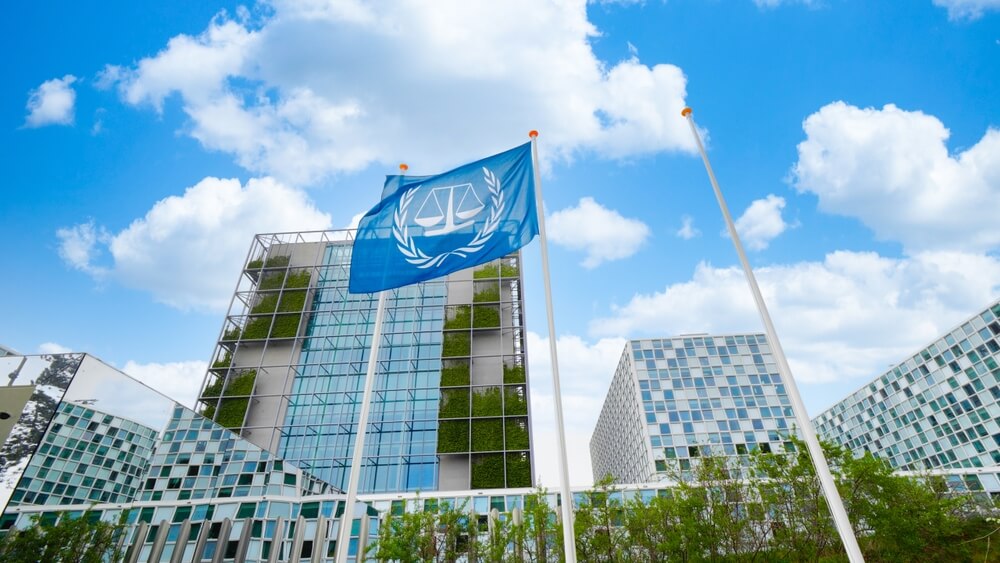 Legal autonomy will no longer be sufficient if their daily work can depend on the decision of the government of a country that does not even belong to that institution - ICC
Assessing the effectiveness of sanctions will require comparing planned activities with what is actually implemented, rather than relying solely on the number of open cases and hearings.
The extent of the consequences will depend on OFAC’s clearances, the availability of replacement services and the willingness of member states to finance additional costs.
Continuity of payments, contract terminations and delays directly related to these disruptions will show how far sanctions pressure is transmitted to the proceedings.
The institution’s continued existence alone will not be a sufficient indicator that it has preserved its ability to carry out its mandate.
If Washington extends sanctions to the ICC as an institution, the most important consequences will not be confined to events in The Hague.
Even more significant will be a change in how international organisations assess their own independence.
Legal autonomy will no longer be sufficient if their daily work can depend on the decision of the government of a country that does not even belong to that institution.
Financial, technological and commercial ties will, in future, have to be understood as political risks.
The most likely outcome is not the abolition of the ICC, but a slower and more expensive institution that will have to change the way it organises its work.
If member states provide sufficiently stable infrastructure, US pressure will accelerate its move away from systems that Washington can directly influence. If they fail to do so, the US will demonstrate that it is possible to severely limit the ability of an international institution to carry out its mandate without changing its statute, membership or formal powers.
Such a precedent would be far more significant than the current conflict between Washington and the ICC.
