On 10 July, four US senators announced that they had reached agreement with the Donald Trump administration on a new version of the Russia sanctions bill.
Republicans Lindsey Graham and Roger Wicker and Democrats Richard Blumenthal and Jeanne Shaheen expect the updated proposal, now backed by the White House, to enter the legislative process soon.
Trump’s approval changes the political conditions in Washington but does not yet reveal the final scope of the law. The agreed text has not been published.
It is not known which provisions of the original proposal were retained, how they were altered, or what powers the president will have to delay punitive measures, approve exceptions, or withdraw them during negotiations.
This is not a minor legal detail. That part of the law will determine whether the new sanctions genuinely limit Russian revenues or whether Trump gains another powerful tool for trade negotiations with countries that buy Russian energy.
The political change, however, is clear. The proposal has enjoyed the support of a large majority in the Senate since spring 2025, but did not advance until an agreement was reached with the administration.
Trump tried to preserve his freedom of decision in his dealings with Vladimir Putin and did not accept that Congress should determine in advance when and against whom he must apply the most severe measures.
The agreement of 10 July removes precisely that obstacle. The proposal is no longer a means by which the Senate tries to pressure the president, but a bill that could grant the president additional powers.
The law awaiting Trump’s approval
The original proposal for the Sanctioning Russia Act of 2025 had more than eighty co-signatories in the Senate, a rare bipartisan majority in Washington today.
Its most important provision was that it did not introduce additional bans on Russian officials, banks, or state-owned enterprises. There are already many such measures, and during the war the Russian economy found ways to mitigate or bypass some of their effects.
The proposal targeted countries that continue to import Russian oil, gas, uranium and other commodities. It envisaged tariffs of up to 500 per cent on goods entering the United States from those countries.
Such a rate would not effectively raise revenue in practice. It would virtually halt trade in the affected products and force governments and companies to choose between Russian energy supplies and access to the US market.
This is a much broader scope than previous sanctions against Moscow. After 2022, Russia lost a large part of the European market but redirected its oil exports to Asia. Lower Russian oil prices have attracted buyers who prioritise energy needs and savings over political alignment with the West.
The most important result of the agreement with the senators will be clear only when the provisions on presidential exemptions are published
As long as there are refineries, ships, insurers, traders and banks ready to support that traffic, sanctioning one more Russian company has limited effect.
Senators are therefore trying to change the business calculus outside Russia. Buying Russian energy products should become expensive because of the potential loss of access to the American market, not just because of difficulties with payment, insurance or transportation.
Therein lies the true weight of the proposal. The size of the American market and the role of the dollar enable Washington to influence the decisions of countries that have not themselves imposed sanctions on Moscow.
So far, Trump has avoided turning that possibility into a prior obligation. His foreign policy rests on the president reserving the right to escalate, delay or remove the threat in exchange for concessions.
A law that automatically imposes penalties could prevent him from using tariffs in broader negotiations on energy, trade, defence or American investment. Therefore, the most important result of the agreement with the senators will be clear only when the provisions on presidential exemptions are published.
Pressure on buyers of Russian energy
China and India remain key markets, without which Russia would not be able to maintain its current volume of oil exports after losing a large part of its European customers. That is precisely why the outcome of the new American pressure will not be decided primarily in Moscow.
The decision will be made in Beijing and New Delhi, where the governments will assess whether continuing to purchase Russian oil at preferential rates is worth the risk of a possible conflict with Washington.
China has a sufficiently large domestic market and sufficiently extensive trade with Russia that it will not abandon Russian energy products merely because of political demands from the United States.
However, tariffs on Chinese goods for purchasing Russian oil would open another major trade dispute with Washington. The cost would be passed on to manufacturers, supply chains, consumers and financial markets, making the Russia bill part of a much broader US–China conflict over trade and technology.
Beijing will therefore try to avoid open confrontation. It can divert part of its trade through intermediaries, change payment methods, expand the use of domestic currencies and demand additional discounts from Moscow as compensation for the increased risk.
China has sufficient bargaining power to transfer some of the American pressure to the Russian seller. In that case, Russia could retain a significant part of its exports but with lower earnings and even greater dependence on a single market.
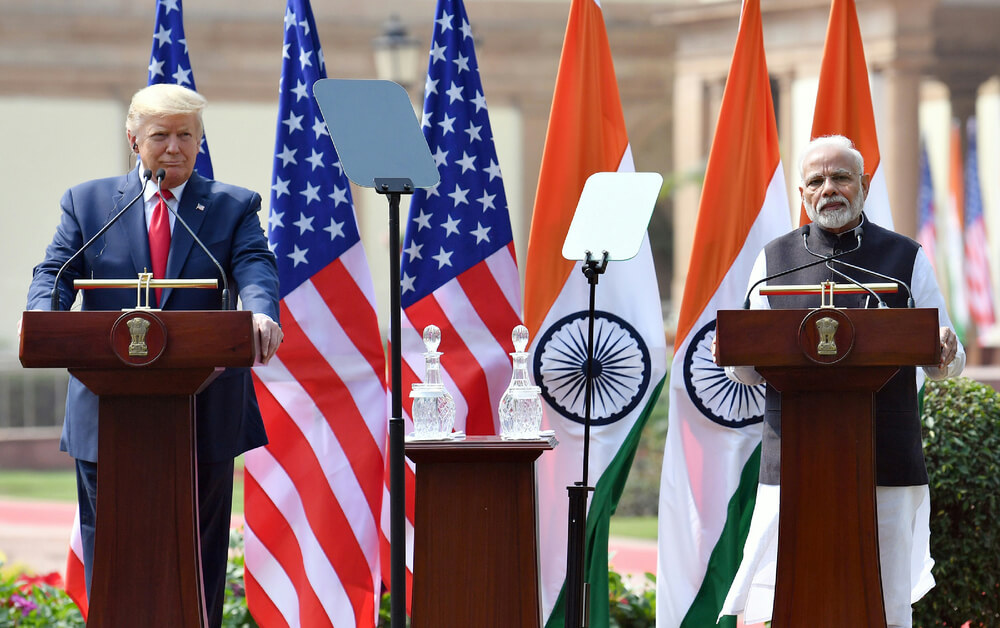 Broad punitive measures against India could undermine the co-operation that successive US administrations have built over the years
India is a particularly sensitive case for Washington. It is a major energy importer, an important American partner in Asia, and a country that the United States expects to constrain the growth of Chinese influence in the long term.
Broad punitive measures against India could undermine the co-operation that successive US administrations have built over the years. At the same time, India’s complete exclusion from the law would weaken its credibility, as New Delhi has become one of the most important buyers of Russian oil.
Trump has already shown how he intends to resolve that conflict of interest. In August 2025, the United States imposed an additional 25 per cent tariff on Indian goods because of India’s purchase of Russian oil.
The tariff was lifted in February 2026 after India accepted commitments that included ending direct and indirect purchases of Russian oil, increasing procurement of US energy products, widening market access and enhancing defence co-operation.
The case shows that Trump does not regard the tariff as a permanent punishment. It is a means by which he opens negotiations, links multiple issues and seeks an agreement that he can present as an American victory. According to New Delhi, he is likely to repeat the same approach if the new law is adopted.
The demand will not necessarily be a complete or immediate suspension of all purchases from Russia. A more likely goal will be to reduce volumes, close intermediary routes, and increase India’s purchases of American energy, military equipment, and other goods.
Brazil, Turkey, and other countries that trade with Russia may also come under pressure, but China and India will determine whether the law seriously affects Russian revenues.
Without a change in their behaviour, Moscow will continue to sell a large share of its export oil, albeit at higher costs, via longer routes and with even greater discounts.
How much authority does the president have?
Senators want legislation that increases the cost of financing Russia's war. Trump wants authority that he can exercise at his own discretion. These two aims are not the same, although they have currently merged into a political agreement.
If the final text requires punitive measures to be applied as soon as clearly defined conditions are met, the White House will have less scope to delay. Such a law could change the behaviour of traders and governments even before the first penalties are imposed, because the risk would become predictable.
Companies do not wait for the introduction of a 500 per cent tariff if they know it is legally inevitable; they start changing contracts, suppliers, intermediaries and payment methods in advance.
If Trump is given broad powers to grant exceptions, extend deadlines and suspend enforcement, the law will function differently. Its greatest impact will lie in the threat.
The president would be able to demand concessions from China, India or other countries, and then suspend sanctions when he judges he has secured enough. Moscow would still feel the pressure, but the outcome would depend on a series of separate deals struck by the White House.
The possibility of losing access to the American market increases the cost of doing business with Russia
The second option is more suited to Trump’s style of governing. He avoids measures that operate independently of his decisions, particularly when they could affect energy prices and US inflation.
A sharp reduction in Russian supply could raise the price of oil at a time when global energy markets are already vulnerable to disruptions in the Middle East. Russia would then sell less, but higher prices would cushion some of the loss. American consumers would see the consequences at petrol stations.
Therefore, the White House will avoid a simultaneous conflict with all major buyers of Russian oil. The measures are likely to be gradual and targeted at individual banks, traders, shippers, companies or types of goods, with exemptions negotiated.
Trump will want pressure to be strong enough to win concessions, but not a sudden supply cut that would hit the US economy.
This does not mean that the law will be insignificant. The possibility of losing access to the American market increases the cost of doing business with Russia.
Banks and large companies usually react more cautiously than governments, because they do not want a dispute with the US Treasury Department or to risk doing business in dollars.
Even selective enforcement can make it more difficult to insure, transport and finance Russian trade, increase the discounts Moscow must offer, and reduce export revenue.
Cost of application to China and India
The proposal’s greatest weakness lies in its apparent strength. A 500 per cent tariff seems a compelling threat, but its broad application to China or India would have consequences far beyond Russian oil.
American companies depend on Chinese manufacturing, while relations with India are central to American policy in Asia. The law, which is intended to weaken Russia, could simultaneously damage Washington’s relations with the two largest Asian powers.
The law will therefore probably not be applied in its broadest possible form. Trump will claim political credit for intensifying pressure on Russia, but he will retain enough freedom to decide whom to punish, when, and for how long.
Some Chinese companies and financial institutions could face additional restrictions, while India is likely to be offered a way out through reduced Russian oil purchases and new contracts with US suppliers.
For Russia, this will not mean the immediate loss of Asian markets. It brings something more dangerous in the long run: its biggest customers will realise that doing business with Moscow can jeopardise a much more valuable relationship with the United States.
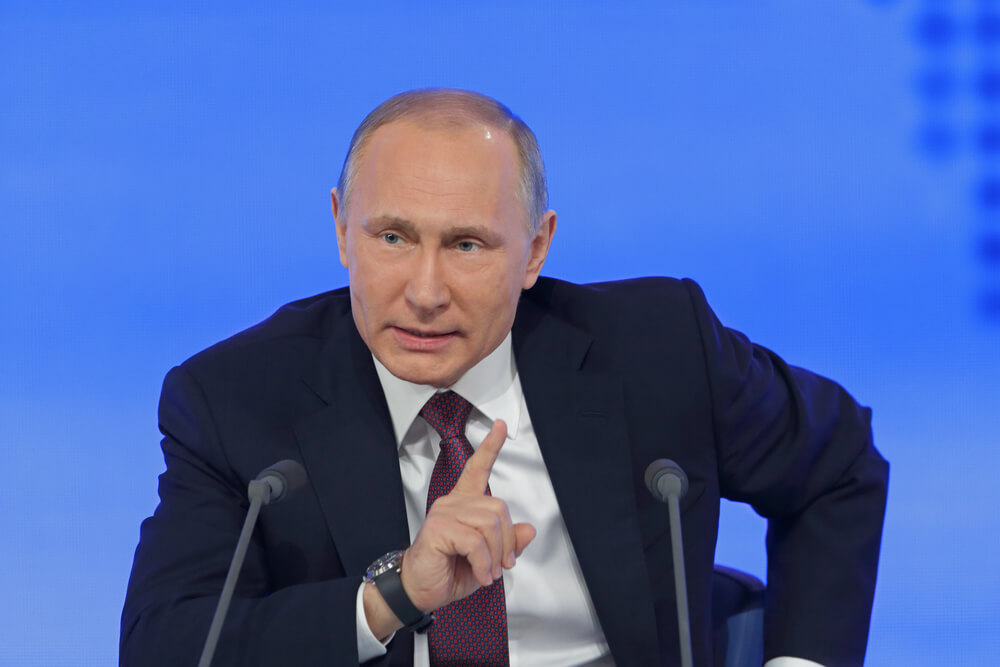 The Kremlin has so far mitigated part of the impact of Western sanctions by redirecting trade, and the new law is trying to close off that escape route - Vladimir Putin
They will therefore demand lower prices, more favourable payment terms, more flexible contracts, and greater concessions from Russia. The pressure will first be seen in discounts, transport costs, insurance, and payment methods, and only later in a possible decline in volumes.
The Kremlin has so far mitigated part of the impact of Western sanctions by redirecting trade, and the new law is trying to close off that escape route. Its effectiveness will not be measured by the number of new names on sanctions lists, but by the gap between the market price of oil and the amount Russia actually receives after discounts, transport costs, insurance and brokerage commissions.
The agreement between Trump and the senators is therefore more significant than a further expansion of the US sanctions list. The American president has accepted that pressure on Russia should no longer be limited to Russian institutions.
At the centre of American policy are the states, banks, traders and companies that enable Russian exports to continue bringing money to the Kremlin.
The most likely outcome will not be a complete ban on Russian oil in Asia. Exports will continue, but more slowly and at greater cost, with ever-increasing discounts and a growing share of revenue going to buyers, intermediaries, insurers, and carriers.
Trump is likely to apply the law selectively, primarily against India and certain Chinese companies, while leaving open the possibility of exemptions in exchange for trade and political concessions.
The most important consequence of this agreement may therefore emerge in Washington itself. Congress has spent months building a broad bipartisan majority for tougher measures against Russia, but has now accepted that their practical implementation depends on the president.
If the bill is passed with broad exemptions, Trump will not be bound by a new fixed policy towards Moscow. He will be given the authority to tighten or relax it according to the needs of each individual negotiation.
Senators wanted a bill that would limit Russian income, but they could end up passing legislation that increases Trump’s power above all.
