Late last month, Lebanon and Israel signed a framework agreement with the United States that Lebanon’s chief negotiator, Nada Hamadeh Moawad, described as a “first step on the road to restoring Lebanese sovereignty and territorial integrity.”
But, as the agreement implicitly acknowledges, Israel is not the only threat to Lebanon’s sovereignty.
The departure of the Israel Defense Forces from southern Lebanon hinges on the “verified disarmament” of Iran’s proxy, Hezbollah.
The terms of the framework agreement, negotiated with US Secretary of State Marco Rubio, contradict those of the latest memorandum of understanding US Vice President JD Vance concluded with Iran.
That agreement, with Pakistan and Qatar acting as mediators, focused on the reopening of the Strait of Hormuz, and Iran has made clear that this is conditional on the unqualified end to Israel’s war against Hezbollah and withdrawal from Lebanon.
The US thus negotiated parallel agreements based on two contradictory visions of Lebanon’s place in the Middle East peace puzzle.
Whereas the peace process Vance led, and which has now apparently collapsed, was shaped largely by Iran’s demands for Lebanon, the Rubio-mediated track treated the Israel-Lebanon conflict as though it were none of Iran’s business.
Peace with honor
Vance is a political opportunist. He knew that President Donald Trump was desperate for a way out of the Iran war, and he wanted to deliver.
As a result, he approached negotiations with Iran in almost the same spirit of surrender that then-US National Security Adviser Henry Kissinger brought to negotiations on America’s withdrawal from Vietnam in 1973.
As long as the result was not too conspicuously humiliating—“peace with honor,” as Nixon put it back then—Vance was going to agree to it.
Vance may well have succeeded in pleasing Trump. “The Markets are loving what is happening,” Trump bragged on social media.
For now, it seems that Rubio’s diplomacy has prevailed over Vance’s facile deal-making
But some Republicans were less impressed, noting that the deal included too many concessions to Iran, including with regard to Lebanon.
“I believe it would be an error to force Israel to stand down against Hezbollah,” said Senator Roger Wicker, chair of the Senate Armed Services Committee.
For now, it seems that Rubio’s diplomacy has prevailed over Vance’s facile deal-making.
Not long after Trump announced his expectation of a “complete ceasefire on all fronts, including Lebanon, Hezbollah, and Israel,” Israel carried out a massive strike on Hezbollah’s weapons stockpile in Lebanon—and neither US nor Lebanese officials protested.
But this does not mean that a new and promising chapter has opened in Israeli-Lebanese relations.
Hezbollah’s complete disarmament is highly unlikely
In 1983, nearly a year after Israel invaded southern Lebanon, US President Ronald Reagan’s administration managed to persuade Israel and Lebanon to agree to an ambitious peace treaty.
But the deal collapsed almost immediately, because it ignored Lebanon’s labyrinthine sociopolitical realities and the Israeli government’s inability to compromise on the security of its northern border.
The First Lebanon War continued for two more years before Israel retreated to a “security zone” in southern Lebanon, which it maintained until May 2000, when Israeli Prime Minister Ehud Barak led a unilateral withdrawal.
Lebanon’s political circumstances, together with Iran’s strengthened regional position, make Hezbollah’s complete disarmament highly unlikely
Today, Lebanon’s political circumstances, together with Iran’s strengthened regional position, make Hezbollah’s complete disarmament highly unlikely.
By conditioning Israel’s withdrawal on this outcome—and including no provisions about cutting Hezbollah’s Iranian lifeline—the Rubio-brokered agreement sets the stage for a permanent stalemate, continuous war, or even escalation.
Since the October 7, 2023, attack by Hamas, Israel’s paranoia has been supercharged, and its expansionist ambitions unleashed.
Now, security threats are interpreted broadly, as evidenced by Israel’s relentless onslaught in Gaza and continued march into Syrian territory along the Golan Heights.
Measured responses and calculated risks are no longer part of Israeli military doctrine.
Response to a real security threat
Now, Lebanon has effectively granted Israel permission to continue fighting Hezbollah on its sovereign territory indefinitely.
Where is the Israeli prime minister who would willingly withdraw from Lebanon when Hezbollah remains intact and supported by Iran, and Israel has political cover to stay there?
Hezbollah certainly has no plans to back down. Its leader, Naim Qassem, has vowed to continue fighting. “We did not leave the battlefield in the most difficult circumstances,” he noted, “and we will not leave it.”
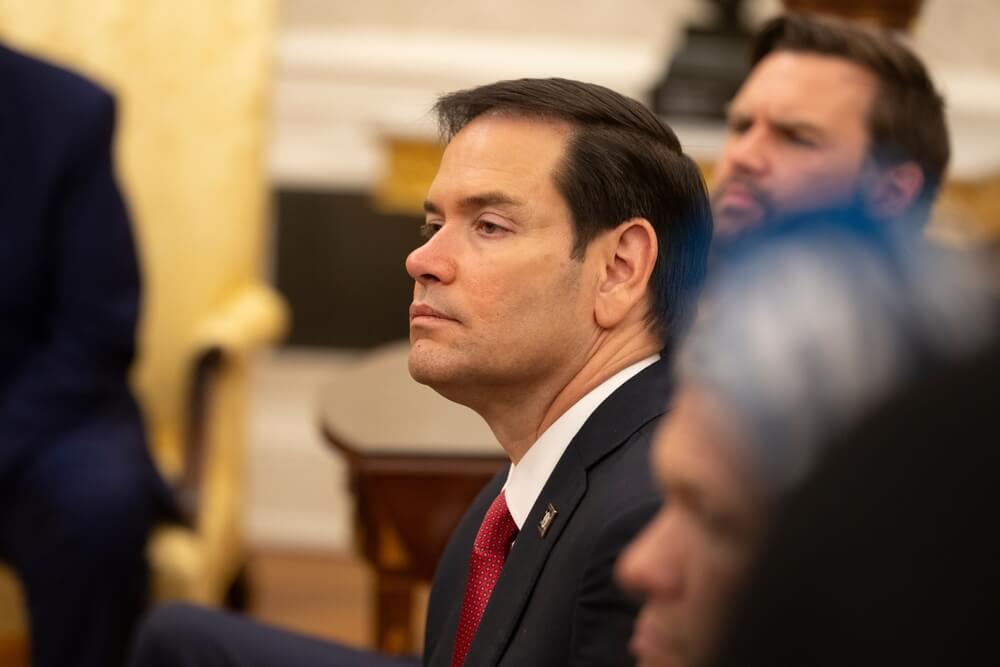 Marco Rubio is right that the disarmament of Hezbollah is the most desirable outcome
The speaker of Lebanon’s parliament Nabih Berri—a representative of the Amal party, which has close ties to Hezbollah—described the deal as an “incitement to civil war.”
Israel’s military action is undoubtedly disproportionate, but it is a response to a real security threat, which the Lebanese Armed Forces do not have the proven ability to mitigate.
The United Nations Security Council Resolution that ended the Second Lebanon War in 2006 called for the disarmament of “all armed groups”—meaning Hezbollah—but neither the Lebanese military nor UN forces, including the UN Interim Force in Lebanon, managed to enforce this international law.
Rubio is right that the disarmament of Hezbollah is the most desirable outcome.
But, under current circumstances, it is also unrealistic. The US would have been better off leading an international effort to curtail Iran’s hostile takeover of Lebanon.
Cutting Hezbollah’s Iranian lifeline is the only way to erode its military capacity, strengthen Lebanon’s sovereignty, and establish an indisputable case for Israel to withdraw from the country.
Shlomo Ben-Ami is a former Israeli foreign minister.
