Some artists cannot be understood through art history alone. To make sense of their work, we also need to consider the economy of the country they lived in, the harshness of its politics, the mood of its society, and what people could or could not tolerate at the time.
Because when the economy deteriorates, it is not only wallets that shrink. Imagination also narrows, patience weakens, anger flares more easily, and tolerance for difference begins to fade.
Astor Piazzolla and Fikret Mualla stand before us not only as two great artists, but also as mirrors of two distinct social psychologies.
One tried to set tango free in Argentina. The other, through a broken life stretching from Turkey to Paris, created a visual language that refused to fit into artistic or social conventions.
One rebelled with the bandoneon, the other with colour. One was accused of “ruining tango”; the other could never be made to fit the mould of the “proper person” or the “acceptable artist.”
Neither was easily embraced during his lifetime. Both were eventually proven right. Yet neither lived a peaceful life.
When the future feels unsafe
In Piazzolla’s story, one point needs to be made clearly. He did not flee to Paris because of Libertango. Paris entered his life earlier, in 1954, as a turning point. He went there to study with Nadia Boulanger.
At the time, he wanted to become a classical composer. He seemed almost ready to leave tango behind, as if the bandoneon belonged to his past and classical music to his future.
Then Boulanger listened to him. She did not find his classical compositions truly his own. But when Piazzolla played one of his tangos, she heard something else. She showed him his real voice. It was as if she were saying: “This is who you are.” That was the moment an artist found himself.
When Piazzolla returned to Argentina, he no longer fitted into the old tango patterns. He brought jazz, classical music, counterpoint, the noise of the city, loneliness, anger, and the fractured rhythm of modern life into tango.
The traditionalists did not forgive him. Some called him “the killer of tango.” Because in Argentina, tango was not just music. Tango was poverty, migration, port neighbourhoods, masculine pride, lost loves, and the sound of national identity.
That is why, for some people, touching tango felt like touching the past itself.
When people lose control over many parts of life, they want at least their symbols to remain unchanged
This reaction cannot be separated from Argentina’s economic and political climate. From the 1930s onward, Argentina became familiar with political instability. Coups, the hard division between Peronism and anti-Peronism, inflation, external imbalances, income struggles, unions, military governments, and street tension all shaped the national mood.
In countries like that, part of society does not fear innovation itself; it fears losing what little certainty remains. When the future feels unsafe, people cling more tightly to the past.
As the economy deteriorates, culture often becomes more conservative. Because when people lose control over many parts of life, they want at least their symbols to remain unchanged.
The feeling was almost: “The economy is already falling apart; at least don’t change tango.”
So Piazzolla’s struggle was not just musical. He was also confronting the reflexes of a society in crisis, a society clinging to the past. He tried to keep tango alive by changing it. Those who feared change saw that as betrayal. Yet everything that lives must change. What never changes is no longer tradition; it becomes a display object.
That is why Libertango is more than a composition. Recorded in Milan in 1974, even its name speaks like a manifesto: libertad and tango. Freedom and tango. Piazzolla was basically saying: “If you love tango, don’t imprison it. Let it breathe.”
The story of the Republic
Fikret Mualla’s story unfolds in another geography but leads to a similar pain. He, too, struggled with the economic and political realities of his time.
The Republic of Turkey had recently been founded. The country was struggling to recover from poverty and scarcity, industrialisation was pursued through state-led policies, and modernisation was being built from the top down under a single-party political order.
In Turkey in the 1930s, the economy was strained, resources were limited, the art market was weak, and the state exerted a strong influence over culture.
In such an environment, artists were often expected to represent a kind of “disciplined modernity.” They were to tell the story of the Republic, educate society, embrace Anatolia, remain measured, be useful, and avoid overflowing too much.
In Turkey in the 1930s there was modernisation but little room for unrestrained individuality
There was modernisation, certainly, but little room for unrestrained individuality. For someone like Fikret Mualla – restless, ironic, fragile, angry, bohemian and self-destructive – that space was even narrower.
Mualla’s tragedy begins there.
He was not merely painting. It was as if he were transferring his nerves, shame, anger, loneliness, alcohol, poverty, and childlike side onto paper. He painted Paris cafés, streets, circuses, crowds, tables, drinkers, people enjoying themselves, and people left alone.
But his Paris was not a tourist’s Paris. It was slightly drunk, somewhat wounded, a little joyful, a little poor, and always on the verge of losing its balance.
His life in Turkey was far from peaceful. He struggled with mental distress, spent time in hospitals, suffered from poverty, clashed with those around him, and never found the recognition he expected.
When he went to Paris in 1939, he was not simply moving to another city. He was also trying to escape a climate that had become too narrow for him. But Paris did not fully save him either. There was poverty there too, loneliness too, hospitals too, addiction too, and the pain of selling paintings for far less than they were worth. The geography changed, but the storm within him remained.
Institutions usually prefer order
When we place Piazzolla and Mualla side by side, one truth becomes very clear: when economic conditions harden, the psychology of society hardens too. People judge more quickly. States want to control more. Culture is pushed more firmly towards the “correct line.” Artists are expected not to ask too many questions, not to overflow too much, not to disturb too deeply.
Yet great art is often born from exactly that disturbance.
Piazzolla resisted the Argentine spirit that said, “tango must remain as it is.” Mualla did not fit Turkey’s – and later Paris’s – expectation that “an artist should at least be somewhat orderly.”
One fought against the narrowness of tradition, the other fought against society’s obsession with propriety. Behind both stood economic strain, political tension, and cultural contraction.
Because when politics harden, art is either put on display or viewed with suspicion. When the economy contracts, difference begins to look like a luxury. When society is anxious, unconventional people are seen not as sources of inspiration, but as problems.
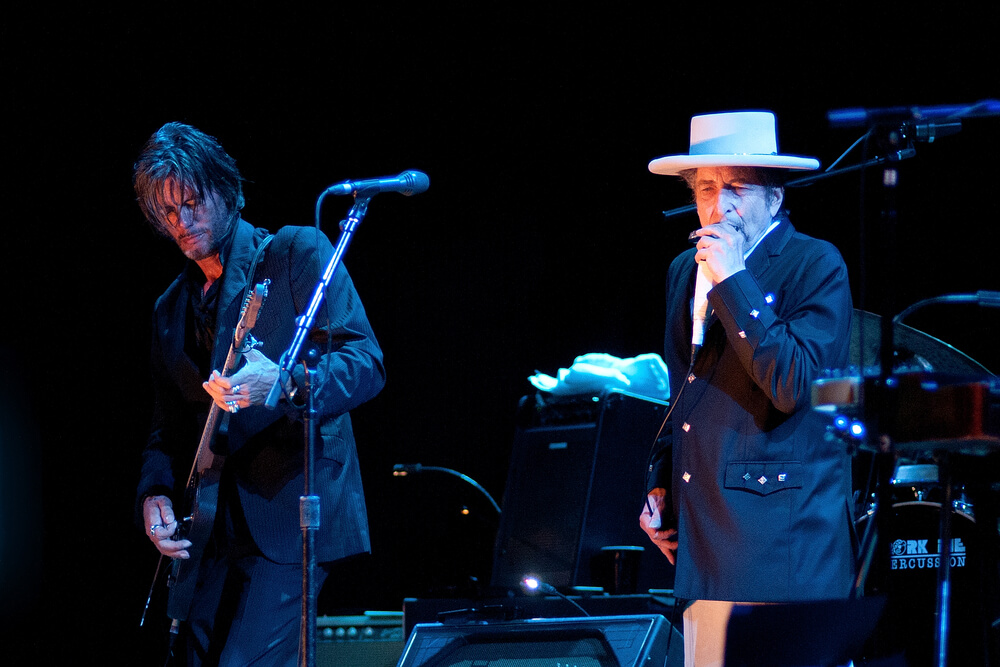 When Bob Dylan walked on stage with an electric guitar, the loyal guardians of folk music booed him
We see this not only in Piazzolla and Mualla. When Stravinsky’s The Rite of Spring was first performed, the audience erupted. People were not ready; the music felt like an assault on their ears.
When Bob Dylan walked on stage with an electric guitar, the loyal guardians of folk music booed him. When Miles Davis led jazz into its electric period, people said he was “ruining jazz.”
In all these cases, the reflex was the same: “Do not change what we know.”
This reflex appears not only in art, but also in economics and politics. The same thing happens when an entrepreneur disrupts an old business model. It happens when an athlete changes the way a game is played. It happens when an academic questions accepted truths. Institutions usually prefer order.
Societies prefer order even more in times of crisis. Unconventional people, by contrast, are often too much for that order.
New forms of exclusion
Is today different?
A little, but not completely. Today, social media makes it easier for unconventional people to become visible. An artist, athlete, musician, entrepreneur, or thinker can find their own audience much faster.
In the past, one had to pass through the gates of a gallery, a record company, a newspaper, a federation, or an institution. Today, it is sometimes possible to bypass those gates.
But this new world has created its own forms of exclusion.
Today, an outsider can be punished not only by institutions, but also by crowds. Social media gives applause quickly, but it also delivers public shaming just as quickly.
An athlete can be pushed aside for speaking too politically. An artist can become invisible for failing to meet market expectations. A musician can be labelled “not one of us” for blurring genres. An entrepreneur can be mocked at first for disrupting old sectors, then copied later. An academic or writer who does not fit familiar ideological camps can be attacked from both sides.
So being unconventional is still costly.
Only the price has changed. In the past, there was exclusion from salons, invisibility in newspapers, and being pushed outside the state or institutional world. Today there is visibility and still loneliness.
Today censorship can come from the moralism of crowds, from algorithms, from sponsor anxiety, from fan anger, or from social pressure
In the past, censorship often came from above. Today it can come from the moralism of crowds, from algorithms, from sponsor anxiety, from fan anger, or from social pressure.
The same rule still works in art, sport, and business: once success arrives, everyone embraces the innovator. But while the innovator is still at the beginning of the road, he or she is usually alone.
Piazzolla was badly wounded in his lifetime, yet today tango speaks to the world more freely through the door he opened.
Fikret Mualla endured poverty, loneliness, and exclusion, yet today he is remembered as one of the most original voices in Turkish painting.
The painful part of both stories is this: they were proven right, but they did not live comfortably enough to enjoy being right.
Perhaps that is the heaviest price.
Societies first become angry with unconventional people. Then they begin to walk the road those people have opened. In the end, they say, “We always loved them.”
But the issue is not whether we love them after they are gone. The real issue is how much space we give them while they are still alive.
Economic crises do not only disrupt markets
For those interested in economics and politics, the stories of Piazzolla and Fikret Mualla are deeply instructive. They show that economic crises do not only disrupt markets; they also strain the soul of society.
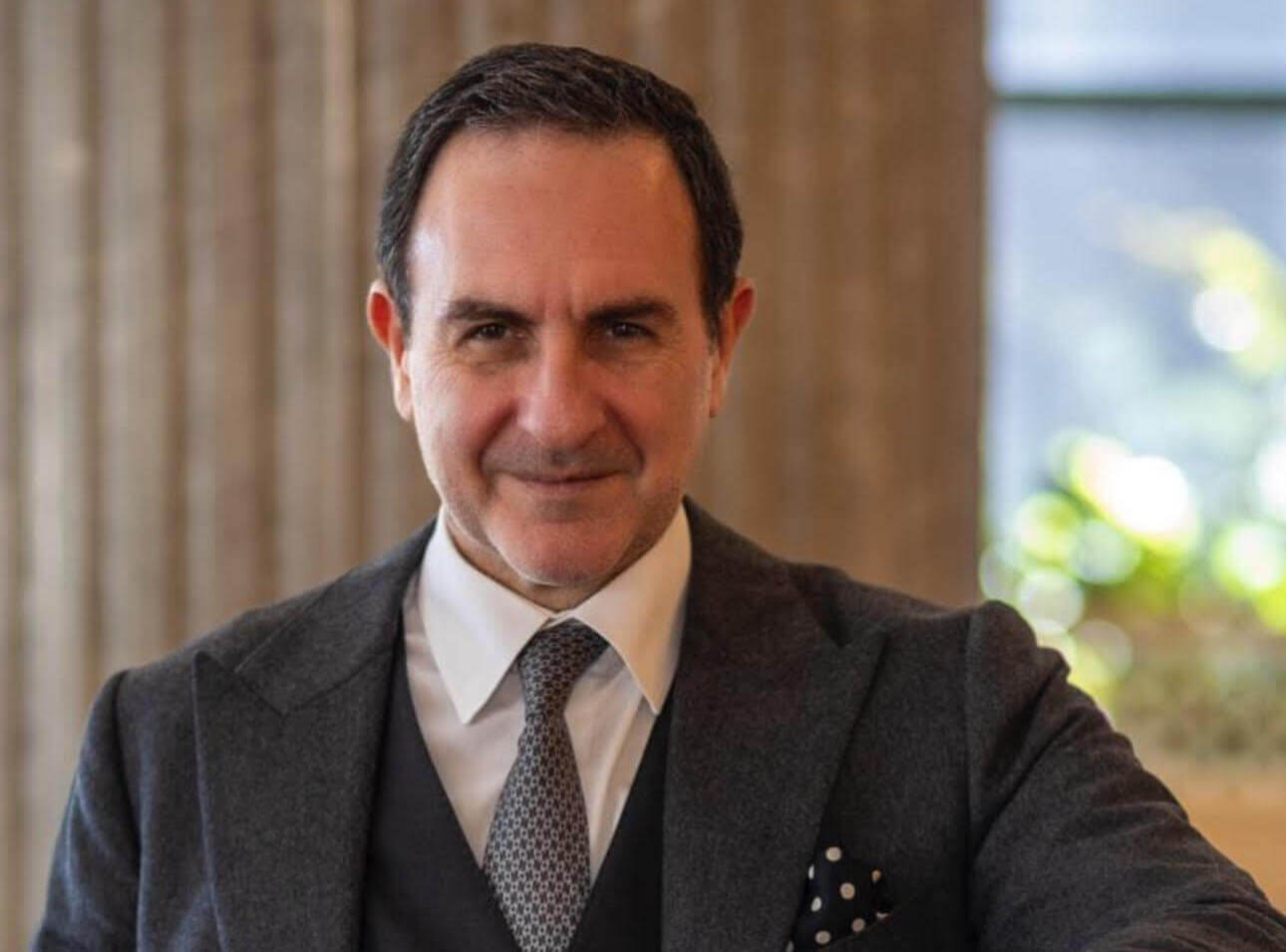 Political pressure does not only constrict institutions; it also constricts imagination - Emre Alkin
Political pressure does not only constrict institutions; it also constricts imagination. And societies whose imagination has narrowed exclude different people more easily. Yet very often, the future is carried by those very outsiders.
Piazzolla set tango free. Fikret Mualla painted in the colours of his own wound.
One with the bandoneon, the other with the brush, said the same thing: do not force me into a mould.
We still face the same question today. Do we see unconventional people as a problem, or as society’s chance to renew itself? This question appears everywhere – in art, sport, economics, politics, and science.
Progress often moves forward not on the shoulders of obedient people, but on the shoulders of restless ones.
And perhaps what we need to learn is to understand those restless people a little earlier, while they are still alive.
