In the early morning of 27 February, the Pakistan Air Force conducted airstrikes against targets in Kabul, as well as Paktia and Kandahar provinces.
According to AFP journalists present in Kabul, the overflights of jet aircraft and explosions lasted for more than two hours.
Kandahar, which the Taliban consider their political and religious stronghold, is also home to the movement’s supreme leader, Hibatullah Akhundzada.
Pakistani authorities announced that the operation was called "Ghazab Lil Haqq" ("Righteous Anger"). Defence Minister Khawaja Asif stated that Pakistan had exhausted all other options and no longer viewed the conflict with the Taliban as a limited security incident but as an open war.
This is not a border incident that escalated. It marks the end of a long-term and flawed strategic concept, the consequences of which Pakistan is now facing.
The Taliban as an instrument of regional policy
For decades, Islamabad has used the Taliban as an instrument of regional policy. The initial assumption was that Afghanistan, under Pakistani influence, would provide a backup in the event of conflict with India and prevent the opening of a western front. The Taliban were a means to that end.
Within this framework, Inter-Services Intelligence, Pakistan’s military intelligence agency responsible for both external and internal operations, has funded, trained, and protected Taliban structures for years.
The withdrawal of the United States from Afghanistan in August 2021 was seen in Islamabad as a strategic success
That policy continued during the period when United States and NATO forces led the war in Afghanistan, while Taliban units waged an insurgency with support from infrastructure and logistics based in Pakistan.
The withdrawal of the United States from Afghanistan in August 2021 was seen in Islamabad as a strategic success.
The Taliban returned to power, the American military and political presence disappeared, and it was assumed that the regional balance of power would shift in Pakistan’s favour. That assessment proved to be mistaken.
Pakistan’s loss of control
The problem quickly centred on Tehrik-e-Taliban Pakistan (TTP), an organisation ideologically close to the Afghan Taliban but organisationally separate and directed solely against the Pakistani state.
Since the Taliban’s return to power, the TTP has significantly expanded its operational capabilities. More than 1,200 Pakistani nationals were killed in 2025 alone, roughly double the number compared to the year of the US withdrawal.
The core of the problem is that Pakistan has lost control of an instrument of its own making
Pakistan claims that the TTP is planning and carrying out attacks from inside Afghanistan, and it is demanding that the authorities in Kabul take action against the organisation.
The Afghan Taliban reject these demands or deny that the TTP operates from Afghan soil. This has turned the security problem into a direct confrontation between Pakistan and the Taliban authorities in Kabul.
The core of the problem is that Pakistan has lost control of an instrument of its own making. A structure conceived as a means of regional influence has become a security threat that now works against its creator.
Reframing the conflict
From that moment, Islamabad changed its interpretation of the conflict. Pakistan's Defence Minister Khawaja Asif posted on X that "the Taliban has turned Afghanistan into a colony of India."
This statement is not intended for the domestic audience. Its function is foreign policy: to portray the conflict with the Taliban as a consequence of wider regional pressure, rather than as the result of Pakistan's own long-standing misguided policies.
The reason for this interpretation lies in recent regional conflicts and events. In April 2025, Pakistan and India fought a four-day armed conflict known as Operation Sindoor, which began with an attack in Pahalgam on India’s side of Kashmir.
Islamabad does not see the Taliban as an isolated security problem
Israel explicitly sided with India during that conflict, supplying military equipment. Yesterday, on 26 February, India’s Prime Minister Narendra Modi returned from Israel, where he stated in the Knesset (Israeli Parliament) that "India stands with Israel, firmly and with full conviction."
Israeli Prime Minister Benjamin Netanyahu, a few days earlier, announced a concept he calls a "hexagon of alliances," in which India takes centre stage and which is explicitly directed against what he describes as a "radical Sunni axis," with Turkey and Pakistan named as its pillars.
Islamabad, therefore, does not see the Taliban as an isolated security problem. It perceives coordinated pressure: India from the east, Israel as an ally of India, and the Afghan Taliban from the west as an alleged instrument of India.
That narrative has both a structural logic and a concrete military-political goal: to position Pakistan in the international arena not as an aggressor, but as a party defending itself from its environment.
Military supremacy without resolution
At the tactical level, the balance of power is currently in favour of Pakistan. Pakistan's air force, missile units, and regular ground forces represent a superiority that the Taliban cannot match, as Afghanistan does not have an air force or integrated air defence system.
Islamabad claims it destroyed 27 Taliban positions, captured 9, killed more than 130 fighters, and captured 9 members of the movement during the 27 February strike.
Pakistan can destroy targets and temporarily suppress the enemy, but it cannot dismantle the organisational structure or prevent attacks within its own territory
The Taliban, on the other hand, state that 8 of their fighters were killed in the previous night's attack, while they claim to have killed 55 Pakistani soldiers and transferred their bodies to Afghan territory.
Military supremacy at the border does not resolve the fundamental problem. The experience of the twenty-year war led by the United States and NATO in Afghanistan demonstrates the established pattern of Taliban actions: accepting tactical losses, retreating, reorganising, and continuing a long-term asymmetric war.
Pakistan can destroy targets and temporarily suppress the enemy, but it cannot dismantle the organisational structure or prevent attacks within its own territory.
The security vacuum effect
A factor beyond the control of both Islamabad and Kabul enters the equation: the Islamic State of Khorasan (IS-KP).
This organisation operates on both sides of the border and is in conflict with both the Pakistani state and the Afghan Taliban. It systematically exploits every security vacuum created by escalation.
In recent months, IS-KP has carried out attacks in Kabul, as well as a suicide attack on a mosque in Islamabad, in which dozens of people were killed.
Pakistan possesses nuclear weapons, but in the conflict with Afghanistan, this capability has no operational significance
Any Pakistani escalation against the Taliban has a dual effect: it reduces the resources available to fight IS-KP and simultaneously reinforces the propaganda and recruitment narrative of jihadist groups within Pakistan, who portray the state as an extension of foreign interests.
Pakistan possesses nuclear weapons, but in the conflict with Afghanistan, this capability has no operational significance.
The nuclear arsenal is relevant only in relation to India, as a deterrent against a conventional or nuclear attack. In a war against an insurgency movement without territorial centres, command structures, or fixed targets, nuclear weapons offer no military advantage.
When mediation fails
Diplomatic channels are virtually exhausted. Qatar and Turkey have mediated several attempts to reach a truce in recent months, but no agreement has endured.
In February 2026, Saudi Arabia succeeded in mediating the exchange of captured Pakistani soldiers, but that channel did not develop into a more permanent political mechanism.
At present, those intermediary frameworks are no longer effective. Islamabad refers to previous agreements and accuses Taliban authorities of systematically violating them.
Kabul responds by claiming that Pakistan's air and missile strikes on Afghan territory have nullified any commitments from earlier agreements.
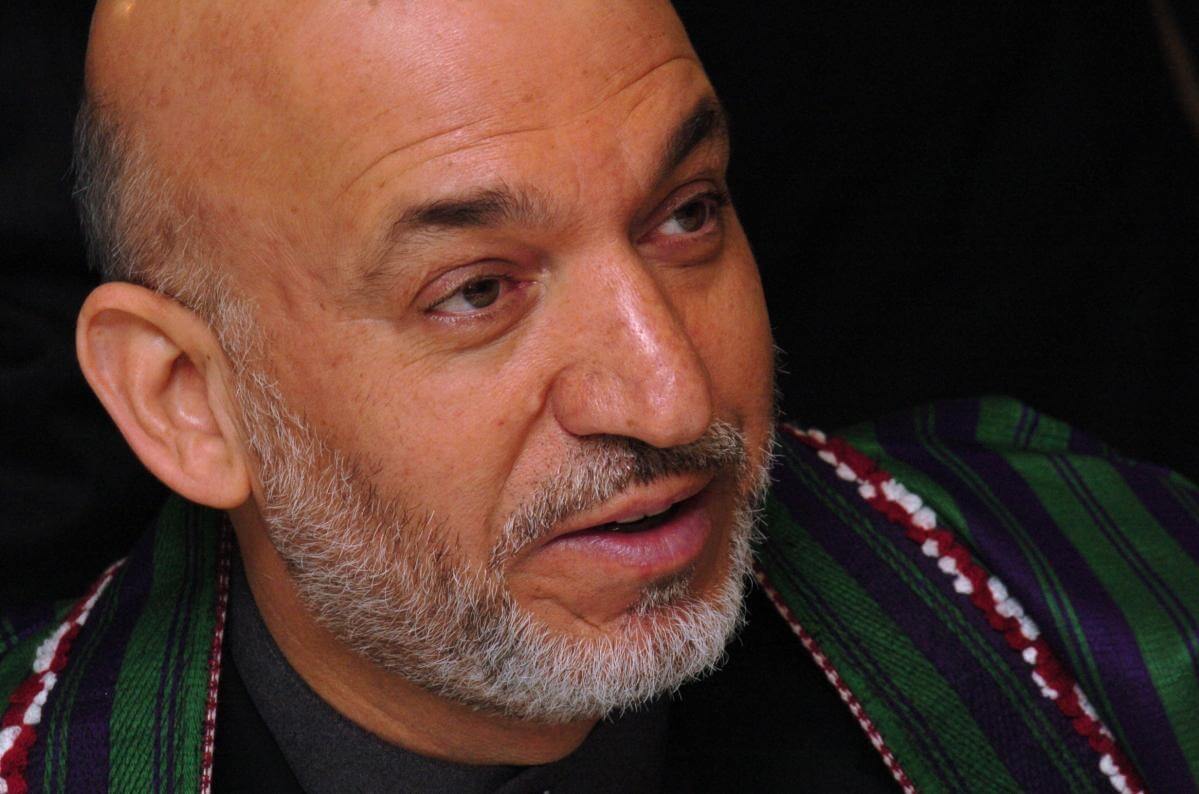 The Afghans will defend their beloved homeland with complete unity - Hamid Karzai
Former Afghan President Hamid Karzai, who lives in Kabul under Taliban control, posted on X that "the Afghans will defend their beloved homeland with complete unity."
In Pakistan, state leadership responded by announcing a full military escalation. President Asif Ali Zardari stated that the armed forces had been given a mandate for "a comprehensive and decisive response," while Prime Minister Shehbaz Sharif declared that "the country was united behind Pakistan's armed forces."
Those statements offer limited analytical value. They are standard messages of political consolidation during periods of escalation. The core of the problem for Pakistan lies elsewhere.
Islamabad has invested decades of political effort, significant financial resources, thousands of lives, and much of its international credibility in the project of controlling the Afghan Taliban. On 27 February, that project definitively turned against its sponsor.
A strategic mistake comes full circle
Airstrikes do not win the war in Afghanistan. The United Kingdom, the Soviet Union, and the United States, each with far greater military power, demonstrated this at different times.
None of these powers managed to translate conventional supremacy into a lasting political outcome.
Pakistan can win tactical fights on the border, but it cannot impose a solution that would stabilise the western front or eliminate an adversary whose modus operandi is based on attrition, withdrawal, and resurgence. For now, there is no clear strategic way out of this situation for Islamabad.
All estimates indicate that the escalation has only just begun and that there is no short-term exit
All estimates indicate that the escalation has only just begun and that there is no short-term exit.
In this conflict, Pakistan is simultaneously the creator, sponsor, and victim of the same policy.
There are few examples in contemporary international relations where a long-standing strategic mistake returns with such precision and at such a cost.
