On 20 February, Warsaw officially withdrew from the Ottawa Convention, the 1997 international agreement banning the use, stockpiling, production, and transfer of antipersonnel land mines.
The standard interpretation of this move comes down to a response by a NATO member to the Russian threat on its borders. While this interpretation is not incorrect, it overlooks another crucial aspect of the story.
What actually happened on 20 February was not merely a military decision by a NATO member; it marked the formal end of one of the most ambitious projects of the liberal international order of the 1990s: the idea that democracies can and should voluntarily relinquish certain weapons, even at the expense of their own tactical advantage, because the protection of civilians is a value that supersedes strategic calculations.
Today, no country bordering Russia or Belarus, except Norway, abides the convention. Estonia, Latvia, and Lithuania formally withdrew at the end of 2025. Finland did so on 10 January 2026.
Poland completed the process on 20 February this year, after submitting a notification of withdrawal to the United Nations on 20 August 2025 and following the mandatory six-month period.
Poland ratified the convention in 2012 and was the last EU country to do so. By 2016, it had destroyed its entire stockpile of Cold War-era antipersonnel land mines – more than a million units.
At the time, this gesture reflected the kind of country Poland aspired to be. Ten years later, the same country is planning to resume production of these mines.
East Shield and the return of mines
Poland’s Deputy Defence Minister Paweł Zalewski told the AP on 20 February: "These mines are one of the most important elements of the defence structure we are constructing on the eastern flank of NATO, in Poland, on the border with Russia in the north and with Belarus in the east."
Zalewski confirmed that Poland will begin domestic production of both antipersonnel and anti-tank land mines in cooperation with domestic companies, aiming for complete self-sufficiency.
Belma S.A., which has so far focused on anti-tank systems, could increase its capacity from around 100,000 to as many as 1.2 million mines per year, according to announcements.
A day before the withdrawal from the convention, Prime Minister Donald Tusk attended a demonstration of the Bluszcz system, an unmanned mine deployment vehicle jointly developed by Belma S.A. and a military research institute.
After the demonstration, Tusk said, "We are in the process of finalising this mine project within the East Shield, which is crucial to our security, our territory, and our border. This also includes the capability we will soon achieve – the ability to mine the Polish border in the event of a threat within 48 hours."
All this is taking place as part of what Warsaw calls the East Shield, a system of reinforced defence facilities along the borders with Belarus and the Russian enclave of Kaliningrad, which is under construction from 2024.
The project includes physical barriers, an expanded troop presence, and advanced surveillance systems. Mines were announced as the next element in that defence structure.
Zalewski formulated the logic of this move precisely. Russia is one of thirty countries that have never signed the convention. In the same category are the United States, China, India, Pakistan, and South Korea.
"We are not an aggressive country, but we have to use all means to deter Russia" - Poland’s Deputy Defence Minister Paweł Zalewski
For decades, the agreement tied the hands of those who signed it, while the most powerful global actors remained outside it.
From Warsaw's perspective, this asymmetry was not the moral strength of the convention but the strategic weakness of those who respected it. "We are not an aggressive country," Zalewski said, "but we have to use all means to deter Russia."
That argument is understandable. But it reveals something that is rarely explicitly named: the war in Ukraine did not only change the military doctrine of European countries; it changed the very philosophy by which those countries define the relationship between security needs and humanitarian obligations.
The 1997 convention was based on the premise that there is a set of weapons that are so indiscriminate and dangerous to civilians in the long term that even legitimate defence cannot justify their use.
The experience of Angola, Cambodia, and Bosnia and Herzegovina, where children are still stepping on landmines buried decades before their birth, was an argument that seemed irrefutable in 1997.
Now that same argument faces a simple military calculation. Russia, which has never acceded to the convention, uses mines in Ukraine without any restrictions.
The question is no longer a moral one but an operational one – whether a country that may find itself at war can deny itself a weapon that its potential adversary has never stopped using.
Organisations for the protection of human rights have not changed their positions. They judge.
Zalewski did not reject their argument but placed it in a different framework: the mines will be in reserve, deployed only in case of a real threat; they will not be pre-emptively placed. “We very much respect our territory and we don’t want to exclude it from day to day use for the Polish citizens,” he said.
That sentence was politically carefully drafted, but it does not change the essence. The country that previously destroyed a million mines is now in the process of manufacturing them again.
When civilisational responsibility becomes a luxury
What is also important is that this trend does not stop at NATO's borders. It is not just about Europe.
Since 1999, when the convention entered into force, there have never been more countries considering or announcing withdrawal from it than there are today.
The argument used by Warsaw, Helsinki and the Baltic capitals – that they are in an asymmetrical position against an enemy not bound by the convention – is the same one used by governments on the other side of the world in conflicts unrelated to Russia.
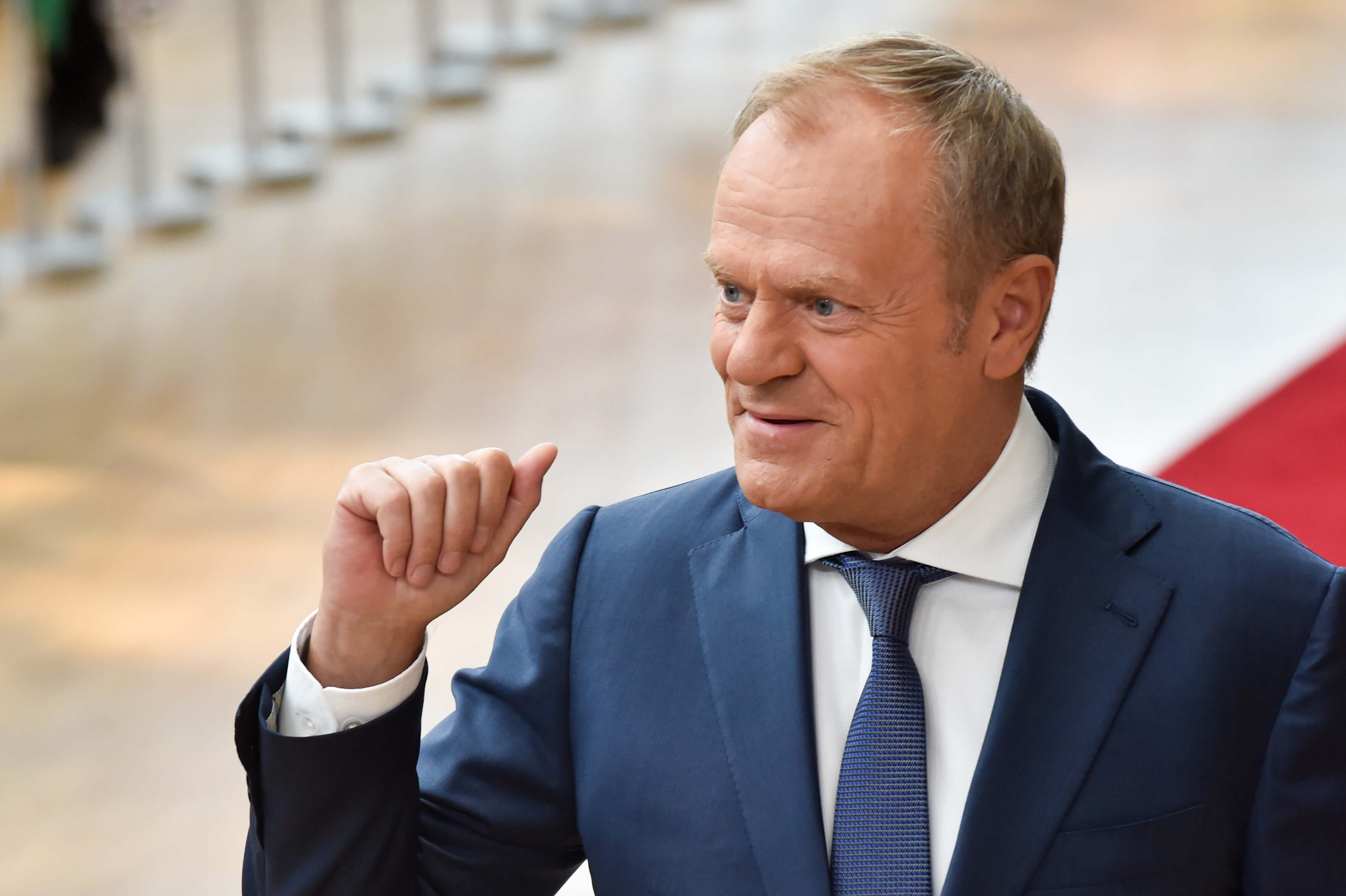 Poland destroyed more than a million mines in 2016 and is now producing them again - PM Donald Tusk
Each time a NATO democracy leaves the convention, that argument gains new legitimacy and spreads further.
Princess Diana, who walked through minefields in Angola in 1997 and whose advocacy was one of the key factors that initiated the negotiations, would now be met with a question none of her interlocutors at the time anticipated.
What happens when a country that signed the convention as an act of civilisational responsibility comes to see that same responsibility as a luxury it cannot afford? The answer to that question is neither simple nor clear-cut.
Anyone who claims that Poland did the only right thing ignores decades of documented humanitarian harm caused by these mines.
Anyone who says it acted wrongly should explain how a country sharing hundreds of kilometres of a border with an aggressive state that never signed the same convention should act differently.
In less than a year, all border states along NATO's entire eastern flank, from the Baltic Sea to the Arctic, except Norway, have withdrawn from the convention and announced plans to renew or construct their own mine production capacities. That belt can now be mined within a period measured in days.
The liberal international order that built institutions in the 1990s on the idea that violence could be normatively limited is now suffering erosion at the hands of the very countries that built it – not out of ill will, but because of a fear that is real and justified.
Poland destroyed more than a million mines in 2016 and is now producing them again. Ten years was enough for that decision to become meaningless. That is the only conclusion from this story that truly says something about the world we live in today.
