In February 2025, US President Donald Trump “paused” enforcement of the Foreign Corrupt Practices Act, which prohibits bribing foreign officials or facilitating corrupt payments, pending a six-month review of its scope and application.
Since then, FCPA enforcement has been “almost non-existent.” Although Trump contends that this will strengthen US businesses, evidence suggests otherwise.
For decades, it was widely believed that corruption could “grease the wheels” of business.
That belief was definitively discredited by a seminal 2000 study by Daniel Kaufmann and Shang-Jin Wei, which found that companies that paid bribes to cut through bureaucratic red tape did not face fewer obstacles.
Instead, corrupt officials responded by creating even more red tape in order to extract additional payments.
Corrupt officials were also found to tailor their bribe requests to firms’ perceived ability to pay.
Far from boosting profitability, Kaufmann and Wei showed that such practices raise the cost of capital, as investors and lenders demand a premium from firms exposed to corruption risks.
More recent evidence reinforces this conclusion. A comprehensive 2025 study examining 40,000 firm-level observations across 40 countries in Sub-Saharan Africa between 2003 and 2023 found that corruption is the single biggest drag on firm growth.
Similarly, the International Monetary Fund has warned that high-corruption environments depress expected growth, discourage investment in capital and technology, and create a self-perpetuating cycle of stagnation.
Pay-to-play culture
These findings should alarm US businesses. As the Trump administration relaxes anti-corruption enforcement and nurtures an explicit pay-to-play culture, the line between legal and illegal becomes dangerously blurred.
The consequences are already visible. Oil and gas executives who reportedly donated to Trump’s presidential campaign in return for specific policy commitments are now the subject of complaints filed by the non-partisan watchdog CREW and Democrats on the House Oversight Committee.
At the same time, multiple crypto billionaires have been accused of leveraging political donations to secure influence and presidential pardons.
Yet the law itself has not changed. It remains illegal for any company in the United States to give money or anything of value in exchange for a specific “official act” (bribery), or as a reward for such an act (illegal gratuities).
Rather than maintaining institutional independence, officials have been instructed to advance and defend Trump’s policies “zealously”
What has changed is the Justice Department’s priorities: rather than maintaining institutional independence, officials have been instructed to advance and defend Trump’s policies “zealously.”
As a result, CEOs find themselves navigating a more volatile political landscape.
While some argue that pay-to-play politics has always existed and that business leaders must do whatever is necessary to maximize shareholder value, others see Trump’s tactics as a mafia-style shakedown.
Only clean business policy
The empirical evidence, in any case, is clear: consistently enforced anti-corruption rules are the only thing protecting companies from predatory public officials and political extortion.
Importantly, corruption tends to hollow out firms’ internal culture, replacing the discipline of competing through excellence with dependence on access, bribes, and favoritism.
Over time, what begins as tactical accommodation hardens into strategic decay.
There are plenty of examples of companies that chose a different path. Celtel, the telecommunications firm founded by Mo Ibrahim, operated during the 1990s and early 2000s in several African countries, some of which were widely regarded as highly corrupt.
Ibrahim made refusal to pay bribes a non-negotiable company policy, requiring every request for a “facilitation payment” to be referred directly to the board.
Rather than rely on political access, Celtel focused on technical excellence, operational efficiency, and customer service. This strategy paid off, as evidenced by the company’s sale to Zain in 2005 for $3.4 billion.
Siemens restored its credibility by rooting out corruption
Likewise, Siemens restored its credibility by rooting out corruption. In 2008, after it was revealed that the company had paid more than $1 billion in bribes, Siemens installed new leadership and implemented an uncompromising “only clean business” policy.
Sales teams were required to compete on technological excellence and efficiency rather than political connections, enabling the company to rebuild its reputation and become the preferred partner for large-scale infrastructure projects financed by institutions like the World Bank.
For many firms, such institutions’ confidence is essential. The engineering firm formerly known as SNC-Lavalin nearly collapsed in 2013 after multiple corruption scandals led to a ten-year ban on bidding for World Bank-funded projects.
Facing criminal fraud charges and a plummeting share price, the company adopted a zero-tolerance approach to corruption, overseen by an independent monitor.
This restored confidence among governments seeking “clean” partners and resulted in the World Bank lifting sanctions early. Rebranded as AtkinsRéalis, the company reported $9.7 billion in revenue in 2024.
The US weakens its anti-corruption regime
Encouragingly, even as the US weakens its anti-corruption regime, other countries are moving in the opposite direction.
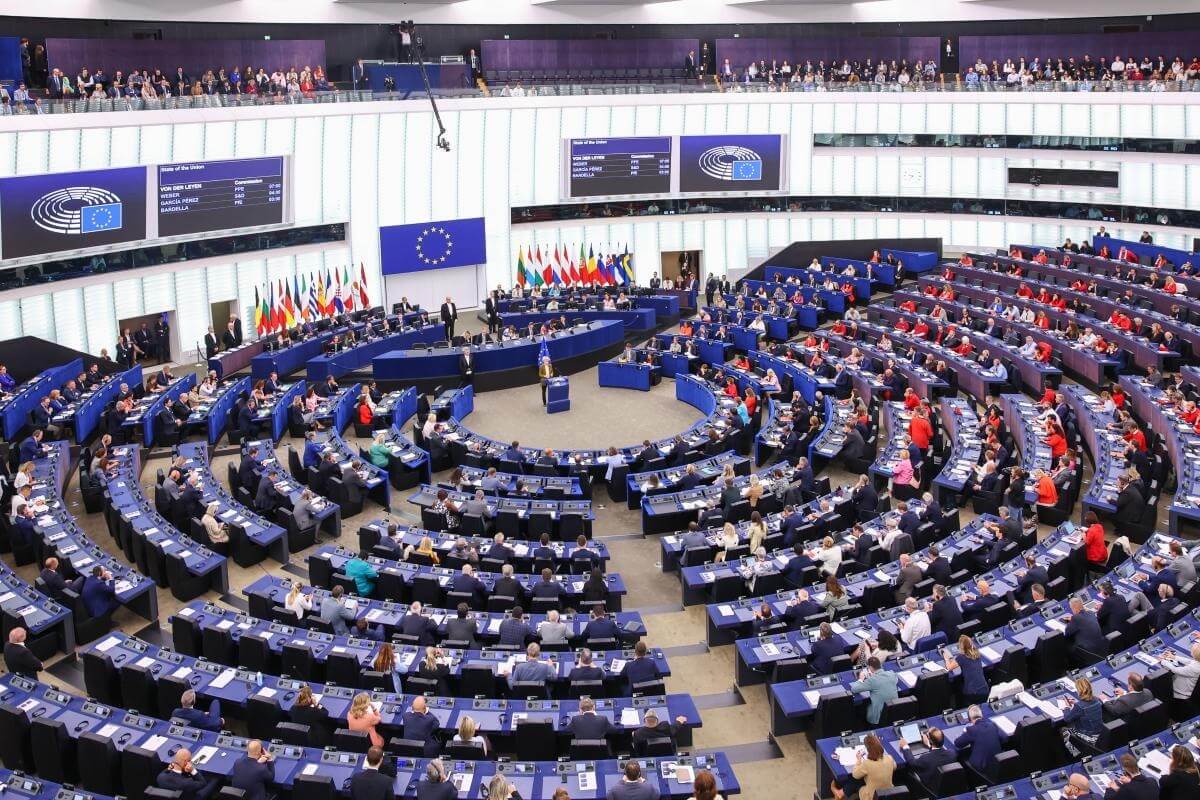 The EU has introduced an anti-corruption framework that harmonizes offenses and penalties across all 27 member states
In March 2025, the United Kingdom, France, and Switzerland launched the International Anti-Corruption Prosecutorial Taskforce, signaling a renewed commitment to coordinated enforcement.
Consequently, major financial institutions and law firms now warn clients that “compliance is no longer optional,” regardless of US policy shifts.
The European Union, for its part, has introduced an anti-corruption framework that harmonizes offenses and penalties across all 27 member states, replacing fragmented national regimes with a unified standard.
Under the new rules, companies found guilty of bribery face fines of up to 4-5% of total global turnover.
Global businesses would be wise to heed these signals. When corruption becomes normalized, the temptation is to adapt and accommodate those in power.
But the smarter strategy is to double down on non-negotiable standards. In the long run, indulging corrupt officials always costs companies more.
Ngaire Woods is Dean of the Blavatnik School of Government at the University of Oxford.
