During an official visit to Israel on 25 February, India’s Prime Minister Narendra Modi addressed the Knesset, becoming India’s first head of government to do so.
The Israeli Parliament also awarded him the Speaker of the Knesset Medal, the first time in its history that this honour has been awarded to a foreign statesman.
This move represents a clear alignment of India within the current security relations between South Asia and the Eastern Mediterranean.
Modi's visit to Jerusalem comes at a time of heightened tensions and the formation of new security configurations in the wider Asia-Middle East region.
Ahead of Modi's arrival, Benjamin Netanyahu spoke at a meeting of the Israeli Cabinet about the network of alliances that Israel is seeking to establish.
This framework includes India, Greece, Cyprus, and several countries from the Arab, African, and Asian regions. Although he did not specify the intended targets of such an arrangement, the security context leaves little room for alternative interpretations.
On the opposite side are Turkey, Qatar, and Pakistan. Turkey has expanded military cooperation with Pakistan and Bangladesh in recent years and provides political support to Hamas.
In this constellation, Qatar plays the role of a financial supporter, primarily through long-term financial transfers to Gaza and the political protection of the Hamas leadership, which Israel and India assess as factors enabling the organisation's survival and operational capability.
Pakistan, as the only Muslim country with a nuclear arsenal, gives this group additional strategic weight. In the assessments of Jerusalem and New Delhi, these three actors operate as a connected entity whose activities directly affect the region's security balance.
A security relationship redefined
During the visit, agreements on cooperation in artificial intelligence, quantum computing, and cyber security were signed.
In parallel, discussions were held on the development and integration of anti-missile systems, including technical compatibility between India’s capabilities and Israel's Iron Dome missile interception system and short-range missiles.
India became the single largest buyer of Israeli military technology during Modi's term. These steps shift cooperation from procurement to a long-term technological and operational partnership in defence.
Addressing the Knesset, Modi stated that India stands with Israel "firmly and with full conviction". This statement comes at a time when Israel faces intense international legal pressure, including proceedings before the International Criminal Court and the International Court of Justice.
Its significance increases further when considering India's domestic and foreign political context. India is a country with more than 200 million Muslim citizens and strong economic interests in the Gulf countries, where millions of India’s workers earn incomes crucial to the domestic economy.
Despite these constraints, Modi chose to publicly and unambiguously define India's position. He made that decision consciously, fully assessing the political consequences.
The regional infrastructure and trade projects now taking shape exclude Pakistani territory and do not envision it as a transit or logistics point
The reasons for this move can be traced directly to the events of April 2025. After the attack in Pahalgam (a city in India’s Jammu and Kashmir State), in which 26 civilians were killed, India carried out airstrikes on targets within Pakistani territory. Pakistan responded with missile and drone strikes.
The conflict lasted four days and took place between two nuclear-armed states. During that period, Israel clearly sided with India.
This stance was registered in New Delhi as a concrete political and security fact. The experience of mutual support in crisis situations, now institutionalised in Jerusalem, gives the partnership real operational weight.
For Pakistan, the strategic position is deteriorating. The regional infrastructure and trade projects now taking shape exclude Pakistani territory and do not envision it as a transit or logistics point.
The IMEC (India-Middle East-Europe Economic Corridor) project establishes a new route connecting India to Europe via Saudi Arabia, Jordan, and Israel.
In this framework, Israel assumes the role of a key hub between Asia and Europe. Pakistan remains outside this arrangement. Those building it view Pakistan not as part of the solution, but as a space that the new infrastructure must bypass.
How alignment shapes the region
The connection between Modi and Netanyahu is based not only on shared foreign policy interests, but also on a similar understanding of internal security and political order.
Their political parties, the BJP in India and Likud in Israel, start from the assumption that political Islam poses a long-term security challenge.
This view is reflected in the similar language used to describe threats, as well as in the policies both governments have developed towards their own Muslim communities.
Therefore, cooperation between the two leaders does not require additional political coordination or lengthy negotiations. The basic assumptions about the nature of threats and the appropriate responses have already been established.
Further development of India-Israel relations in the short term will depend not only on bilateral decisions but also on the reactions of other regional actors, which may limit the pace and scope of cooperation.
Defence cooperation will continue to deepen, particularly in technology, anti-missile defence, and intelligence exchange.
The United Arab Emirates and Saudi Arabia, which have normalised or began normalising relations with Israel through the Abraham Accords, will not react harshly to this rapprochement.
Both countries do not view India-Israel cooperation as a threat to their security interests but as part of a broader regional arrangement to which they themselves belong.
If implemented, the corridor would give India direct infrastructure and trade access to Europe without relying on Pakistan or Turkey
The reactions of Turkey and Pakistan will differ. Initially, they will confine themselves to political statements and diplomatic moves, seeking to strengthen alternative alliances, but without immediate steps that would alter the balance of forces on the ground.
Pakistan's response will, by all accounts, move towards strengthening military and intelligence ties with Turkey and China. Ankara is already deeply involved in Pakistan's defence sector, while Beijing has long-term security and economic interests in Pakistan.
These interests centre on the CPEC (China-Pakistan Economic Corridor), a $65 billion infrastructure project that provides China with land access to the Arabian Sea through Pakistani territory.
However, at this stage, China has no interest in entering open confrontation with India and Israel. Its actions remain focused on preserving influence and stability while avoiding moves that would accelerate regional escalation.
In the medium term, IMEC (India-Middle East-Europe Economic Corridor, a planned infrastructure and trade route connecting India to Europe via Saudi Arabia, Jordan, and Israel) is gaining much wider strategic importance.
If implemented, the corridor would give India direct infrastructure and trade access to Europe without relying on Pakistan or Turkey. Thus, both countries remain outside the mainstream of the new Asian-European infrastructure.
For Pakistan, which is already facing serious fiscal pressures, continuous attacks by the TTP (Tehrik-e-Taliban Pakistan, an armed Islamist movement active inside Pakistan), and persistent instability along the border with Afghanistan, this represents a narrowing of the space for economic recovery and long-term stabilisation of the country.
The Iran question as the great unknown
In the long term, the most significant unknown in this calculation remains Iran.
Israeli security and political assessments are based on the assumption that the current system of government in Tehran is not permanent. This assumption has a historical basis.
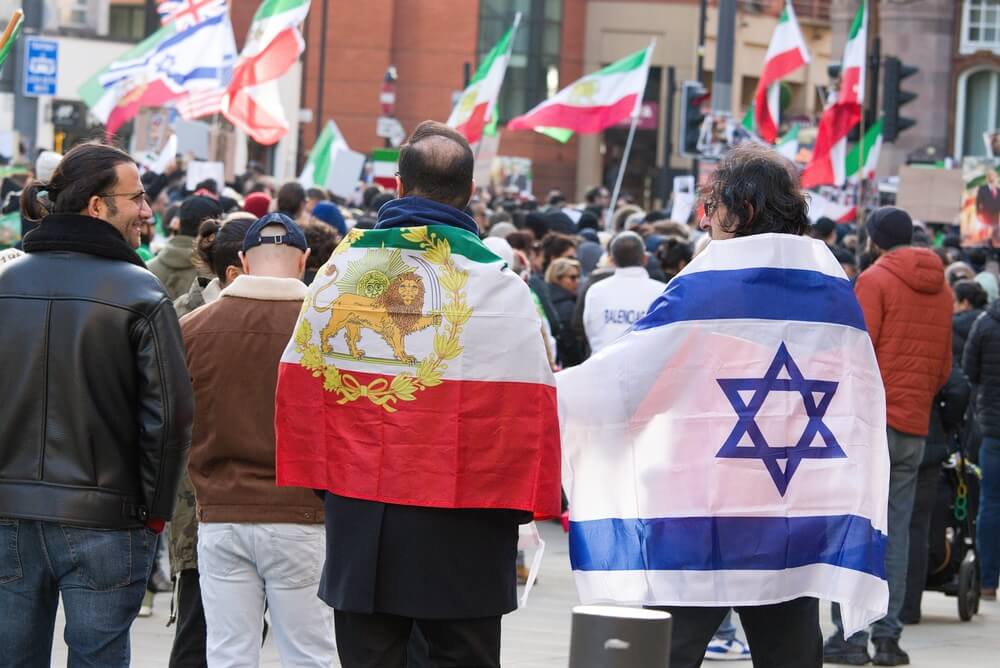 Iran could become a potential partner for India and Israel in security and economic arrangements spanning the area from the Persian Gulf to the eastern Mediterranean
Before the Islamic Revolution of 1979, Iran and Israel maintained close political, intelligence, and security relations. That experience continues to influence the way Jerusalem views Iran after the Ayatollah regime.
Iran today has about 85 million inhabitants, a significant educated class, and a society in which a large part of the population does not accept the ideological framework of theocracy.
At the same time, the government is under constant pressure. The national currency has severely weakened, social unrest is recurring, and the state's ability to ensure long-term internal stability is limited. Negotiations on the nuclear issue and sanctions do not offer an optimistic outcome.
If these processes do not produce a sustainable solution and there is a change of government, Iran could assume a completely different role in the region in a short time.
In such circumstances, Iran could become a potential partner for India and Israel in security and economic arrangements spanning the area from the Persian Gulf to the eastern Mediterranean.
Such a development would represent one of the most profound changes in regional relations in the modern era and would have direct consequences for the security order of the entire Middle East and the wider Asian environment.
Modi’s visit to Israel confirmed the cooperation framework that will serve as the basis for future security, technological, and infrastructure decisions by India and Israel, to which other regional actors will have to adapt.
