Swedish defence company Saab AB and the Ukrainian state enterprise Ukrainian Defence Industry (Ukroboronprom) signed a memorandum of understanding, formalising their intention to develop cooperation in the fields of aviation and aerial surveillance.
It was signed at the Munich Security Conference, underscoring its significance for European security and the integration of defence technologies.
This is a partnership between equal entities: a globally renowned Swedish company and a Ukrainian defence conglomerate that has demonstrated its capabilities and technological achievements during the large-scale war against Russia.
Saab is globally known for its JAS 39 Gripen fighter aircraft, radar systems, and defence technologies, and will contribute its expertise in aviation and radar technologies.
The Ukrainian side brings a developed industrial base and real combat experience.
Such cooperation involves knowledge exchange, joint projects, potential development of production lines, and modernisation of existing equipment.
It enables Ukraine to integrate modern Western technologies into its military infrastructure more rapidly, even amid ongoing war.
Adapting Ukrainian production to NATO standards will further facilitate technology transfer.
Sweden, in turn, gains direct access to a new market for joint production and services, expanding its export potential.
Through this partnership, Saab strengthens its position as a key supplier of aviation and reconnaissance systems in Europe, which is especially important amid growing global competition in the arms market.
Joint projects will also include the development of radar stations, avionics, and combat platforms, incorporating Ukraine’s battlefield experience.
This provides Sweden with not only economic but also technological benefits, since systems tested in real combat conditions are more in demand on global markets.
Strengthening NATO’s eastern flank
For Europe, this means strengthening NATO’s eastern flank and increasing overall defence capability in the region.
Cooperation with Ukraine also promotes the harmonisation of standards in Europe, facilitating integration of the defence industry.
Closer ties give Sweden an advantage in shaping future joint projects within the European Defence Fund.
In the long term, this enhances Sweden’s defence potential in Scandinavia and the Baltic region and contributes to regional stability and the overall security balance in Europe.
Cooperation with Ukraine in combat aviation and radar systems becomes not only a military-technical factor but also an economic and geopolitical one, strengthening Sweden’s role in the European security architecture.
Ukraine’s combat experience gives Saab an opportunity to test and improve its systems in real combat conditions
Partnership with Ukroboronprom opens new production and service markets for Saab, increases exports of Swedish defence technologies, and creates manufacturing jobs.
Ukraine provides a large market for aviation and radar solutions, helping Swedish companies find new customers in Europe.
Joint production and technology exchange strengthen Swedish and integrated European supply chains, especially for critical aviation and radar components, reducing dependence on external suppliers outside the EU and NATO.
Ukraine’s combat experience gives Saab an opportunity to test and improve its systems in real combat conditions, particularly in radar and aerial surveillance, increasing the competitiveness of Swedish developments on global markets.
Strengthening Ukraine’s defence capabilities through cooperation with Sweden means a more effective deterrence of Russian aggression in the east, which increases overall security for European countries, including Sweden.
A foundation for a broader defence alliance
Joint agreements with Ukraine create a foundation for a broader defence alliance between Sweden and other European countries in aviation and surveillance, particularly within NATO and the EU.
As a key partner in modernising Ukraine’s aviation and radar infrastructure, Saab enhances Sweden’s image as a reliable security ally, potentially strengthening Stockholm’s political and trade positions.
Potential large contracts for JAS 39 Gripen aircraft, with political decisions made at the highest level in both countries, and expanded production in Ukraine would ensure long-term orders for Saab and the Swedish defence industry, contributing to stability and investment attractiveness.
The key focus is on unmanned systems, which have become the largest sector of Ukraine’s industry during the full-scale war
In addition, Ukraine is officially launching an arms export market and plans to establish ten Ukrainian export centres in 2026, located in Northern Europe, the Baltics, Germany, and the United Kingdom.
The key focus is on unmanned systems, which have become the largest sector of Ukraine’s industry during the full-scale war.
For European countries hosting these export centres, this means direct access to weapons and technologies tested in combat against Russia’s regular army.
Placing export centres in the Baltics and Northern Europe significantly reduces logistics costs and speeds up deliveries of modern systems.
Production of drones
Of particular importance is the launch of a full production line for Ukrainian drones in Germany, alongside existing production lines in the Baltics, the UK, and Poland, integrating Ukrainian technologies directly into the European defence-industrial complex.
These countries receive not only imports but also localised production, jobs, and tax revenues.
Ukrainian technologies help to quickly close critical gaps in the production of various types of drones.
The presence of 450 Ukrainian drone manufacturers creates a large-scale ecosystem open to investment and cooperation with European businesses.
For the Baltics and Northern Europe, this reduces dependence on a limited number of traditional defence contractors, including those competing with the EU, and increases strategic autonomy in defence.
European countries gain the ability to rapidly adapt technologies to their own needs without lengthy development cycles, using solutions based on real high-intensity warfare experience rather than theoretical scenarios.
Cooperation with Ukraine is not only an act of solidarity but also a pragmatic benefit
This makes Ukrainian technologies particularly valuable amid growing threats from Russia, especially for the Baltic states.
Export centres also serve as hubs for the exchange of knowledge and tactics in UAV use, strengthening the security, economy, and defence resilience of Baltic and Northern European countries.
Cooperation with Ukraine is not only an act of solidarity but also a pragmatic benefit.
Ukrainian drones were developed and refined during the full-scale war against Russia, providing systems with proven effectiveness in real combat operations.
This significantly reduces the risk of investing in ineffective platforms and accelerates rearmament without years of testing programmes.
Launching Ukrainian production lines in the Baltics, Poland, Germany, and the UK involves relocating part of defence production, creating jobs, utilising industrial capacity, reducing dependence on imports from outside Europe, and increasing technological competence among European personnel.
Cooperation with Ukraine gives Latvia, Lithuania, Estonia, and Northern European countries an alternative source of modern weapons beyond traditional major suppliers, reducing strategic vulnerability in the event of global political crises.
Ukraine becomes part of Europe’s defence system
Ukraine becomes part of Europe’s defence system, aligning with Europe’s course towards strategic autonomy.
The announcement of 450 drone manufacturers and 10 export centres signals a large market for investors from partner countries, providing access to a rapidly growing, high-demand sector with higher returns than traditional defence projects. This makes cooperation both economically and politically attractive.
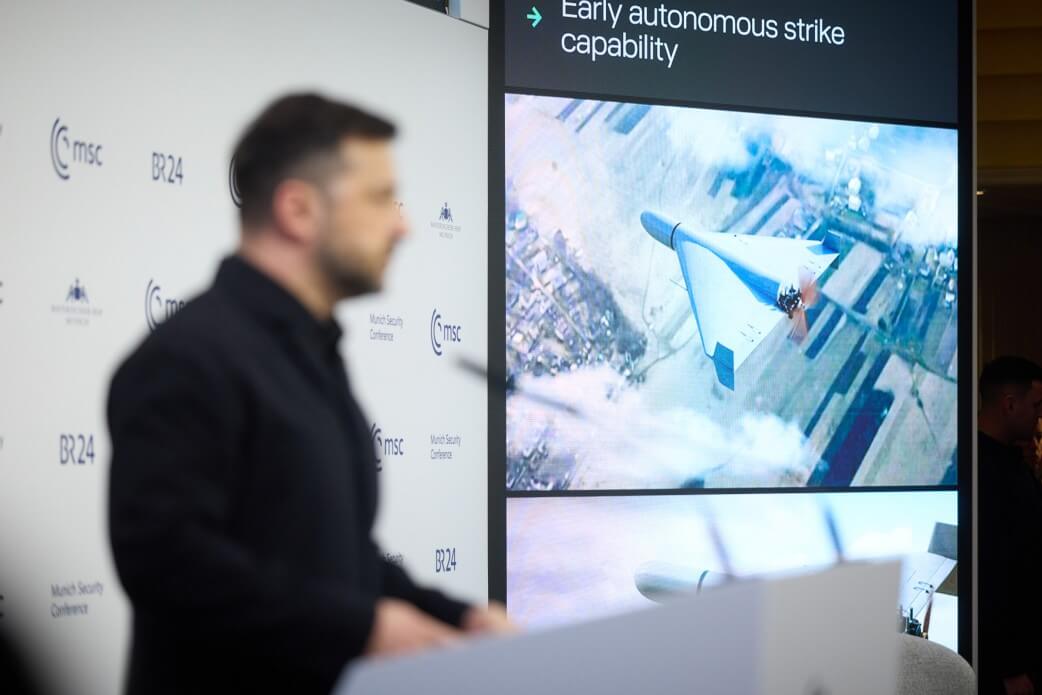 Ukrainian UAVs enable countries threatened by Russian invasion to rapidly build capabilities in reconnaissance, combat operations, and electronic warfare
Ukrainian UAVs enable countries threatened by Russian invasion to rapidly build capabilities in reconnaissance, combat operations, and electronic warfare, which is especially important given limited stockpiles and slow production in many European countries.
Joint production centres reduce the time between order and delivery, improving the operational readiness of partner armed forces.
Export centres effectively integrate Ukraine into Europe’s defence-industrial system, providing the Baltics and Northern Europe with an ally that possesses unique combat experience.
This integration strengthens their security and collective resilience against Russian threats.
Ukrainian technologies, designed with Russian military tactics and capabilities in mind, improve preparedness for Latvia, Lithuania, and Estonia, enhance interoperability, and directly strengthen deterrence against Russia.
The launch of arms exports and export centres demonstrates Ukraine’s transformation from an aid recipient into a full-fledged partner, forming a new architecture of defence partnership with European countries under direct Russian threat, thereby increasing their security and defence resilience.
Oleksandr Levchenko, a former Ukrainian diplomat, is a professor at the State University (Kyiv) and a member of the Academy of Geopolitics and Geostrategy (Kyiv).
