On April 12, Hungarians will vote in an election whose outcome may already be decided—and whose meaning will become clear only after the ballots are counted.
This is not just another European political contest. It is a test of whether a system designed to make itself unbeatable can still be beaten.
Democracy, at its core, is a system of reversibility. Governments win power—but they can also lose it.
That is what keeps the future open, channeling political conflict away from violence and into institutions. The question now is whether that logic still applies in Hungary.
For 16 years, Prime Minister Viktor Orbán has pursued a single objective: to make election outcomes predictable without abolishing elections themselves.
Incumbency has been weaponized. Districts are gerrymandered. Courts are stacked. Media is captured. Patronage networks reward loyalty and punish independence. The result is a system in which losing has seemed increasingly improbable.
The lesson has not gone unnoticed. Orbán has shown how constitutional majorities can be used to dismantle future constraints; how market mechanisms can be twisted to eliminate independent media without formal censorship; how preferential procurement and favoritism can entrench a political class without openly abolishing competition.
Yet the system rests on a tacit bargain: political closure in exchange for rising living standards.
That bargain has broken down. EU funding has been suspended over rule-of-law concerns.
The economy has stagnated, and public services have deteriorated. Corruption is no longer a background condition. It is now, for many Hungarians, the explanation.
Pre-election transfers—including a bonus worth six months’ salary for military personnel and police—have softened the blow. But they have also exposed the limits of a model that redistributes without generating growth.
Connecting the system’s corruption to everyday experience
Enter Péter Magyar.
A former Fidesz insider, Magyar broke publicly with the regime over a presidential pardon scandal and corruption revelations, and has since built a sustained double-digit polling lead.
He has done so not by campaigning on constitutional repair or abstract democratic principles, but by connecting the system’s corruption to everyday experience: stagnant wages, crumbling hospitals, underfunded schools.
For years, Orbán dominated by turning politics into a battle over identity, sovereignty, and external threats. Magyar has shifted the terrain
For years, Orbán dominated by turning politics into a battle over identity, sovereignty, and external threats.
Magyar has shifted the terrain. The question is now simpler—and more dangerous for the regime: does the system actually work? The critique is no longer abstract. It is lived.
The system has responded as it always does: not with argument, but with fear.
Billboards depict EU leaders flushing taxpayer money down a golden toilet. AI-generated videos show Hungarian soldiers dying in Ukraine. The message is blunt: a vote for Magyar is a vote for war.
Trump and Kremlin-linked disinformation networks
Orbán is not alone in pushing it. He has the backing of US President Donald Trump and Kremlin-linked disinformation networks—a convergence that has made Hungary a hub for laundering Moscow’s talking points into the American right.
Yet the geopolitical scaffolding on which this message rests is shifting under its own weight.
The peace-versus-war binary requires a certain clarity about who stands for restraint.
An America that waged a costly and destabilizing war against Iran is not a straightforward guarantor of Hungarian security.
The spectacle of a US vice president flying to Budapest to campaign for the peace candidate while the US president threatened to annihilate “a whole civilization” is not easily narrated away. The contradictions are no longer easy to conceal.
Beyond the campaign, deeper structural pressures are mounting.
A political strategy that forecloses immigration as a solution is failing on its own demographic terms
Orbán’s political project has long centered on demographic renewal and resistance to immigration.
But Hungary’s demographic trajectory remains dire. Fertility hovers near 1.3 children per woman.
The population has been falling steadily since 1980—and is projected to decline further. Pronatalist incentives have not moved the needle.
A political strategy that forecloses immigration as a solution is failing on its own demographic terms: facing a shrinking workforce, mounting pension pressures, and some of the highest debt-servicing costs in the EU.
These are problems no campaign can solve—and no election can easily escape.
Then, in the campaign’s final days, came something else. Reports surfaced of explosives near a gas pipeline in northern Serbia; Orbán convened an emergency defense council, and Magyar and investigative journalists noted that they had been warned weeks earlier to expect exactly this.
The political logic was unmistakable: the election was no longer about wages or public services but a question of security, survival, and threat.
Orbán’s rolling state of emergency—invoked variously over migration, COVID-19, and the war in Ukraine—entered yet another iteration. And few were surprised.
Do elections still do what elections are meant to do?
Three outcomes are now possible—and none resemble a conventional democratic contest.
First: managed victory. Orbán wins, confirming that the system can absorb economic dissatisfaction without yielding power. This would serve as a powerful demonstration that democratic forms can endure even as their substance is hollowed out.
Second: victory without power. Magyar secures a parliamentary majority but lacks the constitutional supermajority needed to dismantle the system Orbán has built.
This may be the most unstable outcome of all. It would show that losing an election no longer means relinquishing power. Courts remain loyal. Media remains aligned. Key institutions remain intact.
A system designed for permanence may refuse to recognize defeat—raising the risk that political conflict spills beyond institutional channels.
Third: systemic rupture. The opposition wins the supermajority required to remake the system—an outcome analysts place at just 10–20%.
This would mark a genuine reversal, achieved through the very electoral mechanism the regime sought to neutralize.
But even then, the challenges would be severe: frozen EU funds, high debt burdens, and demographic decline would constrain any new government. Reversibility itself could prove destabilizing.
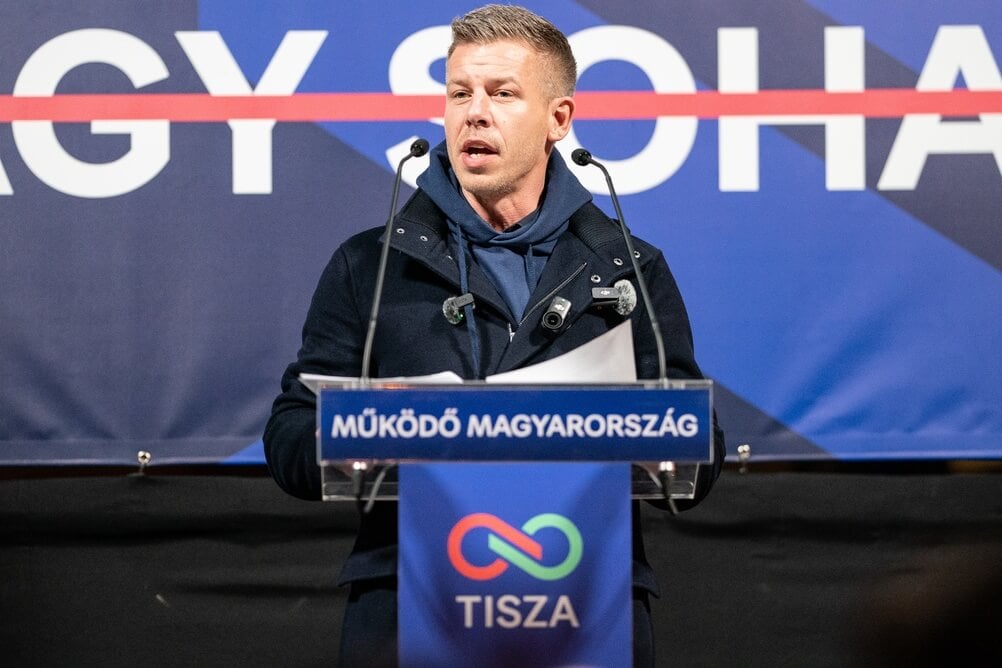 Do elections in Hungary still do what elections are meant to do? Do they keep the future open? - Péter Magyar
In each scenario, the central question remains the same. Do elections in Hungary still do what elections are meant to do? Do they keep the future open?
Orbán’s achievement has been to demonstrate how democratic institutions can be reshaped to favor permanence without openly abandoning electoral legitimacy. But this permanence is conditional.
Captured courts cannot constrain corruption. Patronage cannot generate productivity. A demographic strategy that rejects immigration cannot solve demographic decline.
On April 12, Hungarians will cast their ballots. What those ballots mean depends on whether those who lose power actually relinquish it, and whether those who win are allowed to govern.
Only then will we know whether elections still change who rules—or merely confirm who already does.
Stephen Holmes is a Professor of Law at New York University School of Law and a Berlin Prize Fellow at the American Academy in Berlin.
