The European Central Bank will raise interest rates on 11 June for the first time since 2023.
Eurozone inflation accelerated to 3.2% in May, energy prices increased by nearly 11% in one month, and the eurozone economy contracted by 0.2% in the first quarter of 2026, according to Eurostat's final revision.
The European Central Bank is beginning a tightening cycle in a slowing economy, caused by an energy shock that neither originated in Europe nor can be controlled by Europe. The only decision the bank faces is which party to charge.
A shock that overturned all projections
The economic context leading up to this session is a direct result of the closure of the Strait of Hormuz since March 2026.
Before the start of the Iran War, eurozone inflation was at 1.9%, and the ECB was more concerned about inflation not falling below the two per cent target than about it rising.
Documents from the February meeting of the Governing Council confirm this: the main concern was a possible drop in prices, and the interest rate was considered appropriate. In less than two months, that framework collapsed.
When core inflation accelerates during an energy shock, it indicates the shock is starting to spread through supply chains
Oil and gas prices have risen enough to alter all inflation projections. In March, the ECB had already raised its forecast to 2.6% for the whole of 2026, warning that in a worst-case scenario, inflation could reach four per cent, and in the very worst case, exceed six per cent in early 2027.
Economists are particularly concerned not only about the rise in overall inflation, but also because it is occurring alongside core inflation. Core inflation measures how price increases are affecting everyday services, rents, transport, and wages, excluding temporary spikes in food and energy prices, and indicates whether inflation is becoming entrenched in the economy.
That value increased from 2.2% in April to 2.5% in May. When core inflation accelerates during an energy shock, it indicates the shock is starting to spread through supply chains: shipping, logistics, and industrial inputs become more expensive, and these costs are passed on to final prices. The central bank then no longer has grounds to claim the shock is temporary and that it should wait.
The ECB chooses the lesser evil
Christine Lagarde, President of the ECB, confirmed in May that the March inflation forecast would be revised upwards.
A Bloomberg survey of economists conducted in early May predicts that the ECB will raise interest rates twice more this year, in June and September, each time by a quarter of a percentage point. This would increase the base interest rate from 2% to 2.5% by the end of the year.
The real question is not what will be decided on 11 June, but how clearly the ECB will signal that it is not stopping there. The ECB faces two unfavourable options in this situation.
If the ECB signals that the June increase is a one-off, there is a serious risk that markets will interpret this as giving up
If it raises the interest rate and clearly announces that it will not stop there, the markets will immediately factor in a third increase by the end of the year. Borrowing costs will rise for businesses and governments at a time when the economy is already slowing.
However, if the ECB signals that the June increase is a one-off, there is a serious risk that markets will interpret this as giving up. When citizens and companies stop believing that inflation will be contained, it could really get out of hand. This is exactly what the ECB must not allow.
Economists at BNP Paribas stated before the session that the bank intends to retain its decision-making freedom for September and therefore will not commit in advance to either a further increase or a pause.
Who pays and how much
The concrete consequences of this shift are not the same for all Eurozone members, and this is precisely where the political sensitivity of the situation lies.
Italy enters this cycle with a public debt amounting to 137.1% of gross domestic product, according to Eurostat data for the end of 2025.
When a country owes so much, any increase in interest rates directly raises the cost of refinancing that debt, and with the 0.3% quarterly growth rate Italy achieved in the first quarter, there is almost no room for additional costs.
France stagnated during the same period; investments are falling, and the country, which has not resolved its structural fiscal problems, is entering a phase of monetary tightening without a cushion to soften the impact.
German factory orders fell by 3.8% in April compared to the previous month
Germany is in a relatively better position: thanks to fiscal stimulus and increased defence spending, it achieved 0.3% growth in the first quarter, but its economy is export-oriented and therefore particularly sensitive to the slowdown in demand in both the rest of the Eurozone and globally.
German factory orders fell by 3.8% in April compared to the previous month, according to data from the German statistics office Destatis published on 8 June. Analysts had expected a 2.2% decline. Therefore, Germany is not immune.
Banks profit from higher interest rates in the short term as their lending margins increase. Savers are now receiving a positive return on term deposits.
However, citizens with variable-rate home loans, of whom there are proportionally many in Spain and Italy, are already feeling the rise in monthly instalments.
Energy-intensive industry is hit twice: higher energy costs increase production expenses, and more expensive borrowing slows investment and equipment renewal.
The strait that holds all the strings
What happens after June depends primarily on whether the Strait of Hormuz remains effectively closed.
The Strait of Hormuz is a narrow waterway between Iran and Oman, through which about one fifth of the world's maritime oil and natural gas traffic passes. Traffic through it is currently at about five per cent of the pre-war level.
Iran will not open the strait until the United States lifts the naval blockade of Iranian ports.
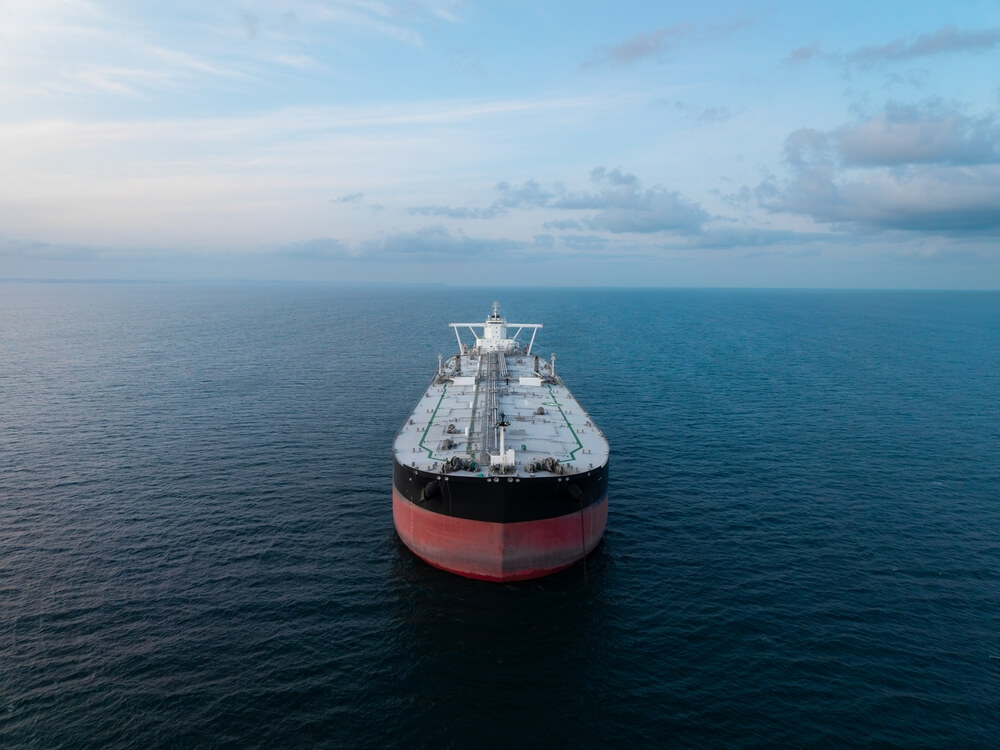 If there is a diplomatic breakthrough and the strait opens by August, the energy shock will be temporary, inflation will return towards target by autumn, and the ECB could end the cycle after one or two increases
The US will not lift the blockade without a formal agreement, which Tehran is not prepared to sign under current conditions.
Last week, the Iranian negotiator stated that there is not enough seriousness on the American side to conclude the framework agreement. This situation will not be resolved in a few weeks.
If the strait remains closed until September, energy inflation will remain structurally embedded in Eurozone prices, core inflation will continue to rise, and the ECB will have no basis to end the cycle after one increase.
Each month of delay in reaching a diplomatic solution directly increases the probability that the ECB will have to implement a third increase by the end of 2026, which would raise the deposit rate to 2.75% in an economy that is barely growing in that scenario.
If there is a diplomatic breakthrough and the strait opens by August, the energy shock will be temporary, inflation will return towards target by autumn, and the ECB could end the cycle after one or two increases.
However, that optimistic scenario assumes an agreement between the parties, who are not yet close to defining the terms.
Limits of monetary policy
On 11 June, the ECB begins a cycle with an unknown end, in an economy that cannot easily withstand it, due to a shock outside its jurisdiction.
The bank can set the interest rate. It cannot open the strait, replace the energy sources on which Europe is structurally dependent, or implement the fiscal reforms that Eurozone governments have delayed for years.
Monetary policy cannot solve the problem facing Europe; it can only determine who will bear the cost and at what rate
Monetary policy cannot solve the problem facing Europe; it can only determine who will bear the cost and at what rate.
Italy enters this cycle with a debt of 137.1% of GDP and an economy that is barely growing. France enters with a structural deficit that has remained unresolved for years.
Both countries will pay more than others, not only through higher interest rates but also through slower investment, rising debt servicing costs, and less fiscal space to respond if the situation worsens.
The ECB cannot change anything in this situation. It can only choose between unfavourable scenarios while waiting for the Strait of Hormuz to reopen.
