As the ceasefire deadline set by the Trump administration expires tomorrow in the war with Iran, the United States is once again confronting the same reality it faced in the Gulf nearly 40 years ago.
In 1988, as today, there were assumptions in parts of Washington that American military superiority could impose order on Gulf waters, secure shipping lanes, and force Iran to back down.
What happened to the USS Samuel B. Roberts demonstrated how dangerous that assumption was then and why it remains dangerous now.
On 14 April 1988, the guided missile frigate USS Samuel B. Roberts was operating in the central Gulf as part of Operation Earnest Will, the American mission to escort oil tankers during the Iran-Iraq War.
By that stage of the conflict, Iran had already begun mining shipping routes, attacking commercial vessels, and forcing the United States into an increasingly defensive posture.
Samuel B. Roberts entered one of the Gulf’s main eastbound shipping lanes, one of the same narrow and highly predictable corridors through which commercial shipping still moves today.
At approximately 4:39 p.m., sailors aboard the ship identified several floating mines ahead of the vessel.
Captain Paul Rinn immediately ordered the frigate to reverse course along its own wake, believing that retracing the same track offered the safest route out of the minefield.
It was during that manoeuvre that the ship backed into another mine beneath the surface that had not been seen.
Damage-control effort
The mine was an Iranian-laid M-08 contact mine, based on an older Soviet design and carrying roughly 300 pounds of explosives.
When it detonated beneath the hull, it tore a hole of roughly 20 feet into the ship, broke the keel, flooded the engine room, ignited multiple fires, knocked both gas turbines off their mounts, and sent shockwaves through the entire vessel.
Flames spread across multiple decks while machinery rooms and engine compartments flooded in succession.
For nearly 5 hours, sailors fought flooding and fires manually, reinforced the hull with steel cables, brought emergency pumps online
For roughly 15 minutes there were serious fears that Samuel B. Roberts would break apart entirely.
Electrical systems failed, propulsion was lost, and the ship came dangerously close to sinking.
The only reason it survived was because of one of the most significant damage-control efforts in modern American naval history.
For nearly 5 hours, sailors fought flooding and fires manually, reinforced the hull with steel cables, brought emergency pumps online, and removed live 76 mm shells from the forward gun magazine to prevent a secondary explosion.
Eventually, the crew stabilised the ship enough to limp away from the minefield under limited auxiliary power.
A few thousand dollars against millions of dollars
A mine costing only a few thousand dollars nearly destroyed a warship worth hundreds of millions and ultimately caused roughly $90 million in repair costs.
The damage was so severe that the ship’s keel had effectively been broken, one of the most serious forms of damage a warship can sustain and usually fatal to the vessel.
Samuel B. Roberts had to be towed to Dubai for temporary repairs before being transported across the Atlantic aboard the Dutch heavy-lift ship Mighty Servant 2 because it could not safely sail home under its own power.
The Reagan administration had direct physical evidence tying the attack to Iran and to the Islamic Revolutionary Guard Corps Navy
The U.S. Navy eventually removed the entire damaged engine room and welded in a replacement module weighing roughly 315 tonnes. Repairs took 13 months.
Four days later, U.S. Central Command launched Operation Praying Mantis, destroying Iranian oil platforms used for military purposes, sinking or crippling Iranian warships, and inflicting severe losses on Iran’s conventional navy.
The mines recovered after the attack carried serial numbers matching mines previously seized aboard the Iranian minelayer Iran Ajr.
The Reagan administration therefore had direct physical evidence tying the attack to Iran and to the Islamic Revolutionary Guard Corps Navy, or IRGC-N.
Keeping the Strait unsafe
But Operation Praying Mantis did not solve the real problem. The Strait of Hormuz is not an open-ocean environment. It is narrow, shallow, congested, and highly predictable.
Commercial vessels, tankers, LNG carriers, container ships, and warships move through mainly two fixed shipping corridors. In many areas, there is simply not enough room for large ships to manoeuvre freely.
Even a relatively small number of mines can force vessels into tighter channels and predictable patterns, making them easier targets for drones, missiles, fast boats, naval sabotage teams, or further mining operations, precisely as we are currently seeing in the Gulf.
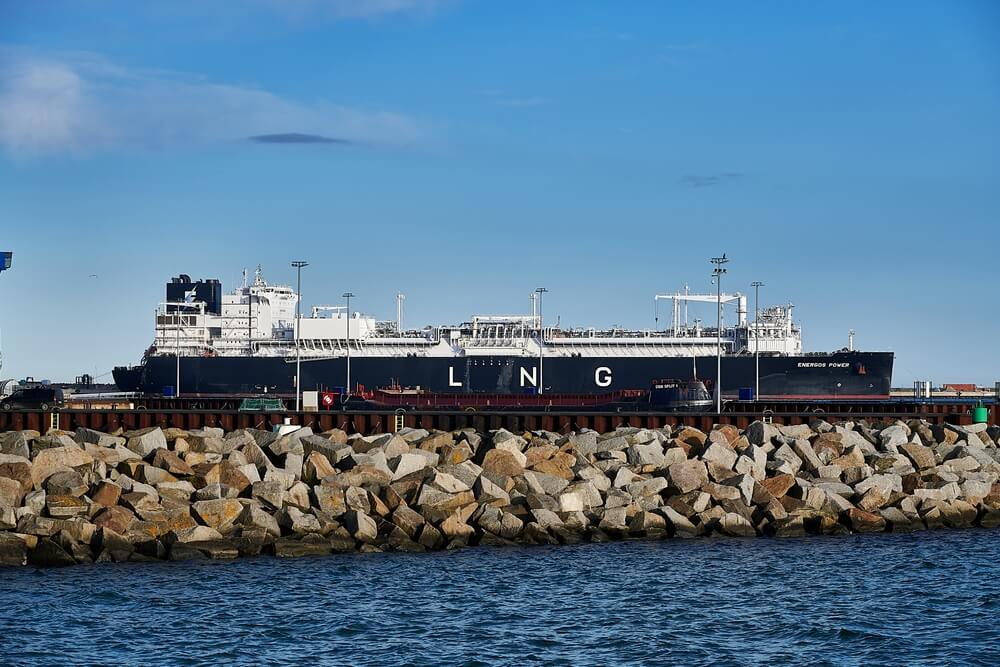 Iran does not need to close the Strait entirely to impose major costs. It only needs to make shipping slower, more dangerous, less predictable, and more expensive
Iran does not need to close the Strait entirely to impose major costs. It only needs to make shipping slower, more dangerous, less predictable, and more expensive.
That is precisely the model around which the IRGC-N has been built. Unlike Iran’s conventional navy, the IRGC-N is not designed around major naval battles.
It is designed around making Gulf waters too dangerous, too uncertain, and too expensive for the global economy to function normally.
Its core assets are not frigates or destroyers. They are naval mines, anti-ship missiles, explosive drone boats, mobile missile launchers, swarming fast attack craft, and covert sabotage teams operating from islands, tunnels, hidden ports, fishing villages, and hardened positions along the Iranian coastline.
Special naval forces
Most importantly, the IRGC-N possesses dedicated special naval forces specifically trained for underwater sabotage, boarding operations, limpet mine attacks, combat diving, and covert insertion missions.
These forces are known as the Sepah Navy Special Force, or SNSF, and form part of the IRGC-N’s broader Takavar commando structure.
They consist of combat divers, boarding teams, marines, snipers, and helicopter-borne assault units trained for underwater sabotage, vessel seizures, reconnaissance, and attacks on offshore infrastructure.
Special naval forces are trained to attack shipping, sabotage offshore infrastructure, place limpet mines on commercial vessels, board ships, conduct covert reconnaissance
Among the most important of these formations is the Aba-Abdullah Special Operations Brigade, based around Greater Farur Island and specialising in amphibious warfare, boarding operations, combat diving, and heliborne assaults.
Another key formation is the Imam Sajjad Commandos and Marine Corps, based around Abu Musa Island and responsible for many of Iran’s strategically important Gulf islands, including Abu Musa, the Tunbs, Qeshm, and Sirri.
Alongside them operates the Ansar-al-Hojjat Corps, another marine and commando formation that supports island defence and operations in the Strait of Hormuz sector from the Bandar Abbas axis.
These forces are trained to attack shipping, sabotage offshore infrastructure, place limpet mines on commercial vessels, board ships, conduct covert reconnaissance, and exploit precisely the kind of environment that exists in the Gulf: shallow waters, dense shipping traffic, crowded coastlines, offshore platforms, oil terminals, and confined sea lanes.
There is no clean military solution
Even if the Trump administration launches a renewed major military campaign against Iran, it will still not be able to eliminate these capabilities entirely.
Many of them are mobile. Many are hidden. Many are dispersed across hundreds of miles of coastline and islands.
Some can be launched from civilian-looking dhows, fishing boats, or small speedboats moving at night.
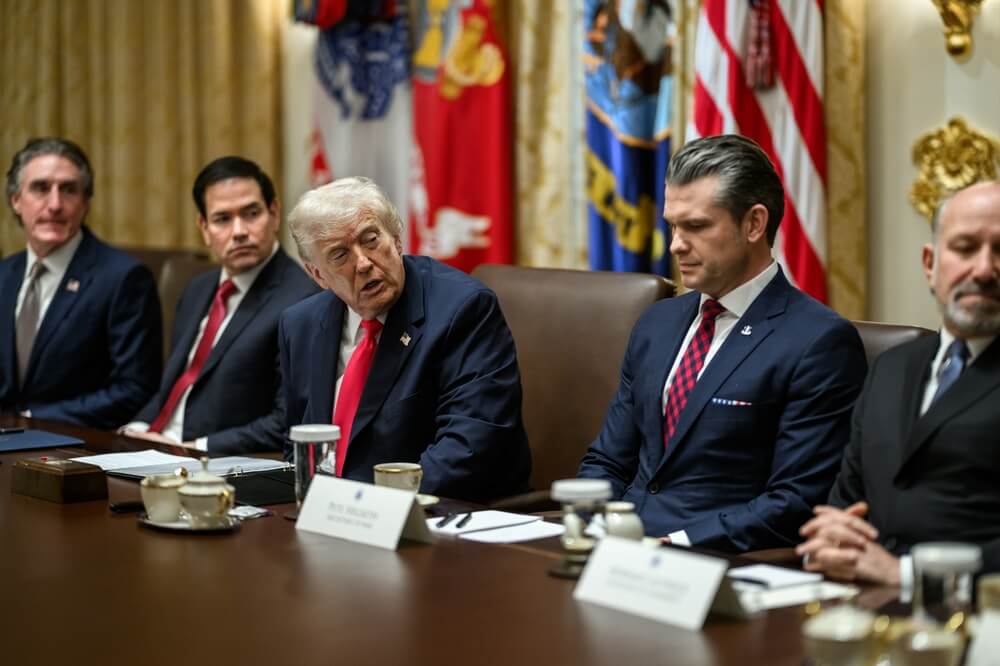 As the Trump administration’s ceasefire deadline expires tomorrow, the US must remember that there is no clean military solution in the treacherous waters of the Gulf
Mine warfare is one of the slowest and most dangerous forms of military activity.
Every suspected contact must be identified individually by sonar operators, divers, mine-hunting vessels, helicopters, and underwater drones working through thousands of possible objects in shallow and cluttered waters.
Iranian mines vary widely in type and trigger mechanism, making clearance operations slow and difficult.
Clearing a limited series of minefields will take weeks. Clearing multiple series of minefields across the Strait while under threat from missiles, drones, speedboats, and sabotage operations will take much longer.
That is what Samuel B. Roberts proved in 1988. A single Iranian mine almost destroyed one of the world’s most advanced naval vessels.
Since then, the IRGC-N has spent nearly 40 years building an entire naval doctrine around repeating that lesson on a much larger scale.
This is precisely why, as the Trump administration’s ceasefire deadline expires tomorrow, the United States must remember that there is no clean military solution in the treacherous waters of the Gulf.
Dr Nawaf Obaid is a Senior Research Fellow at the Department of War Studies, King’s College London.
