Now that protectionism is back, understanding the full costs and knock-on effects of trade barriers has become imperative for governments navigating a more uncertain global economy.
The United Kingdom’s experience after leaving the European Union is especially revealing in this respect, because Brexit reduced both the value of UK goods exports to the EU as well as the number of different products sold there.
While much of the post-Brexit debate has focused on the first cost, the second one warrants more attention.
As governments elsewhere raise trade barriers of their own, the UK offers a clean test of what such added frictions can do.
When the UK’s new trade and cooperation agreement with the EU took effect in 2021, tariffs on qualifying goods stayed at zero, but it still incurred hefty new costs from customs declarations, rules-of-origin paperwork, separate regulatory approvals, and the fixed expense of keeping a cross-border trading relationship going.
When Oleksandr Shepotylo, Yujie Shi, and I tracked monthly trade between the UK and 100 countries from 2017 to late 2025, comparing UK–EU trade with UK trade elsewhere, we found that these new arrangements cut the value of UK exports to the EU by 16.5%, reduced the number of products exported to the EU by an estimated 53.8%, and slashed the variety of imports by almost one-third.
Such losses are not always easy to see, and thus tend to be under-appreciated. Firm-level research by Rebecca Freeman and her co-authors finds that the fall in UK exports was concentrated among smaller players.
The implication is that the UK economy may have missed out on the gains from smaller exporters testing second markets, niche products sold in modest volumes, or new customers who eventually might have become a large account.
In other words, the measured losses do not tell the whole story. While a firm that stops exporting shows up in the data, a firm that never starts leaves no trace.
Foregone gains
But foregone gains can be inferred. Our research finds that, since 2021, very few new product-level trade flows have opened between the UK and EU countries.
Think of all the first sales that were never made, the products that were never adapted for a second market, and the new supplier relationships that never began.
We rarely know in advance which small relationships will stay small, and which will drive the growth of a highly productive firm or a new market
Think of all the insights about demand, evolving technologies, and competitors that UK firms could have generated by forging new export relationships and expanding their businesses beyond the UK.
A skeptic might reply that trade barriers mostly weed out marginal activities of little value, and the resources behind them may find better uses elsewhere, while the relationships that matter survive.
That may well be true in some cases. But we rarely know in advance which small relationships will stay small, and which will drive the growth of a highly productive firm or a new market.
This uncertainty is itself a reason to be careful with policies that make entry and experimentation more costly.
Many of trade lines have not come back
The overall product mix matters, too. In our estimates, the effect of the post-2021 barriers depended far more on what was traded than on which EU country was buying it.
Pharmaceuticals, chemicals, and automotive components held up best, even though they faced some of the heaviest regulatory requirements, probably because UK and EU production in these sectors was already tightly integrated.
By contrast, consumer goods, perishables, and less differentiated products suffered the most.
Many of these lines have not come back. In agri-food, the loss of import varieties grew from 12% under light-touch border controls to 30% once checks were fully enforced.
Again, we see that frictions are not neutral. Their burden falls hardest on goods that are easy to substitute, and on firms that are easy to discourage.
We should judge trade barriers and agreements not only by existing trade values, but also by their effect on the fixed costs of entering a market or launching a product
We therefore should judge trade barriers and agreements not only by existing trade values, but also by their effect on the fixed costs of entering a market or launching a product.
For example, more thorough impact assessments could show how many firms, products, and trading relationships a policy is likely to affect, alongside the usual measure of trade values.
Similarly, through mutual recognition of standards, where one country accepts product tests and certificates issued in the other, both parties can reduce fixed costs.
In separate work with Shepotylo and Lin Zhang, I found that such agreements are associated with around 10% more exports on average.
True, because they leave rules of origin and customs formalities untouched, they rely on political goodwill.
When the EU did not update its medical devices agreement with Switzerland in 2021, amid a wider dispute over their relationship, Switzerland became a third country for those products.
Integration is easier to reverse than to rebuild
But the deeper point remains: there are many overlooked potential costs that can discourage a firm from making its first export.
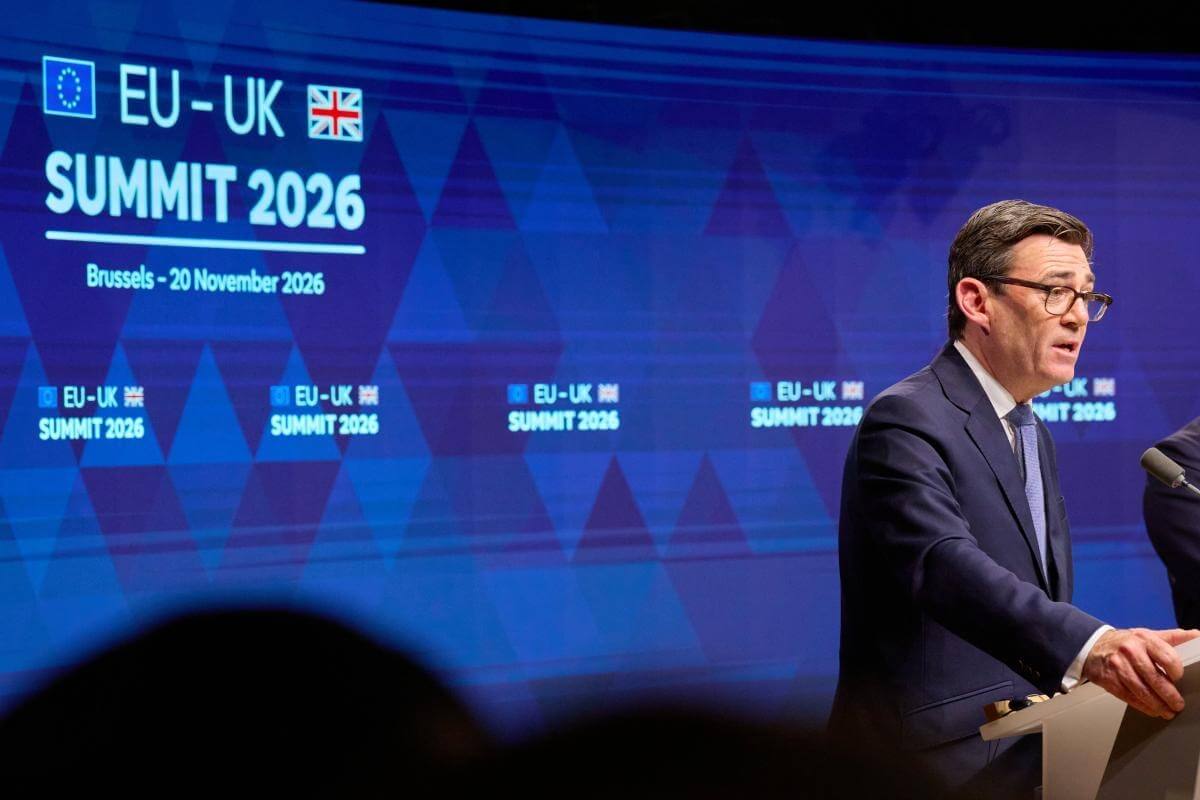 Lifting a barrier will not necessarily restore the relationships that were disrupted or the opportunities that were lost - Andy Burnham
When the United States ended duty-free entry for parcels worth less than $800 in August 2025, it introduced duties and compliance requirements that fell hardest on low-value shipments, and thus on smaller sellers.
Higher fixed costs tend to fall most heavily on newer, smaller traders, but the resulting headline trade figures often understate what has been lost.
A final lesson for policymakers everywhere is that integration is easier to reverse than to rebuild.
Exporting involves sunk costs, and research going back to the 1980s demonstrates that trade lost to a shock may not return afterward. Lifting a barrier will not necessarily restore the relationships that were disrupted or the opportunities that were lost.
Ultimately, the real cost of protectionism may lie less in the trade it destroys than in the trade that it prevents.
Jun Du is Professor of Economics and Managing Director of The Productivity Institute at the University of Manchester.
