UK prime minister Andy Burnham heads to Brussels this week to secure agreement on renewing at least some of the ties with the European Union that were severed by the country’s departure from the bloc.
Ardent pro-Europeans hoping that the long-awaited ‘reset’ might be step one on an inevitable journey to rejoin the EU would be best advised not to hold their breath.
During his brief, months-old premiership, Burnham has been both credited and condemned for reopening the Brexit debate after expressing a clear desire to see the UK rejoining in his lifetime.
What is less clear is how that personal aspiration might be translated into political reality in a country where the wounds from the destabilising aftermath of the narrow 2016 ‘leave’ vote are still healing.
And how might the EU view reliving the Brexit trauma, despite the warm words from European capitals about the virtue of closer ties with the British?
Although rejoining the 27-member bloc is not on the ruling Labour Party’s agenda, diehard Brexiteers are already on manoeuvres to forestall a sellout, having set up a Stay Out campaign just days ahead of Friday’s Brussels summit.
Lost more than it gained
In his own prelude to Brussels, Burnham argued, in a foreign policy speech to leaders of the City of London financial district this week, that the UK had lost more than it had gained in the decade since the referendum decision to leave.
Despite the ferocity of the arguments that surrounded the 2016 vote, it is a relatively uncontentious view, given that it is now apparently shared by a sizeable number of the electorate who voted to leave.
The trend is apparent from polling that has shown a steady growth in majority public support for closer ties with the EU, although repentant leavers show little enthusiasm for rerunning the in-out vote.
If leave voters had known in 2016 what they know now, they might have made a different choice
For now at least, Burnham is focused on mitigating the negative impact of a ‘hard’ Brexit that he said was not good enough for the country and had deprived it of potential economic growth.
His underlying argument was that, if leave voters had known in 2016 what they know now, they might have made a different choice.
He cited Russia’s invasion of Ukraine and related security threats as examples of how the world had changed in the intervening decade. In retrospect, he said he regarded Brexit as the first domino to fall in a global move towards more isolationism and protectionism.
Relatively modest ambitions
Burnham had previously insisted that “no one is talking” about rejoining the EU ahead of this week’s summit reset session and that his aim was to secure a deal that would be closer to what people voted for in the Brexit referendum.
On the agenda are deals to facilitate UK food sales to Europe and a youth exchange programme. EU students might be offered cheaper, domestic rates for tuition at UK universities in exchange for improved access to European markets.
Any agreement will fall within Labour’s current manifesto restrictions that rule out rejoining the EU single market or customs union.
Depending on the summit outcome, Burnham is due to launch a formal debate on the options for the UK’s long-term relationship with the EU
These relatively modest ambitions have provoked a familiar response from the Brexit lobby about the threat of the UK reverting to being a rule-taker rather than a rule-maker in its relations with its next door neighbours.
Depending on the summit outcome, Burnham is due to launch a formal debate on the options for the UK’s long-term relationship with the EU, to be decided on only after the next general election.
“At every stage, the British people will be the boss,” he told his City of London audience, without quite explaining how that might work given the splits over Europe that persist.
Political opponents off guard
One factor in Burnham’s favour is that his quest for better EU ties, whether or not that might one day lead to the UK rejoining, has failed to provoke any significant public backlash.
Aside from the Stay Out response of the ultras, he appears to have caught his political opponents off guard by reviving the Brexit debate, something that his predecessor Keir Starmer avoided, even as he initiated the moves towards this week’s summit.
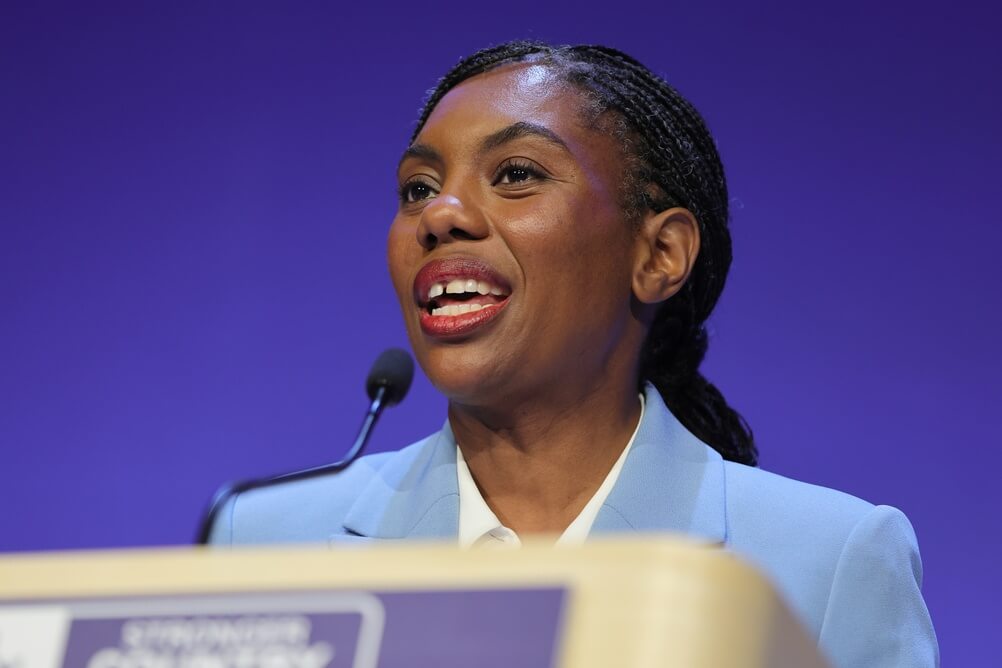 Kemi Badenoch may have come closest to reflecting the view of many voters when she asked her party’s annual conference last month to “imagine having to go through that again"
Although the Conservative Party and Reform have pledged to reverse any steps that move the UK closer to the EU if they were elected to government, that currently distant prospect will not determine this week’s outcome in Brussels.
The Europeans have hedged their bets by requiring a fairly standard penalty clause in the proposed food deal to cover their lost costs if a future UK government pulls out.
For the most part, the pro-Brexit right has been on the defensive since Burnham reopened the Europe debate.
The Conservative leader, Kemi Badenoch, may have come closest to reflecting the view of many voters when she asked her party’s annual conference last month to “imagine having to go through that again”.
A Brexit ‘lite’
Even within Burnham’s own ranks there are evident misgivings about how fast and how far to go towards renewing ties with Brussels.
Many Labour MPs, including the prime minister, represent areas that predominantly voted ‘leave’ in 2016. A very practical consequence of their pushing the case for Europe might be that they lose their parliamentary seats.
The spectre of right-wing and Eurosceptic parties taking power in France and elsewhere might temper domestic enthusiasm for the UK going back
Others are concerned that the EU pro-Europeans seek to rejoin is not the one they left. The spectre of right-wing and Eurosceptic parties taking power in France and elsewhere might temper domestic enthusiasm for the UK going back.
MPs as well as voters will have to await the outcome of the Brussels talks to learn about the next steps. Many might settle for revisiting the prospect of a Brexit ‘lite’ that would include obligations as well as benefits.
What is not on the cards for now is the option to turn back the clock and reconsider membership, informed this time by a rational debate that would avoid the misleading histrionics that marred the 2016 vote.
