The war on Iran has exposed deep divisions across the Arab world. Some regard the American and Israeli campaign as an opportunity to weaken (or even topple) a regime that has undermined the authority of national governments, including their ability to decide on war and peace, through support for armed groups and interventions in Iraq, Syria, Lebanon and Yemen.
Others fear that Iran’s collapse could unleash disorder across the region. Still others defend Tehran as the backbone of the so-called “axis of resistance” against Israel, or as a protector of the Shia political influence that has grown in parts of the Arab world over the past two decades.
These positions often overlap. Some condemn Iran’s attacks on Gulf states while opposing the American and Israeli war. Others resent Tehran’s interference in Arab affairs but regard it as the only effective military counterweight to Israel.
Even among those who want Iranian influence weakened, there is disagreement over whether the regime’s collapse would restore Arab sovereignty or create dangers that neighbouring countries could not contain.
Beneath these disagreements lies a larger question about regional security: who should control decisions over war and peace, and whether weakening Iran would strengthen Arab states or leave them exposed to further conflict.
For some, the Palestinian cause takes precedence over Arab disagreements with Tehran. For others, Iran has used Palestine to justify military intervention and extend its influence.
In the Gulf, this debate has acquired an urgency of its own. The confrontation between Iran, Israel and the United States has reached the territory, infrastructure and economies of the Gulf Arab states.
Disruption to shipping through the Strait of Hormuz has made the consequences particularly severe for countries whose prosperity depends heavily on energy exports and international trade.
Opposed to the war, exposed to its fire
The Gulf states find themselves at the heart of a war they worked hard to avoid. The American and Israeli strikes on Iran, launched on 28 February 2026, confronted Gulf governments with a stark dilemma.
Their concerns about Tehran’s nuclear programme, ballistic missiles and armed allies do not necessarily translate into support for a war whose consequences would fall heavily on their own territory.
Gulf capitals know that a wider confrontation would turn their countries into targets, putting their energy facilities, ports, shipping routes and civilian infrastructure in the line of fire.
Nine months on, they have learnt that neither their security partnerships with Washington nor their integration into the global economy can shield them from the war or its potentially devastating economic consequences.
Since 28 February, Iran has fired more than 7,000 missiles and drones at Gulf states, striking civilian and economic targets including airports, ports, power stations and desalination plants.
Tehran has repeatedly maintained that it is targeting American military facilities, a claim Gulf governments reject in light of the attacks on civilian and economic infrastructure.
Gulf publics share their governments’ ambivalence. Many oppose the American and Israeli war, yet feel growing hostility towards Iran as its attacks reach their cities.
That anger, however, has not necessarily translated into support for a wider military campaign against Tehran, particularly when further retaliation could inflict still greater damage on the Gulf itself.
Gulf governments have come to see drawing Iran into regional security arrangements as a better guarantee of their stability than striking and weakening it
Oman and Qatar have continued diplomatic efforts to contain the conflict, while Saudi Arabia has also supported de-escalation.
What Gulf leaders dread most is that a new round of escalation will extend to Iran’s infrastructure and strategic sites, prompting Tehran to strike the same kinds of facilities across the Gulf.
Iran has made it plain that it will not go down alone. It has vowed to drag the region with it, and the Gulf states, more exposed and more fragile than their neighbours, would be the first to go under. Neither their opposition to the war nor their tireless mediation has altered Tehran’s calculus, in this respect.
The Gulf economies run on foreign labour. With the relative exception of Saudi Arabia and Oman, the Gulf states depend on very large numbers of foreign residents, who make up close to 90 per cent of the population in the UAE and Qatar.
These workers keep daily life running. The fear is that Iranian threats to strike vital facilities and water and energy supplies could trigger an exodus of foreign workers that would paralyse life in these states and wreck their future.
As these fears have deepened, Gulf governments have come to see drawing Iran into regional security arrangements as a better guarantee of their stability than striking and weakening it.
Their influence in Washington is real but finite, and Tehran’s intransigence in deadlocked settlement talks steadily erodes it. Over Israel, which openly seeks to topple the Iranian regime, they have no leverage at all.
An opportunity, not a threat
Elsewhere in the Arab world, political and social forces hostile to Iranian influence see the war as an opportunity to weaken the networks through which Tehran has exercised power beyond its borders.
Their argument is straightforward. Tehran’s role in Iraq, Lebanon, Syria and Yemen, they say, went far beyond backing allies.
Iran built a web of armed and political movements that gave it a grip over sovereign states and, in effect, seized their power over war and peace: Iraq’s Popular Mobilisation Forces, Hezbollah in Lebanon, the Houthis in Yemen, and its alliance with Bashar al-Assad’s regime.
Weakening Iran, or even toppling the regime, could unravel that web and restore control of their own decisions to Arab states
That web allowed Tehran to confront regional rivals from Israel to Saudi Arabia and Jordan. Weakening Iran, or even toppling the regime, could therefore unravel that web and restore control of their own decisions to Arab states.
This view runs deep in Syria and among many Sunnis in Iraq and Lebanon. It is shared, too, by some Shia, who believe that Iran gambled with the region’s long-rooted Shia communities by turning them into instruments of its expansionist ambitions.
Iran: backer of resistance or project of influence?
For some Shia political movements in Iraq, Lebanon and Bahrain, defending Iran reflects longstanding religious, ideological and strategic ties.
Tehran has provided political backing and military assistance to allied organisations, helping them strengthen their positions within their own countries. These groups fear that Iran’s collapse could weaken their own political influence at home.
Arab Shia, however, are no monolith, and it would be mistaken to treat them as a bloc beholden to Tehran. Some oppose the war on Iran yet refuse to let any outside power dictate to their countries, Iran included.
In Iraq, the influential cleric Muqtada al-Sadr has warned Iran’s Revolutionary Guards against striking Iraqi territory and condemned the militias dragging the country into “a pointless war”.
Supporters of the so-called “axis of resistance” frame the debate around Israel. For them, Iran is the one state that has given military and political backing to the forces confronting it.
By supporting armed movements in the name of resistance, Iran extends its regional reach at minimal actual cost
Its defeat, they argue, would leave the Palestinians and their allies facing a far stronger adversary, just as official Arab commitment to the cause is fading and no effective alternative has emerged.
Iran’s critics see things differently. Palestine, they argue, has become a source of legitimacy and an instrument of influence for Tehran. By supporting armed movements in the name of resistance, Iran extends its regional reach at minimal actual cost, which is borne instead by the societies caught on the frontlines bear much of the human and material cost.
Support for the Palestinian cause, in their view, cannot justify interference in other states’ affairs or the existence of armed organisations capable of pulling entire countries into conflict without the authority of their governments.
The disagreement therefore concerns more than Iran’s declared support for Palestine. It concerns the political influence Tehran derives from that support, the military decisions taken by its allies and the question of who pays the price when confrontation escalates.
Divided hopes: no common vision of security
Hopes are as divided as fears. Some want the war to weaken Iran and reduce the power of armed groups operating beyond state control. Others hope Tehran withstands the assault, fearing that its defeat would leave Israel with overwhelming military superiority.
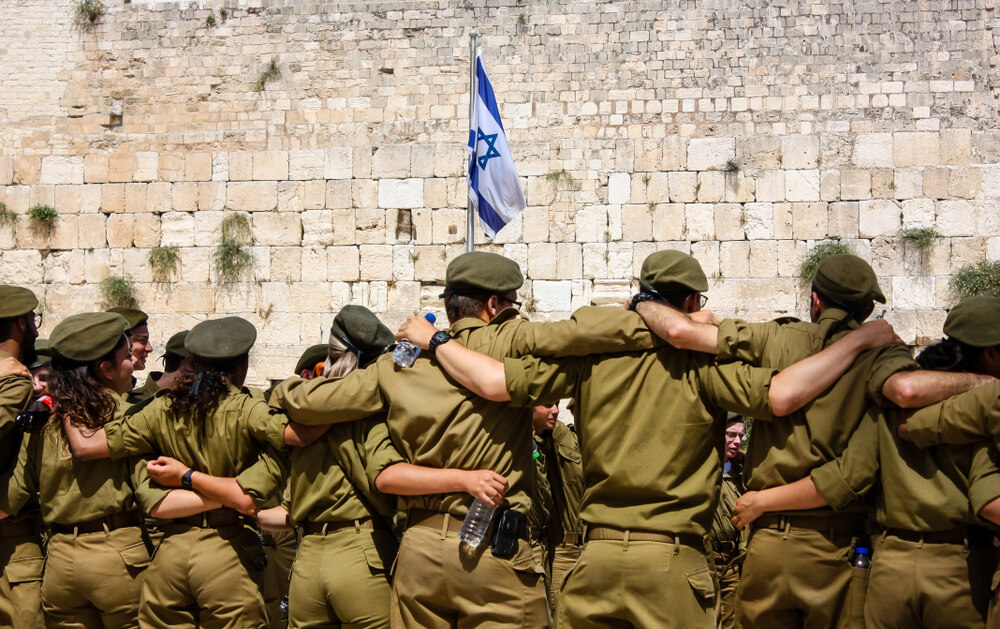 Supporters of Iran’s confrontation with Israel fear that weakening Tehran would remove an important obstacle to Israeli military dominance
Still others want the fighting to end before further attacks damage their countries, displace their populations or draw them into another conflict.
These differences reveal the absence of a common Arab approach to regional security. For Gulf governments, the immediate concern is protecting their territories, populations and economic infrastructure from Iranian attacks.
For opponents of Iranian-aligned armed movements, it is restoring the authority of national governments over military decisions. Supporters of Iran’s confrontation with Israel, meanwhile, fear that weakening Tehran would remove an important obstacle to Israeli military dominance.
The war has exposed deep Arab divisions over Iran and the region’s future security. Any lasting settlement must address Iran’s attacks on Gulf states, the authority of Arab governments over their territory and armed forces, and the conflict involving Israel and Palestine.
Otherwise, an end to the fighting may leave Arab states and their populations exposed to further insecurity.
Siba Madwar is a Syrian political commentator and PhD researcher at King’s College London, specialising in conflict resolution in divided societies and post-conflict statebuilding.
