The United Nations General Assembly has adopted another resolution aimed at strengthening international cooperation and mitigating the long-term consequences of the Chernobyl disaster.
The document was prepared by Ukraine and received the support of 97 UN member states.
At the same time, an unexpected outcome of the vote was that the United States found itself among the countries voting against the resolution, alongside Russia, Belarus, China, North Korea, Nicaragua, and Niger. An additional 39 states abstained.
The vote took place at a time when Ukraine is experiencing one of the most challenging periods in its modern history, seeking to defend its national interests amid negotiations with the United States over possible parameters for ending Russia’s aggression.
It should be recalled that an earlier 28-point peace plan, developed by Steve Witkoff with the participation of several Russian officials, triggered a strong negative reaction both in Kyiv and in European capitals.
In response, Ukraine and its partners developed alternative proposals, which were subsequently presented to the American delegation.
The latest round of negotiations took place in Berlin. The outcome of the meeting, opened on Sunday by German Federal Chancellor Friedrich Merz, remains unclear. Nevertheless, statements by the participants allow for cautious optimism.
One of the most difficult issues remains the future of Ukrainian territories currently under Russian occupation.
U.S. President Donald Trump put forward the idea of a partial withdrawal of Ukrainian and Russian forces from certain areas of Donbas and the establishment of a demilitarised “free economic zone” where American business interests could operate.
The Ukrainian side and European leaders insist that any progress on territorial issues is possible only if Ukraine is provided with clear and reliable security guarantees from the United States and a number of Western partners, comparable in substance to Article 5 of the NATO Charter.
NATO membership
President Volodymyr Zelenskyy stated his readiness to compromise by refraining from seeking Ukraine’s immediate membership in NATO, provided that a special, legally binding collective defence agreement is concluded.
Kyiv views this approach as a balance between political realities and the need for credible security guarantees.
German Defence Minister Boris Pistorius noted that he currently sees no real willingness on the part of Russian President Vladimir Putin to engage in genuine peace negotiations.
At the same time, he described the visit of American mediators to Berlin as a positive step.
President Zelenskyy characterised such a demand as a “red line”
According to sources familiar with the talks, the U.S. side insisted that Ukraine agree to relinquish Donbas.
President Zelenskyy characterised such a demand as a “red line” and confirmed that he is not prepared to make such concessions.
He also emphasised that Ukraine currently has no direct dialogue with Russia and that its interests are, in effect, being represented by American intermediaries.
A planned online meeting between EU foreign ministers and the leaders of the U.S. negotiating delegation did not take place due to unexpected technical disruptions, the causes of which remain unknown.
The future of frozen Russian assets
The European Union will have additional opportunities to coordinate its next steps in the coming days.
On Tuesday in Brussels, EU foreign ministers will continue discussions on the agenda for the summit scheduled for Thursday.
On Wednesday, leaders of Europe’s “eastern flank,” including the Baltic states and Poland, will meet in Helsinki.
A decision is expected on the future of frozen Russian assets
On Thursday, all 27 EU leaders will gather in Brussels for a summit that could become one of the most important in recent years.
A decision is expected on the future of frozen Russian assets—a decision that will be of critical importance both for Ukraine’s future and for the European Union’s role as a global political actor.
Russian-American rapprochement
The new U.S. National Security Strategy effectively envisages the development of elements of a Russian-American partnership, which has already begun to manifest itself in practical steps.
Washington’s support for Moscow’s position during the UN vote on the Chernobyl issue became the first signal of this shift in a multilateral context.
The United States found itself aligned with countries frequently criticised for authoritarian tendencies, a fact that did not prompt public concern from the White House.
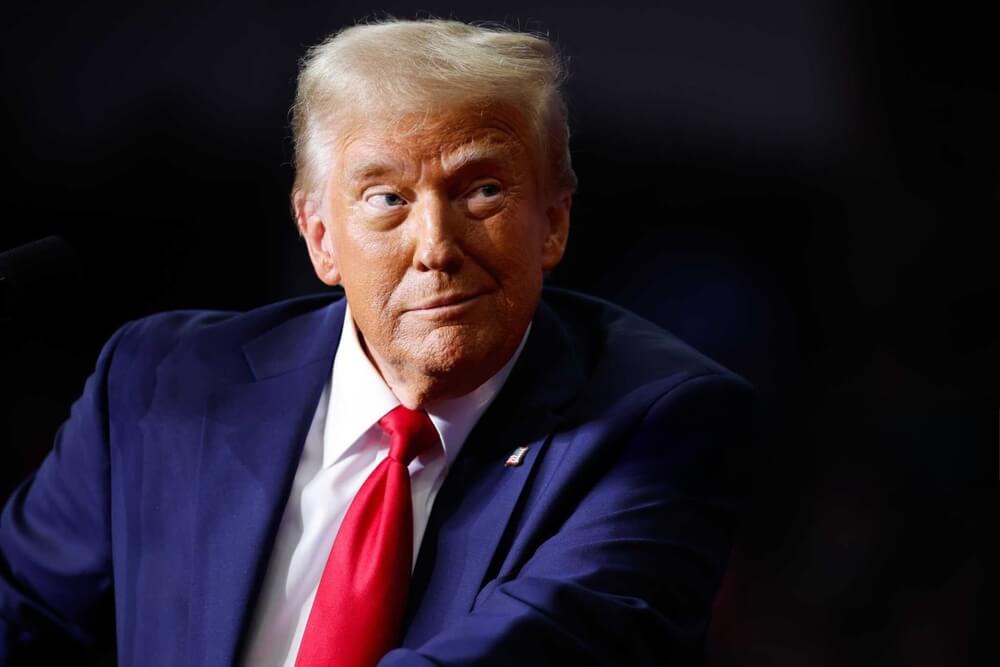 Russian-American rapprochement began to take shape following a meeting between Donald Trump and Vladimir Putin in Alaska
At the same time, in the rhetoric of the U.S. leadership, Europe is increasingly portrayed as weak and secondary.
According to expert assessments, Russian-American rapprochement began to take shape following a meeting between Donald Trump and Vladimir Putin in Alaska.
The agreements reached there are already having tangible effects: Moscow is not actively opposing Washington’s actions in Venezuela, while the U.S. president has increasingly and publicly sided with Russia’s position on ending the war in Ukraine.
In 2025, the new U.S. administration significantly reduced military and financial assistance to Kyiv, a shortfall that Europe has so far been unable to fully compensate. This has already begun to affect the situation along the front line.
Over the years of the full-scale war, Ukraine has inflicted substantial losses on Russia in manpower and equipment, demonstrating a high level of effectiveness in the use of international assistance.
In this context, the suspension of U.S. support cannot be interpreted as the termination of “unlimited funding,” as it is sometimes portrayed in American political discourse.
It cannot be ruled out that Washington is seeking to pressure Ukraine into relinquishing part of its occupied territories as quickly as possible in order to establish the first international precedent of this kind.
If a founding member of the United Nations is forced under external pressure to give up part of its territory, this could later be cited as justification in similar conflicts elsewhere in the world.
Notably, Denmark has already stated that its national security faces potential threats from the United States.
Oleksandr Levchenko, a former Ukrainian diplomat, is a professor at the State University (Kyiv) and a member of the Academy of Geopolitics and Geostrategy (Kyiv).
