In March 2026, the Strait of Hormuz cannot be regarded as a routine disruption in the energy market. The affected area is where the main currents of the modern economy intersect: oil and gas exports, major sea routes, undersea fibre optic cables, financial flows, and military communication systems.
When such a point is disrupted, the effects are not limited to a single sector, nor can they be resolved by rapid market adjustments. They are transmitted between systems and reinforce one another.
Therefore, it is less important how the oil price will react and far more important how the risk affecting several interconnected networks will be managed simultaneously.
Since late February, when the United States and Israel launched coordinated strikes as part of Operation Epic Fury, the Strait of Hormuz has ceased to be merely a strategic sea passage. It has become an active battlefield.
On 3 March, Iran's Islamic Revolutionary Guard Corps announced the closure of the strait to ships linked to the US, Israel, and their allies.
By mid-month, there had been more than twenty confirmed attacks on merchant ships. Tanker traffic has dropped by approximately seventy per cent, and over one hundred and fifty vessels are waiting in anchorages outside the danger zone.
The media, however, still mostly follow oil prices on the London and New York stock exchanges, as if this were just another episode in a long series of Middle East tensions.
The Strait of Hormuz, however, is not an ordinary strait. It is one of the few places on the planet where the physical and digital arteries of the global economy literally intersect in the same narrow geographic space.
The oil and gas that power Asia and Europe, the container ships that transport goods worldwide, and the fibre optic cables that carry billions of dollars in transactions and terabytes of data every hour all pass through this same narrow corridor.
The multifaceted nature of the crisis
Brent crude exceeded $80 per barrel shortly after the strike, with estimates indicating that a prolonged closure could push prices into triple digits.
The European price of natural gas has almost doubled in just two days. These figures are dramatic but familiar. Less visible, yet potentially more devastating, is the digital dimension of the crisis.
Key submarine cable systems that form the backbone of international internet and data traffic pass through the waters of the Strait of Hormuz and its approaches: AAE-1, FALCON, Gulf Bridge International, and Tata TGN-Gulf, as well as connections linking Europe with India and further to Asia.
These cables carry government communications, bank transfers, data from cloud centres, military intelligence streams, air traffic control systems, and a significant portion of commercial internet traffic between Europe, the Middle East, South Asia, and beyond.
The arrangement of submarine cables in the area of the Strait of Hormuz further increases the risk
Of particular concern is the fate of the massive data centres that Amazon, Microsoft, and Google have built in the Gulf, investing billions of dollars in the expectation that the region will become a key hub for artificial intelligence and cloud services.
The arrangement of submarine cables in the area of the Strait of Hormuz further increases the risk. Several main routes converge in shallow waters at the approaches to the strait, at depths that in some places do not exceed a few tens of metres, and only then separate towards the Arabian Peninsula, the Red Sea, the Levant, Africa, and Europe.
This means that a large part of the traffic is concentrated in a small area before the network branches out.
Planned projects to reduce that concentration and provide alternative routes, including extensions of the 2Africa system through the Gulf, have been halted due to the worsening security situation. The region is therefore left without additional capacity that was intended precisely for such circumstances.
Vulnerability of submarine infrastructure
The cables in this area lie on a relatively shallow seabed, close to busy waterways. This makes them vulnerable not only to deliberate actions – such as mines or explosions – but also to accidents: dragging anchors, damage from ships manoeuvring in chaos, or even seismic activity caused by conflicts.
Repairing such damage requires specialised vessels to lay cables, precisely locate breaks, and spend weeks at sea in conditions where the strait is a zone of active military operations. In practice, today, this becomes almost impossible.
Digital infrastructure is no longer collateral damage; it has become an integral part of strategic pressure
Intelligence data indicate that in December 2025, Iran formed a joint operational body between the Ministry of Intelligence (VAVAK) and the intelligence department of the Revolutionary Guard.
The aim is to map cable routes, landing points, and the weakest points in the approaches to the strait. Digital infrastructure is no longer collateral damage; it has become an integral part of strategic pressure.
Consequences for finance and the economy
A complete severance of these cables would not shut down the global Internet. The global network has alternative routes and can continue to function even under such conditions.
The issue is where the disruption occurs and whom it affects. A region that relies on these connections would be left with limited capacity and forced to divert traffic to longer, more congested routes. This results in slower data transfer, delays, and increased pressure on networks already operating near their peak.
The consequences extend beyond the user's Internet experience. They affect systems that depend on a stable and fast connection. Trade in energy products takes place through digital platforms operating in real time.
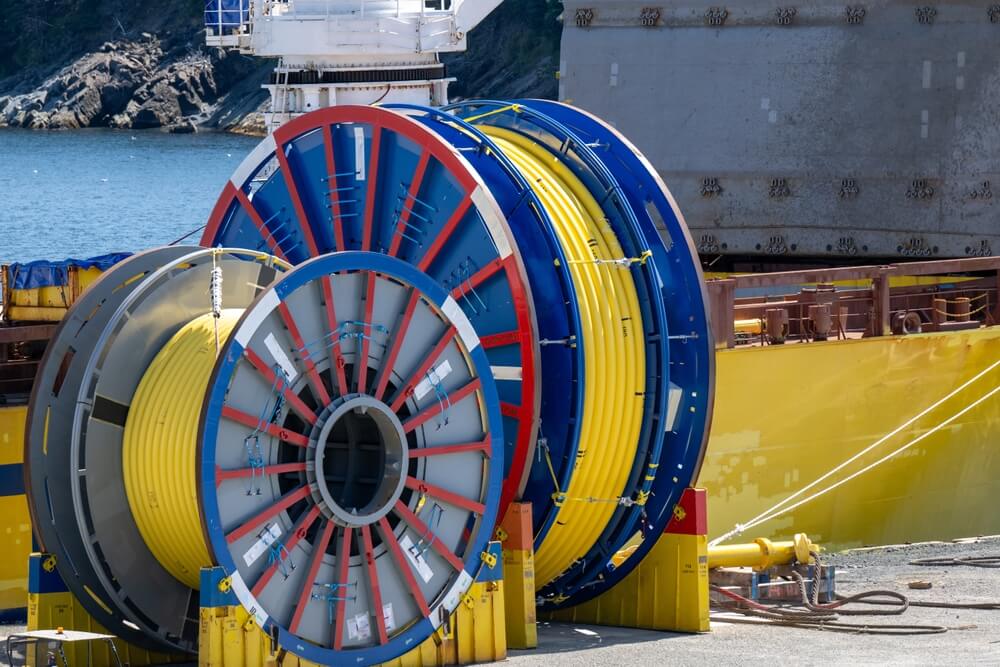 Both major corridors – the Strait of Hormuz and the Red Sea – are now effectively closed to safe operations. Cable repair ships cannot approach either
Bank transfers, currency settlements, and derivatives clearing rely on a reliable and uninterrupted flow of data. When that connection slows or becomes unstable, transaction risk increases, uncertainty spreads, and markets react immediately.
In such an environment, financial systems are particularly vulnerable. Gulf state wealth funds, oil and gas traders, and global banks operate in a network that does not tolerate downtime.
Even partial damage to the cables is enough to disrupt the rhythm of transactions and cause consequences that are quickly transmitted between markets in Dubai, London, and Singapore.
Previous incidents with submarine cables in the Red Sea in 2024 and 2025 showed that even limited outages lead to rising costs, reduced liquidity, and increased volatility.
At the same time, both major corridors – the Strait of Hormuz and the Red Sea – are now effectively closed to safe operations. Cable repair ships cannot approach either.
This means that even limited damage could go unrepaired for weeks, and traffic would be diverted to longer and more expensive routes around Africa or via land links, further straining the system.
Military implications
Military operations in the region are heavily dependent on fibre optic cables to transmit large amounts of data in real time. This includes surveillance, target tracking, intelligence sharing, and coordination between units.
These systems are not the only channel of communication, but they are crucial for speed and precision.
Slower data flows make it more difficult to coordinate air defences, monitor movements at sea, and operate unmanned systems
In the event of cable damage, communication is redirected to satellite and radio links. These allow continuity but with limited capacity and greater exposure to interference.
The result is not the interruption of operations but a decrease in their efficiency. Slower data flows make it more difficult to coordinate air defences, monitor movements at sea, and operate unmanned systems.
If such conditions persist, the risk of misjudgements and delays in response increases. This is a factor that directly affects the course of operations in crisis situations.
Effects on insurance, trade and supply chains
The market’s reaction is evident first through insurance. Premiums for passage through the Strait of Hormuz have risen from about 0.125 per cent to between 0.2 and 0.4 per cent of a ship’s value per passage.
For a large tanker, this means an additional cost of hundreds of thousands of dollars per journey. Under such conditions, some shipowners consider the passage no longer economically viable.
Disruption in the Strait of Hormuz leads to more expensive transportation, delivery delays, and increased pressure on raw material prices
Traffic struggles to find alternative routes when insurance becomes expensive or withdraws from certain zones. Ships remain off route or waiting, and available capacity declines.
This slows the flow of goods through a route that carries not only oil but also petrochemicals, fertilisers, grains and industrial components.
The consequences are quickly transmitted to supply chains. Disruption in the Strait of Hormuz leads to more expensive transportation, delivery delays, and increased pressure on raw material prices. This then affects production and the food market, from Asia to Europe.
Broader impacts and strategic assessment
The Gulf states, Iran, Iraq, and Saudi Arabia see the initial effects, but the consequences extend further. Energy imports and digital connections bind India and Pakistan to the same direction.
Furthermore, these flows bolster the manufacturing capacity in Southeast and East Asia, which subsequently influences European supply chains and financial flows. A disruption in one location quickly becomes a problem in multiple regions.
This situation is not the result of a single incident that can be repaired and closed. It is a series of disturbances occurring in parallel: navigation, energy, communications, and financial flows.
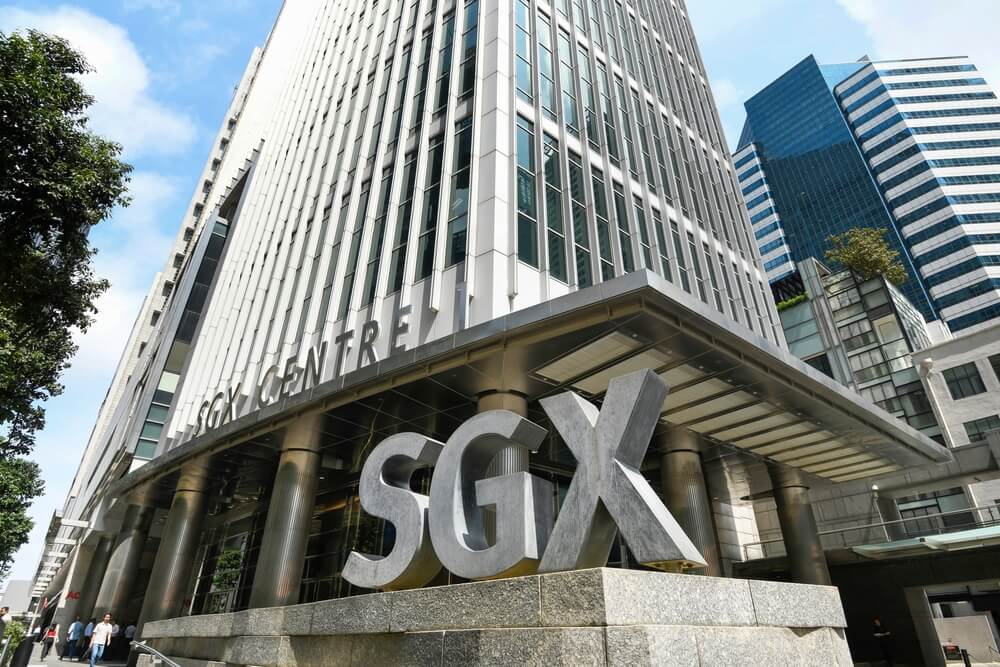 Financial systems must have greater autonomy from a single geographical point - Singapore Stock Exchange
Every new incident, regardless of cause, adds further strain to a system already under pressure. Recovery times are lengthening, and the space for stabilisation is narrowing.
The strikes as part of Operation Epic Fury weakened Iran’s conventional capabilities in the Strait. Part of the fleet was destroyed or taken out of service, and the potential for larger operations was reduced.
However, this does not alter the way the disruption develops. No major actions are needed to maintain the pressure. Occasional incidents, rising insurance costs and difficult infrastructure repairs are sufficient. Such a combination prolongs the disruption and can keep it unresolved for months.
This is no longer a question of stabilising the Strait of Hormuz. The question is how quickly dependence on it can be reduced.
If the flows of energy, data and commerce remain tied to the same passage, any subsequent disruption will have the same effect – no matter who causes it.
Therefore, the only viable response is to rapidly separate them. Energy requires alternative routes, digital infrastructure needs physically separate paths, and financial systems must have greater autonomy from a single geographical point.
This is not a long-term strategy. It is an urgent task.
The Strait of Hormuz has already revealed where the system is most vulnerable. If that lesson is not translated into concrete action, the next blow will not be just another disruption.
