Immigration is perhaps the most incendiary issue in the United States today.
Opponents claim that immigrants are a drain on public finances and compete with US citizens for jobs, housing, and other resources.
But the nativists are as wrong as they are loud. The point that is often missed: Immigrants add to the demand and the supply sides of the US economy.
Housing is a case in point. Immigrants comprise about one-third of America’s construction work force (32.5%) and an even higher share of the jobs most relevant for home building, such as plasterers and stucco masons (61%), drywall and ceiling-tile installers (61%), roofers (52%), painters (51%), and carpet/floor/tile installers (45%).
They thus contribute to housing supply even more than to demand, relative to the rest of the population.
Immigrants also play critical roles in agriculture and health care – some 38% of home health aides come from abroad – typically doing the dirty, unpleasant, and even risky jobs that native-born Americans don’t want, at wages Americans would not accept.
Meatpacking is one of the most dangerous occupations in the US, and an estimated 30-50% of the workforce are undocumented immigrants.
Given this, US President Donald Trump’s efforts to reduce the immigrant population – both through mass deportations and by reducing America’s appeal to foreign-born workers – put direct upward pressure on the prices of critical goods and services, including food, housing, and health care.
The problem is so severe that the Trump administration is belatedly responding by making it cheaper to hire migrant farmworkers on temporary visas.
Skilled immigration
Immigration critics might counter that foreign-born workers still cause harm by putting downward pressure on US citizens’ wages.
But this assumes that immigrants are acting as a relatively close substitute for US labor, and the evidence suggests that they are not.
Immigrant labor largely complements, rather than replaces, that of native-born Americans
Immigrant labor largely complements, rather than replaces, that of native-born Americans.
It is not only low-skilled immigrants who benefit the US economy. While immigrants constitute only 14-15% of the US population, they account for nearly 30% of entrepreneurs.
A robust 46% of companies on the Fortune 500 List – including Apple, Amazon, ACE Hardware, DoorDash, Google, Nvidia, and Levi-Strauss – were founded by immigrants or their children.
With AI-related or venture-capital-backed firms, the immigrant founder share exceeds 40%, and roughly two-thirds of leading AI companies in the US include immigrants among their founders.
Skilled immigration enhances technological innovation – immigrants account for a large share of patents filed in the US each year – and boosts productivity growth, particularly in science- and engineering-related fields (83% of PhD-level computer scientists working in America are foreign-born).
As technologies like AI, semiconductors, and biotechnology become central to global economic and military competition, the ability to attract foreign talent has become a strategic imperative.
The benefits of legal immigration
Many critics concede the benefits of legal immigration – after all, immigrants built America – but argue that the real problem is undocumented workers. (They presumably are not including in this group the tech entrepreneur Elon Musk or First Lady Melania Trump, each of whom began their career in the US with a dubious immigration status.)
And, in fact, there is strong political support in the US for strengthening legal immigration channels, while cracking down severely on illegal immigration.
At first glance, the logic might appear airtight: People in the US should abide by US laws. But this requires that those laws be well-designed and enforced properly.
The Eighteenth Amendment to the US Constitution, prohibiting the sale of alcohol in the US, was repealed less than 15 years later, because it proved impossible to enforce.
From a purely economic viewpoint, illegal immigration has been a net positive for the federal budget
Moreover, from a purely economic viewpoint, illegal immigration has been a net positive for the federal budget.
Undocumented workers typically contribute to that budget, particularly through payroll taxes, but cannot claim benefits like Social Security or unemployment insurance.
Immigrants consume about 24% less in welfare benefits than native-born Americans on a per capita basis, and over the last 30 years, their tax payments have exceeded their benefits claims.
In other words, immigration is just about the only force working to rein in America’s unsustainable national debt – and not by a little.
Immigrants created a cumulative fiscal surplus of $14.5 trillion in constant 2024 US dollars in 1994-2023, cutting US budget deficits by about a third.
Were it not for immigrants’ contributions, public debt would stand at 200% of US GDP today – almost twice the current level.
This effect is particularly important at a time of accelerating population aging.
When the ratio of workers to retirees falls – whether because of declining fertility or, as in the case of Detroit, net emigration – there are not enough taxes to service the existing debt and finance the budget, including pensions and public services. (This is an even more urgent concern for many European countries, as well as Japan and South Korea, which are aging faster than the US.)
Cost to US taxpayers
Not only is Trump’s mass-deportation effort eliminating a major source of government revenue; it is doing so at tremendous cost to US taxpayers.
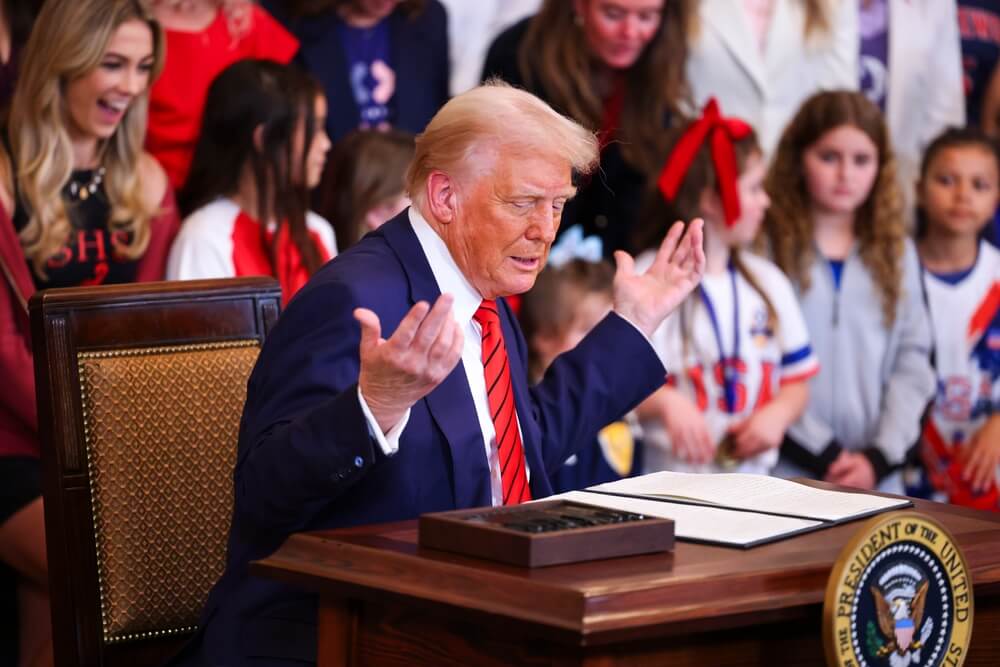 The cost of fighting immigrants exceeds the cost of hosting them - Donald Trump
Trump’s One Big Beautiful Bill Act of 2025 secured an additional $170 billion per year for immigration enforcement – nearly double the $88 billion per year estimate put forward during his 2024 presidential campaign – making Immigration and Customs Enforcement (ICE) America’s largest law-enforcement agency.
The administration’s payments to third countries to accept deportees compound the expense.
The cost of fighting immigrants exceeds the cost of hosting them. And contrary to the frenzied claims of the Trump administration and its propagandists, the rate at which they commit crimes, both violent and non-violent, is lower than that among native-born Americans.
When ICE says it is going after the “worst of the worst,” it can only be referring to the children who are the worst at running from its agents.
Jeffrey Frankel, Professor of Capital Formation and Growth at Harvard University, served as a member of President Bill Clinton’s Council of Economic Advisers. He is a research associate at the US National Bureau of Economic Research.
